Research

News on Science, Technology and Research in India

IIIT-Delhi to Develop Method to Predict Collision from Space Debris

Indraprastha Institute of Information Technology (IIIT)-Delhi receives research funding from National Super Computing Mission (NSM) under HPC Applications to work on the project titled ‘Orbit computation of Resident Space Objects for Space Situational Awareness’ for two years. The NSM project has been implemented by the Department of Science and Technology (DST), Government of India in collaboration with the Ministry of Electronics and Information Technology (MeITy) to ensure the country’s leadership in supercomputing.

DFRL’s Pouch Technology to Prevent Food Waste in Space

The challenge for DFRL scientists here was to develop a technology to preserve the Indian food that had high moisture content when compared to burgers and sandwiches. To tackle the tricky situation, the DFRL has come up with the food waste pouch technology where a special compound has been developed that would restrict the growth of microbes. Prevention of microbe growth on food would prevent spoiling of the food.

CSIR-CMERI Oxygen Enrichment Unit – A Potential Multifaceted Life Saver

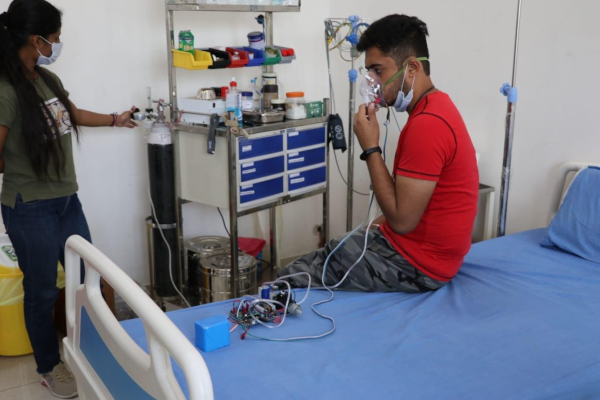
An Oxygen enrichment unit is a device, which concentrates the Oxygen from the air around us by selectively removing nitrogen to supply an oxygen-enriched air. The concentrated Oxygen is delivered to the patients, having respiratory diseases, through oxygen mask or nasal cannula. The device may be used in remote places, homes or hospital like facilities for patients with chronic obstructive pulmonary diseases (COPD), chronic hypoxemia and pulmonary edema. It may be used as an adjunct treatment for severe sleep apnea (in conjunction with a continuous positive airway pressure unit).

ICAR-IVRI Transfers Technology – CSF & Sheep Pox Vaccine through Agrinnovate

The Indigenous CSF Cell Culture Vaccine (IVRI-CSF-BS) developed by using an Indian field isolates has a huge export potential. Due to its very high titre (1×109.5 TCID50 / ml), the Vaccine can produce a large number of doses (60 Lakhs approx.) easily from only one 75 cm² Tissue Culture Flask. The country’s yearly requirement of 22 million doses can be prepared in just four 75 cm² Tissue Culture Flasks.

Spices Board India and UNDP Lab Sign MoU to Develop Blockchain-Powered Traceability Interface for Indian spices

UNDP and Spices Board India are working towards integrating the Blockchain Traceability Interface with the e-Spice Bazaar portal developed by Spices Board India for connecting spices farmers with markets.Design of the Blockchain interface is expected to be completed by May’21. The project will be piloted with over 3,000 farmers engaged in chilli and turmeric farming in select Districts of Andhra Pradesh.