Research

News on Science, Technology and Research in India

Rhino Count in Manas Touches 48 After Being Wiped Out in 2005

“The recovery is one of the biggest achievements as there was not a single casualty in the translocation. The current rhino population in Manas is 48 in the core area of 500 square kilometer of the park and there has been no case of poaching as well in the past four and half years. Before 2016, 10 rhinos were poached,” Manas Tiger Reserve field director Amal Sarmah told TOI.

Sweat Based Non-Invasive Point of Health Diagnosis technology

The study has been carried out by a team of researchers led byan alumnus of the Indian Institute of Technology (IIT) Hyderabad, Dr Brince Paul. As a postdoctoral researcher, he conducted this study in the Écolepoly technique fédérale de Lausanne (EPFL), Switzerland. The study was conducted in collaboration with the Swiss Olympic Medical Center. This study has been published in advanced material technologies journals.

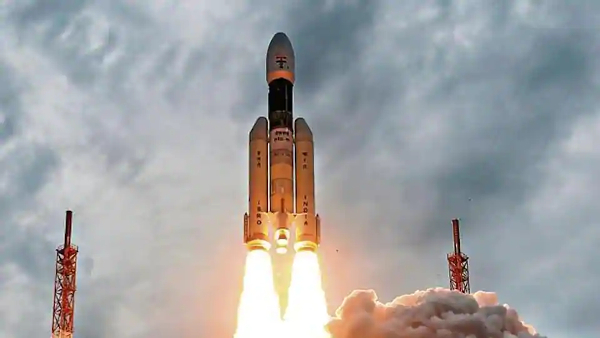
Launch of India’s New-Age Earth Imaging Satellite by May 15: K Sivan

The launch of the 2,268-kg satellite was earlier aborted in the first half of this month due to a technical glitch.
Indian space research organisation (Isro) chairman K Sivan told TOI, “The technical glitch related to a voltage fluctuation issue in the satellite is being fixed. Thereafter, the satellite will be assembled in the launch vehicle and tested again. All these things will take time and the launch is likely to happen in the first half of next month. The delay in the launch of Gisat-1 by GSLV-F10 and the Covid situation will, however, postpone other launches, including the first test-flight of the Small Satellite Launch Vehicle (SSLV or mini PSLV), this year.”

New Electronic Nose with Biodegradable Polymer and Monomer can Detect Hydrogen Sulphide from Sewers

Responding to this challenge, scientists from the Centre for Nano and Soft Matter Sciences (CeNS), Bangalore, an autonomous institute of the Department of Science & Technology, Government of India, in collaboration with their counterparts from Saudi Arabia, have developed an exceptionally sensitive and selective H2S Gas sensor developed by impersonating the neuron responsible for identification of airborne molecules or olfactory receptor neuron (ORN).

Accurate Estimation of Manufacturing Variations can Improve Circuit Performance

This is the first time that the experimental validation of variations predicted using physics-based modeling has been reported. The predictions can be integrated with circuit design software, thus making it possible to design better-performing circuits. This work was partially funded by the Indian Institute of Technology Nano Fabrication Lab (IITBNF Lab), the Ministry of Human Resource Development (MHRD), and the Department of Science and Technology (DST).