Research

News on Science, Technology and Research in India

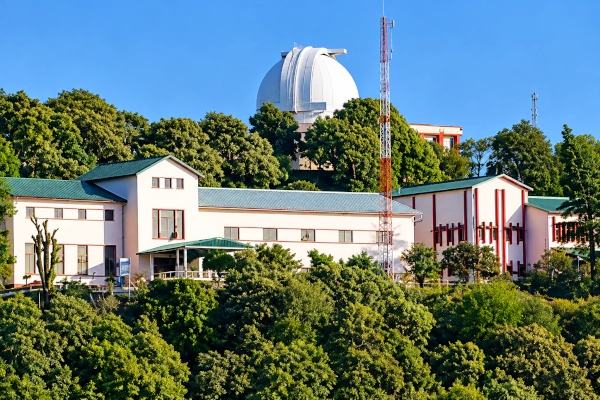
CARI Bengaluru Becomes First CCRAS Institute to Secure ISO 15189:2022 Accreditation

The accreditation confirms that CARI Bengaluru’s clinical laboratory meets globally accepted standards for accuracy, safety, and reliability in medical testing. According to the Ministry of Ayush, the laboratory now holds NABL accreditation for 50 test parameters and provides a wide range of services, including blood glucose, HbA1c, liver and kidney function tests, lipid and thyroid profiles, electrolyte analysis, and complete blood counts.

Indian Scientists Develop Temperature-Tunable Nanomaterials for Future Electronics

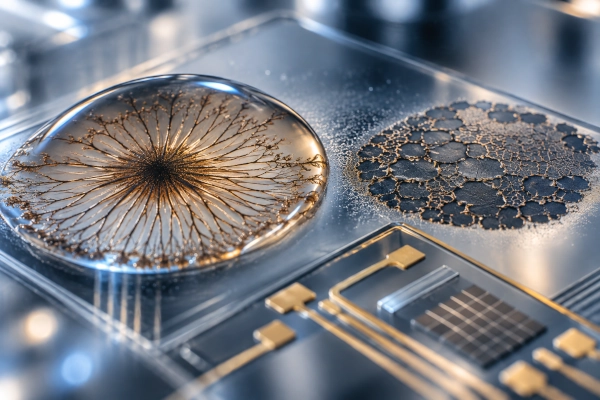
The research was carried out by a team from the Centre for Nano and Soft Matter Sciences (CeNS), Bengaluru, in collaboration with the Jawaharlal Nehru Centre for Advanced Scientific Research (JNCASR), both autonomous institutions under the Department of Science and Technology. The scientists studied naphthalene diimide, an amphiphilic molecule that can organize itself in water through supramolecular self-assembly, forming nanostructures with functional properties relevant to electronics, photonics and biomedical devices.

Scientists Develop Frog-Inspired Brain-Like Sensor That Responds to Humidity

The work was carried out by researchers at the Jawaharlal Nehru Centre for Advanced Scientific Research, an autonomous institute under the Department of Science and Technology. Unlike many existing neuromorphic systems that depend on separate sensing and memory components, this device integrates sensing, synapse-like processing and temporary information storage in one platform, drawing inspiration from the way biological sensory systems operate.

New Study Offers India A Clearer Scientific Window Into The Origins Of Farming In The Ganga Plain

The research addresses a long-standing challenge in palaeoecology and archaeology. Cereal crops such as wheat, rice, barley and millets belong to the grass family, and their pollen often looks very similar to that of wild grasses under a microscope. Because pollen preserved in sediments can reveal patterns of cultivation, deforestation and settlement across the Holocene period, the ability to reliably separate crop pollen from wild grass pollen is crucial for understanding ancient land use and human activity.

India’s First Gourami Fossil Found in Siwalik Foothills, Revealing an Ancient Freshwater World

The discovery is based on fossil otoliths, tiny calcium-carbonate ear structures that help fish with hearing and balance. According to the study, the Mohand assemblage includes otoliths from snakeheads, gobies, and gouramis, giving scientists a rare window into a freshwater ecosystem that existed in the Himalayan foreland during the Pliocene. Researchers say the combination of these fish points to a structured aquatic food web, with smaller fish serving as prey and snakeheads acting as predators.

Classical Messaging Cannot Fully Recreate Quantum Communication, Study Finds

The research was carried out by Sahil Gopalkrishna Naik and Manik Banik of the S. N. Bose National Centre for Basic Sciences, working with Mani Zartab of the Universitat Autònoma de Barcelona and Nicolas Gisin of the University of Geneva. According to the Press Information Bureau, the team examined whether quantum processes can be faithfully reproduced using only classical resources, a question tied closely to the idea of “quantum advantage.”

New TB Study Overturns Textbook Theory, Opens Possible Path To More Precise Antimicrobial Therapies

For decades, scientists believed that a protein known as the sigma factor binds to RNA polymerase to initiate bacterial transcription and then detaches once RNA synthesis moves into the elongation phase. This “sigma-cycle” had widely been considered a standard feature of bacterial gene regulation, including in TB bacteria. But the new study shows that the process is more complex and far less uniform than previously understood.

India’s Multi-Hazard Early Warning System Emerges as a Strategic Shield for National Resilience

The MHEW-DSS represents a shift from fragmented and partially manual forecasting processes to an integrated, automated and impact-based early warning architecture. According to the PIB release, more than 90 per cent of weather data collection, quality checks and integration are now automated, while over 95 per cent of numerical weather prediction model inputs are being used in forecasting.