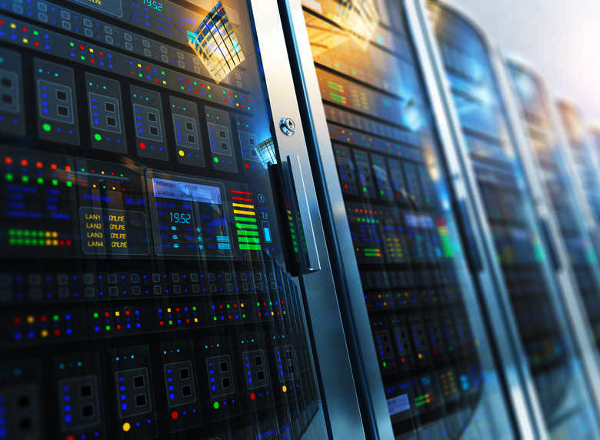
India’s rapidly expanding data centre sector is emerging as one of the country’s most important technology-led economic opportunities, with the potential to generate nearly one lakh engineering jobs in the coming years. Union Minister Dr Jitendra Singh said that India is entering a decisive phase where data centres, artificial intelligence, quantum technologies and next-generation digital infrastructure will shape not only the national economy, but also the future global technology order.
Speaking at the Special Session on “Future-Proofing India’s Data Centres: Resilient Supply Chains and Opportunities” during the Annual Leadership Summit organised by AMCHAM India, the Minister said India can no longer look at the data economy as merely a technological transition. Instead, it must be seen as a strategic national opportunity that will influence investment flows, employment, energy planning, digital sovereignty and geopolitical competitiveness over the coming decades.
According to the Minister, India’s data centre capacity is projected to expand sharply from around 1.5 GW to nearly 6.5 GW by 2030. This growth is expected to create new employment opportunities for engineers and technical professionals in areas such as artificial intelligence systems, cooling technologies, smart grids, renewable energy integration, secure digital infrastructure and advanced data management systems.
The statement is significant because data centres are no longer just storage facilities for digital information. They are becoming the foundation of the modern economy. Every sector — banking, e-commerce, defence, healthcare, education, governance, logistics, manufacturing and entertainment — now depends on secure and scalable data infrastructure. As India’s digital economy expands, the need for reliable domestic data centre capacity will also grow.
Dr Jitendra Singh described data centres as the “next oil economy”, underlining the idea that control over data, computing infrastructure and secure digital platforms will become as strategically important in the future as control over energy resources was in the industrial age. The comparison is powerful because nations that build strong digital infrastructure will be better placed to attract investments, support innovation, protect sensitive information and participate in high-value technology supply chains.
The Minister said India is now ready to emerge as a trusted global data centre hub, supported by policy reforms, private sector participation, clean energy integration and a rapidly growing innovation ecosystem. He also noted that the world is increasingly looking towards India for technology partnerships, rather than India waiting for success stories to emerge elsewhere.
This marks an important shift in India’s technology confidence. With the rise of artificial intelligence, 6G, semiconductors, digital public infrastructure and quantum technologies, India is positioning itself as a major player in the next phase of global technological development. Data centres will be central to this transformation because AI models, cloud services, digital payments, government platforms and enterprise systems all require massive computing and storage capacity.
The Minister also linked the data centre opportunity with India’s wider frontier technology push. Referring to the National Quantum Mission, he said India has already achieved more than half of its planned targets in less than half the stipulated time. Against the target of establishing 2,000 kilometres of secure quantum communication infrastructure over eight years, India has already crossed 1,000 kilometres within three years.
This progress is important because quantum communication, cybersecurity and high-performance computing will increasingly overlap with the data centre industry. Future data centres will not only need energy efficiency and storage capacity, but also stronger security systems, resilient networks and advanced communication technologies. India’s progress in quantum infrastructure can therefore support the creation of a more secure digital ecosystem.
Dr Jitendra Singh also pointed to several policy measures taken by the government to prepare India for future technologies and strategic industries. These include long-term tax incentives for foreign cloud service providers, the National Research Foundation, the Semiconductor Mission and the opening up of sectors such as space and nuclear energy to private participation.
The larger message is that India’s technology ambitions are no longer limited to software services. The country is now building the physical, scientific and industrial base needed for a deeper digital economy. Data centres, semiconductor manufacturing, quantum communication, clean energy, cloud services and AI infrastructure are part of the same larger national architecture.
However, the growth of the data centre sector will also require careful planning. Dr Jitendra Singh said India’s future in this sector will depend on resilient supply chains, sustainable energy systems, advanced telecom connectivity, subsea cable infrastructure, smart cooling solutions and coordinated policy support across multiple sectors.
Energy will be one of the biggest factors in this expansion. Data centres require large amounts of electricity and efficient cooling systems. If India can combine data centre growth with renewable energy, smart grids and advanced cooling technologies, it can build a model that is both economically competitive and environmentally responsible. This is where India’s clean energy transition and digital infrastructure ambitions can reinforce each other.
The employment potential is also substantial. The expected creation of nearly one lakh engineering jobs shows that the sector will require a wide range of technical skills — electrical engineers, data engineers, AI infrastructure specialists, cooling system designers, cybersecurity professionals, renewable energy experts, network engineers and operations managers. This can create new career pathways for India’s engineering workforce.
For global companies, India offers a unique combination of scale, talent, digital adoption and policy support. The country has one of the world’s largest internet user bases, a fast-growing digital payments ecosystem, expanding cloud adoption, and strong demand for AI and enterprise technology. A stronger domestic data centre base can help India attract more global cloud providers, hyperscale operators and technology investors.
The government’s emphasis on partnership with industry is also crucial. Data centre growth cannot be achieved by government action alone. It requires close coordination between policymakers, private companies, infrastructure providers, renewable energy firms, telecom operators, research institutions and state governments. The Minister’s remarks suggest that India wants to create an enabling environment where public policy and private investment work together.
Overall, India’s data centre expansion represents a major opportunity at the intersection of technology, infrastructure, employment and national strategy. If the country can build resilient supply chains, ensure clean power, improve connectivity and support innovation, it can become one of the world’s most dependable digital infrastructure destinations.
The message from the PIB release is clear: India’s data centre economy is not just about servers and storage. It is about jobs, sovereignty, investment, AI readiness, quantum security, clean energy and future competitiveness. As the digital world becomes more data-driven, India’s ability to build and control advanced data infrastructure may become one of the key pillars of its rise as a global technology power.
You may also like
-
SatLeo Labs’ TAPAS-1 Reaches Orbit, Advancing India’s Private Thermal-Imaging Capability
-
TakeMe2Space’s MOI-1A Reaches Space on Falcon 9 Transporter-18 Mission
-
Bank of Baroda Enters Pension Fund Management After PFRDA Appointment
-
SCI and India’s Push for a Larger Indigenous Maritime Fleet
-
Hindustan Shipyard to Serially Produce Indigenous JAYA Autonomous Underwater Vehicle After CSIR-NIO Technology Transfer
