Heritage

News, articles and Essays on Sanatana Dharma, Hinduism and Indian way of life.

1,000-Year-Old Big Temple’s Consecration in February

According to Kudavayil Balasubramanian, temple researcher and epigraphist, as per manuscripts available at Thanjavur Rajah Serfoji two Saraswathi Mahal Library and inscription in the Kalasam on the temple, kumbabishekam. was performed to the temple during Maratta period by Rajah Serfoji one (1729 A.D) and by his great grandson Sivajindra Chatrapathi (1843 A.D).

Chintamani Ganapati – Applied Indology

Chintamani is a the elephant-headed god of wisdom form of Lord Ganesha and is one of Ashtavinayakas among the eight forms of Ganesha. All the idols of Ashtavinayaka are Swayambhu / self originated. All the the eight revered shrines of Ganesha are located in Maharashtra. Village of Theur is located in the Haveli taluka of Pune district, near the confluence of river Bhima and the conjoint river Mula-Mutha.

Kala Bhairava – Applied Indology

Kala Bhairava is the shortened form of Kaala Shakti Bhairava, the Lord who controls the Shakti of Kala – the Power of Time. A Fearsome Destroyer emanation of Lord Shiva, Whose name translates to the Terrifying Blackness of Time-Death The Sanskrit word ‘Kala’ simultaneously meaning ‘Black’, ‘Death’, and ‘Time’.

Explained: How is A Language Declared ‘Classical’ in India

Currently, six languages enjoy the ‘Classical’ status: Tamil (declared in 2004), Sanskrit (2005), Kannada (2008), Telugu (2008), Malayalam (2013), and Odia (2014). The University Grant Commission (UGC) also awards research projects for promoting these languages. The UGC released funds worth INR 56.74 lakh in 2016-17 and INR 95.67 lakh in 2017-18, the Ministry of Culture said.

Black-Necked Crane Arrives in Nyamjang Chhu

The cranes are revered by the Monpas as the embodiment of the 6th Dalai Lama, Gyalwa Tsangyang Gyatso, who was born in Tawang in 1683. He has written about the majestic bird in poems, and has used it as an imagery of his return. This year’s first black-necked crane arrived in its wintering site in Pangcheng valley, along the Nyamjang Chhu river, in Tawang district, on 25 December.

Singapore and Its Probable Chola Connection!

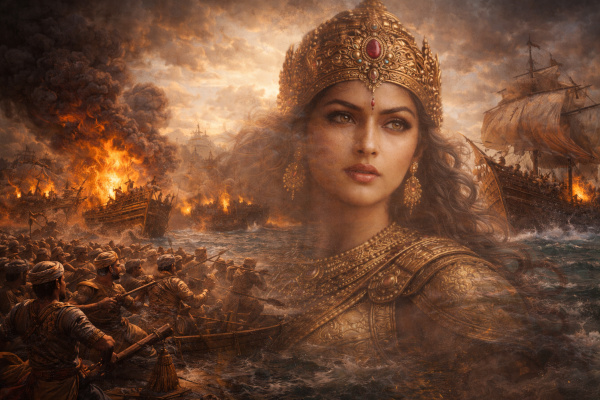
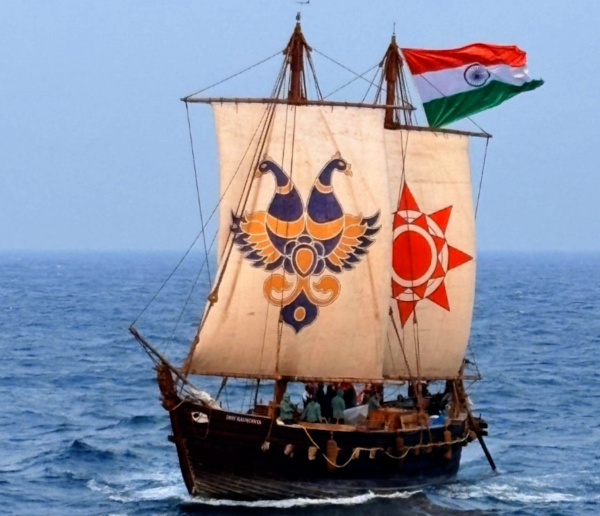
Another mesmerising finding from Sinclair’s study of the Singapore Stone, which was actually blown up by the British in 1843 for smoothening of their passage through the Singapore River, is: Singapore had ‘Tamil connections’ built through the ‘Strait of Singapore as far back as 1,000 years ago.’