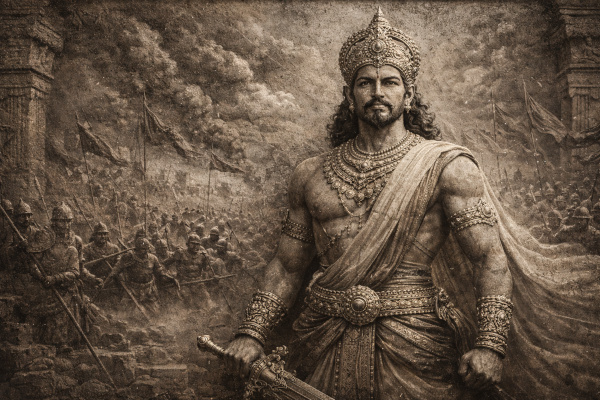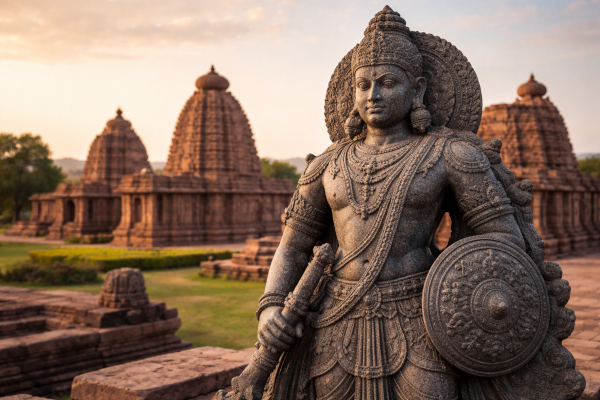
These Ancient Indian Martial Arts can be Traced Back 3000 Years
Here is a list of Ancient Indian martial arts that every Indian should know about and also try learning as it is a good way to self-defense and more
News, articles and Essays on Sanatana Dharma, Hinduism and Indian way of life.
Here is a list of Ancient Indian martial arts that every Indian should know about and also try learning as it is a good way to self-defense and more
Kodandera Madappa Cariappa aka K. M. Cariappa who was the first Field Marshal of the Indian Army and a legend who inspired many. Despite being the most decorated General of the Indian Army, few Indians know about the legendary Field Marshal whose heroism and patriotism blazed a trail in the Indian Armed Forces.
The word Gayatri also means “she who protects the singer” (from gai, to sing, and trai, to protect). It has its origin in the Sanskrit phrase Gayantam Triyate iti, and refers to that mantra which rescues the chanter from all adverse situations that may lead to mortality. Thus, Gayatri is a name of the Divine Mother, she who protects her children and leads them toward self-realization.
Rudra Literally means that “Fire comes from the Bowels of the earth spreading God’s Grace all over the world”. The word Rudra is an ancient Vedic name for God, meaning the roarer, the ruler of storms and wind, the wild, the mightiest of the mighty. These attempts to describe relate to the tremendous and inconceivable power out of which galaxies are born, stars collapse, seasons move and your mind experiences desire.
The Independence day in India celebrates the birth of the nation and remembers the people who brought freedom to the country. Meanwhile, the Republic day celebrates our State and people who maintain the government. Thus, the hero of the Independence day is the Prime Minister of India while that of the Republic day is the President – who heads the State of India.’
Urvashi means she who can control heart of others,”Ur” means heart and “vash” means to control. Earliest Vedic texts suggest, it was also the name for the dawn goddess. In the Vedas, the apsaras are water nymphs where in apsa means water, the one going in the waters or between the waters of the clouds. Often married to the gandharvas or or temptresses of Rishis. There are two types of Apsaras, namely, laukika (wordly) and daivika (divine). Thirty-four nymphs / Apsaras are specified of the first type and ten of the second type. These celestial beings are also known as vidyadhari or tep apsar.
Despite a fracture in his arm, Major Somnath fought with bravery. He led his battalion to Budgam in Kashmir in October 1947, to thwart Pakistani infiltration and lost his life. His last message to the Brigade Headquarters was ‘The enemy is only 50 yards from us. We are heavily outnumbered. We are under devastating fire. I shall not withdraw an inch but will fight to the last man and the last round.’
Subhash Chandra Bose Jayanti or birth anniversary is being celebrated across India will full of fervour and zest. A revolutionary freedom fighter, Bose was a valiant leader who refused to bow down to Britishers during East India company’s rule over India that saw him rise to incredible powers. He created the famous slogan ‘Jai Hind’ and was first to address Mahatma Gandhi as ‘Father of the Nation’. Bose’s birthday commemorates his unmatched patriotism for India.
Rishi Atri is one of the Manasputra of Brahma. Rishi Atri originated from the eyes of Lord Brahma and the Vishnu’s Dharma. Also known as ‘the Devourer’, Atri Rishi is an embodiment of the power of detachment. Rishi Atri is the Saptarishi in the seventh, i.e. the present Manvantara.
Shiva and Parvati observed Arjuna’s devotion and they felt compelled to grant him his desire. However, Shiva was not about to impart the knowledge of His potent Asthra / missile to the human without first testing him for his worthiness. Lord Shiva disguised himself as a Kirata Chief ( Kirata is a clan of mountain dwellers), and asked Goddess Parvati and some of his Ganas to dress up as Kirata women.