Suvela Mountain and the Military Science of High Ground: How Rama Turned Terrain into Intelligence Before the Siege of Lanka
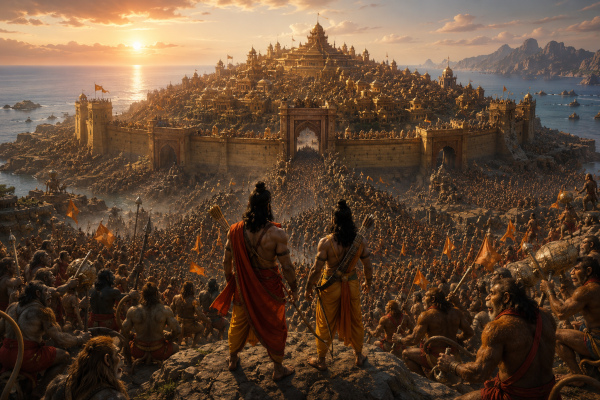
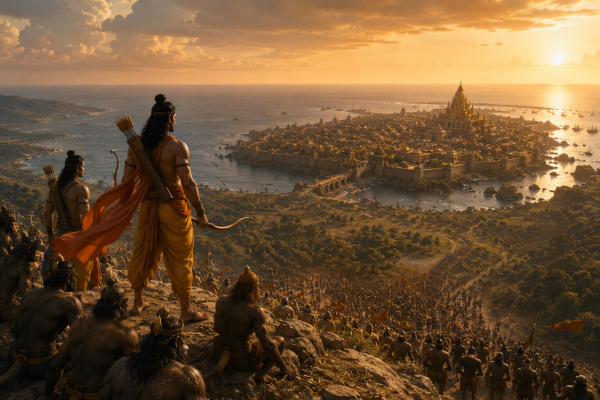
When Rama’s army reached Lanka, the war had already passed through its first great test.
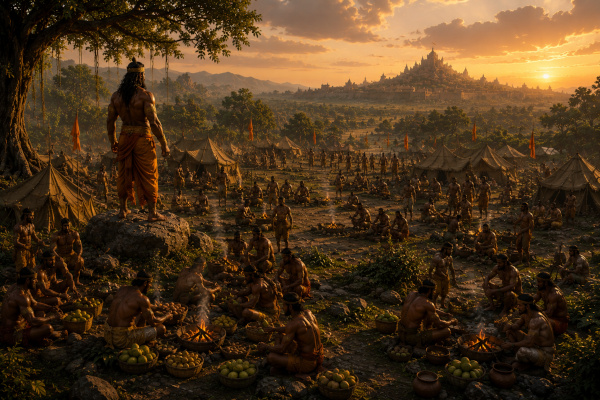
This is the essence of military logistics. Courage carries warriors into danger, but supply keeps them there. A thirsty army becomes weak before the enemy even appears. A hungry army loses speed, discipline and concentration. A force that camps in the wrong ground exposes itself to confusion, disease, panic and surprise. The Ramayana recognises this with striking simplicity. Before the arrows fly and the maces fall, the army must be placed where life can be sustained.
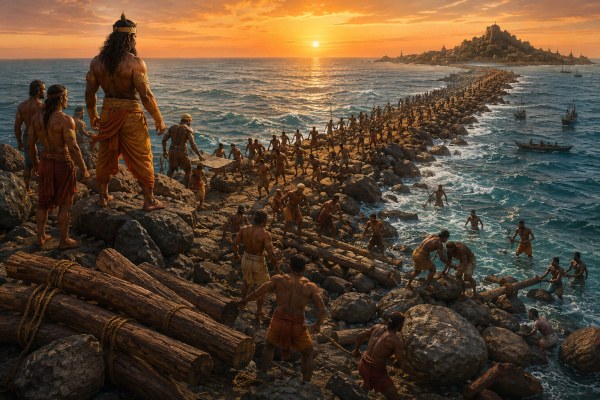
The ocean before Rama was more than water. It was a wall without gates, a
The Vanara force had already achieved the impossible by crossing the ocean through engineering, organisation and morale. Ravana needed to know whether this army was a wild mass of forest warriors or a disciplined invasion force guided by intelligence, leadership and purpose.
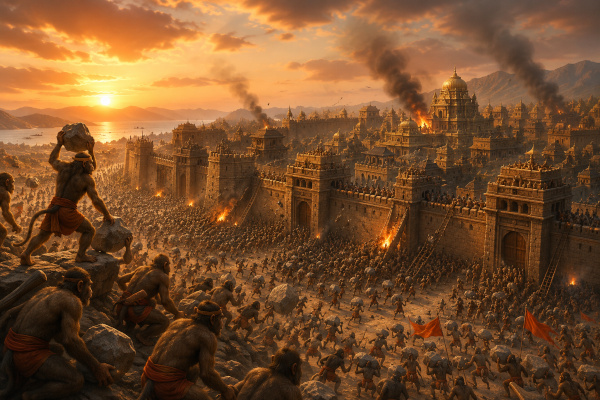
By the time Rama’s army reaches Lanka, the campaign has already achieved something extraordinary. The ocean has been crossed. The bridge has been built. The Vanara host has arrived at the doorstep of Ravana’s island fortress. But reaching Lanka is only the beginning. The real challenge lies ahead
In the Yuddha Kanda of the Ramayana, Vibhishana’s arrival in Rama’s camp is one of
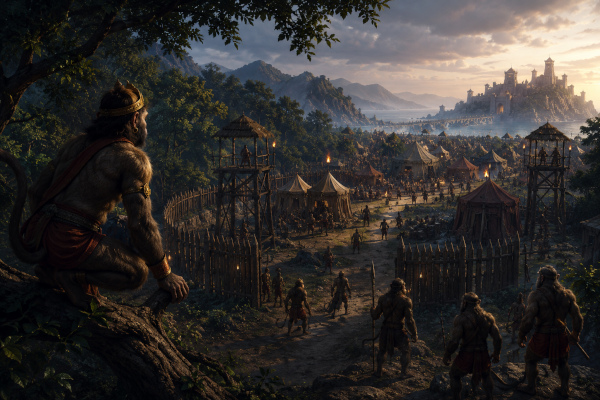
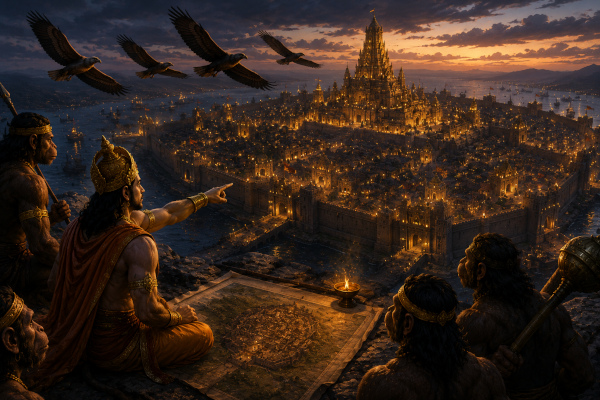
One of the major war tactic in the Ramayana is long-range reconnaissance. Before Rama’s army
Modern India follows a similar strategic logic, though in a very different geopolitical setting. It is not pretending that self-reliance means isolation. Instead, India is building partnerships to fill capability gaps while steadily strengthening its own base.
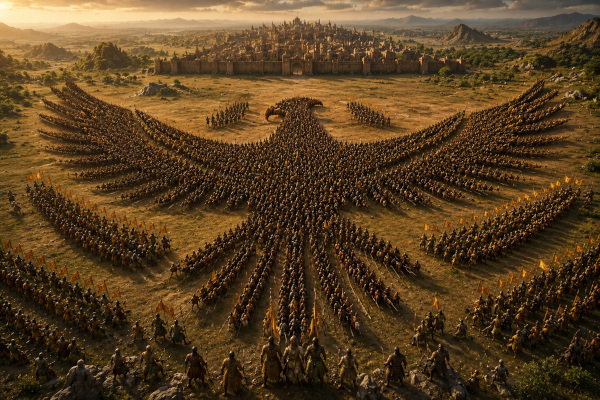
The original Mahabharata passages describe the formation as a firm, fierce, foremost and impenetrable circular array formed by Drona. Abhimanyu openly says he has been taught by Arjuna how to penetrate and strike such an array, but he also admits that if danger overtakes him, he does not know how to come out. This single admission gives the episode its entire military depth: Abhimanyu has entry knowledge, but lacks complete exit doctrine.
The epic describes the war as a clash of enormous scale, with eighteen Akshauhinis gathered at Samanta-panchaka and destroyed in the conflict. One Akshauhini itself was counted as 21,870 chariots, 21,870 elephants, 65,610 horses and 109,350 foot soldiers, giving the war a military scale that naturally invites comparison with modern corps-level and theatre-level planning.