Defense

News , articles and essays on Indian Defense

Param Robotic Mule: Indian Army’s High-Altitude Logistics Takes a Four-Legged Leap

Param belongs to a growing class of Multi-Utility Legged Equipment, or MULE-type systems. Unlike wheeled vehicles, a four-legged robotic platform can move across uneven ground, climb obstacles, negotiate slopes, enter narrow spaces and operate in areas where normal vehicles cannot go. Such a system can be used for last-mile supply, surveillance, reconnaissance, perimeter security, mine or IED detection, sensor carriage and even emergency support in dangerous zones. The key advantage is simple: the robot can go first, carry the load, scan the route and reduce risk to soldiers.


West Bengal Highway Handover Gives Strategic Boost to India’s Chicken’s Neck Corridor

The seven stretches were earlier under the national highway wing of the West Bengal Public Works Department. According to the press note cited by PTI, the handover proposals had remained pending for nearly a year despite repeated requests from the Union Ministry of Road Transport and Highways. The state’s latest approval now allows central agencies to begin development work without the earlier administrative blockage.

Indian Army Women Doctors Save Passenger Mid-Air, Show the Human Face of India’s Peacekeeping Mission

The incident took place while the aircraft was flying over Africa at around 30,000 feet. A passenger reportedly developed seizure-like symptoms, suspected to have been caused by hypoglycaemia, a sharp fall in blood sugar levels. In an aircraft cabin, such a situation can quickly become dangerous because there is no immediate hospital access, medical resources are limited, and any delay can force an emergency diversion.

ICEYE’s India Satellite Manufacturing Hub Could Push the Country Deeper Into Space-Based Intelligence

India’s private space manufacturing ecosystem is set to receive a major boost, with Finnish space-intelligence company ICEYE preparing to establish a satellite production facility in the country. The proposed unit is expected to become the company’s first manufacturing hub in the Asia-Pacific region and will focus on small satellites used for defence, surveillance, environmental monitoring and disaster-response applications.

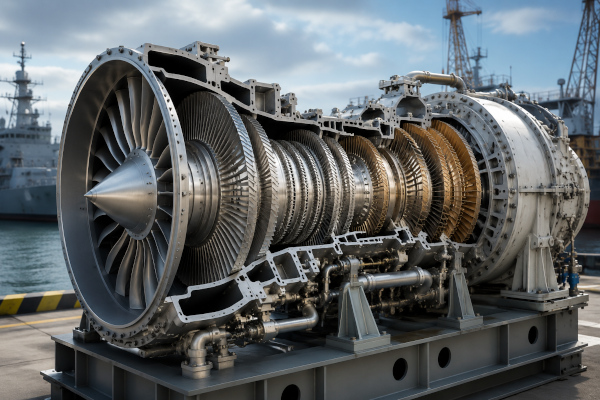
Bharat Forge’s Visakhapatnam Marine Gas Turbine Hub Could Become a Turning Point for India’s Naval Self-Reliance

The project is strategically important because marine gas turbines are among the most critical systems on modern warships. They provide the high-power propulsion required by frontline naval platforms, and their maintenance, repair and overhaul cycles directly affect fleet availability. For a blue-water navy, propulsion is not a background engineering issue; it is the heart of operational readiness. A destroyer, frigate or carrier-support vessel may carry advanced missiles, radars and combat systems, but without reliable propulsion, its combat value is sharply reduced.

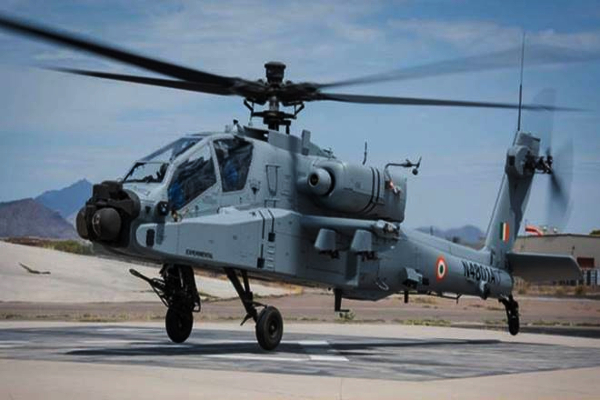
US Clears $428 Million Support Package for India’s Apache Helicopters and M777 Howitzers

The approvals come through the U.S. Foreign Military Sales system, a government-to-government framework used for transferring defence articles, services and training to partner countries. The Defense Security Cooperation Agency explains that FMS is administered by the U.S. government and includes defence services, training, support and long-term programme management, not merely the transfer of hardware.

Weapons, Astras and Warrior-Systems in the Mahabharata: An Ancient Indian Defence Study

The ordinary weapons of the epic represent different combat functions. The bow gave reach, precision and speed. The mace gave crushing power in close combat. The sword served as a secondary weapon when distance collapsed. The spear or lance gave thrusting and anti-cavalry value. The chariot served as a mobile fighting platform. The elephant acted as a shock platform, while cavalry enabled movement, pursuit and screening. Together, these weapons formed the ancient equivalent of combined arms.

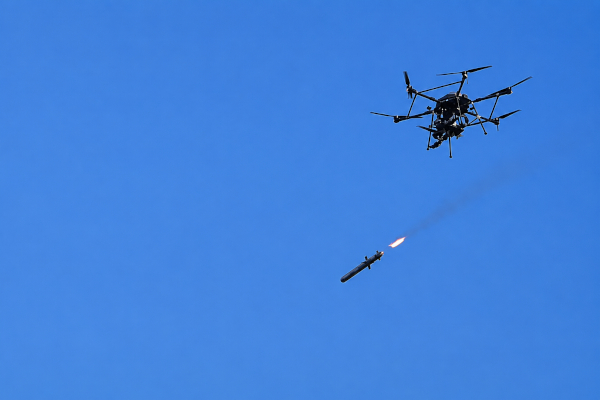
DRDO Completes ULPGM-V3 Trials, Marking Major Step for UAV-Launched Precision Weapons

The ULPGM-V3 is significant because it gives unmanned aerial platforms the ability to engage multiple categories of targets with precision. In the air-to-ground role, the missile has been validated for anti-tank missions. In the air-to-air role, it is designed to engage drones, helicopters and other airborne targets, making it relevant for both battlefield strike missions and counter-air threats in the lower airspace.

Rajnath Singh Meets Vietnam President To Lam as India-Vietnam Defence Partnership Gains New Momentum

According to News On AIR, Singh called on President Tô Lâm and reaffirmed India’s commitment to further deepen defence cooperation with Vietnam. He described defence ties as a key pillar of the India-Vietnam Enhanced Comprehensive Strategic Partnership, underlining that the relationship rests on mutual trust, shared values, security cooperation and common interest in regional stability.

Categories