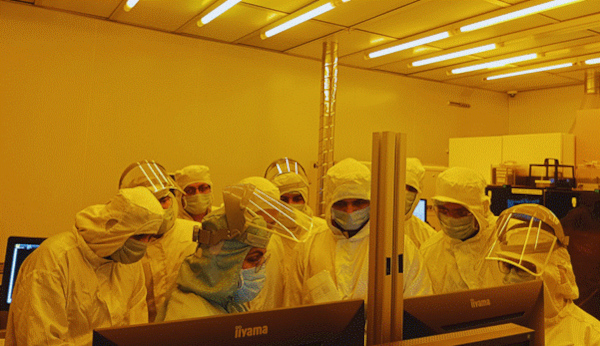
The Union Cabinet, chaired by Prime Minister Narendra Modi, on Wednesday approved Semicon 2.0, a ₹1.27 lakh crore programme aimed at accelerating the growth of India’s semiconductor design and manufacturing ecosystem.
The initiative builds on the progress of the India Semiconductor Mission (ISM) launched under Semicon 1.0 and seeks to establish a comprehensive ecosystem covering chip design, fabrication, packaging, research and talent development. The government said the programme reflects its long-term commitment to positioning India as a major player in the global semiconductor industry.
Semicon 2.0 is structured around six key focus areas. The first pillar aims to strengthen semiconductor design by supporting the development of indigenous chip intellectual property (IP), advanced chip designs and complete system solutions. More than 105 startups are already engaged in chip design, and the new programme seeks to expand this ecosystem further.
The second pillar focuses on encouraging domestic production of semiconductor manufacturing equipment, specialty materials, chemicals and industrial gases. According to the government, this will help create a resilient supply chain while promoting precision manufacturing in the country.
The third pillar seeks to attract additional investments in semiconductor fabrication facilities, including silicon fabs, compound semiconductor fabs, discrete component fabs and display fabrication units. With India’s first semiconductor fabrication plant expected to be commissioned in 2028, the government believes the country is emerging as an attractive destination for global semiconductor manufacturers.
The fourth pillar is aimed at expanding the Assembly, Testing, Marking and Packaging (ATMP) and Outsourced Semiconductor Assembly and Test (OSAT) industry. Officials said the government will encourage advanced packaging technologies to strengthen India’s role in the global semiconductor value chain.
Research and development form the fifth pillar of the programme. While current projects focus on semiconductor technologies ranging from 28nm to 110nm, Semicon 2.0 will support research into more advanced technology nodes through collaboration with leading research institutions in India and abroad.
The sixth pillar focuses on skill development. At present, 315 universities offer semiconductor chip design training using industry-standard Electronic Design Automation (EDA) tools, with nearly 68,000 students already trained. The programme aims to expand academic training while increasing industry participation in clean-room operations, fabrication processes and other specialised skills.
The government said Semicon 2.0 will support economic growth across multiple sectors, improve supply-chain resilience, strengthen national security and enhance India’s technological capabilities in critical industries.
Highlighting the progress under Semicon 1.0, the government said 12 semiconductor manufacturing projects with a cumulative investment of over ₹1.64 lakh crore have been approved. These include one silicon fabrication plant, one silicon carbide fabrication unit, one integrated gallium nitride (GaN) Micro LED display fabrication facility and nine semiconductor packaging units catering to sectors such as consumer electronics, automobiles, telecommunications, industrial electronics and aerospace.
Among these projects, Micron, Kaynes and CG Semi have already commenced commercial production, while another manufacturing unit is expected to begin operations in 2026.
On the design front, financial support has been approved for 24 semiconductor design projects undertaken by startups and MSMEs. In addition, 105 startups and MSMEs have been provided access to industry-standard EDA tools for developing chips and System-on-Chip (SoC) solutions for applications including satellite communications, drones, surveillance systems, Internet of Things (IoT) devices, artificial intelligence, telecommunications equipment and smart meters.
The government said these projects are at various stages of development and are expected to move towards commercial deployment after successful prototyping, further strengthening India’s semiconductor ecosystem.
Source:PIB
You may also like
-
AM Intelligence Orders 20,000 NVIDIA Rubin GPUs as India’s AI Compute Build-Out Accelerates
-
Japan’s Semiconductor Companies Deepen India Footprint as Chip Ecosystem Advances
-
India and UAE Explore New Avenues to Expand Trade, Investment and Business Cooperation
-
GalaxEye Advances 30-Satellite OptoSAR Constellation After Securing US Patent
-
TDB Backs BigEndian Semiconductors with ₹130 Crore for Indigenous VeerAI Vision Chip
