Kautilya

India Trains Myanmar Officers in UN Peacekeeping, Reinforcing Defence Diplomacy in Naypyidaw

India’s Ambassador to Myanmar, Abhay Thakur, highlighted India’s long role in humanitarian and peacekeeping missions, linking the training initiative to the wider goal of global stability. He also underlined the historical, cultural and geographical closeness between India and Myanmar, noting that Myanmar sits at the intersection of India’s Neighbourhood First, Act East and Indo-Pacific policy priorities.

Rudra Barrel-Launched Loitering Munition: India’s Next Step Toward Smart Artillery and Deep Precision Strike

The Rudra barrel-launched loitering munition is an Indian defence system developed by Machfly Aerospace, an Indian aerospace start-up associated with IIT Jammu. According to Machfly’s own description, Rudra is designed as a barrel-launched loitering munition that can be deployed from Pinaka and other multi-barrel launch systems, giving artillery units a new precision-strike option beyond conventional rockets.

India Rises to Third Globally in Installed Renewable Energy Capacity, but Supply Chain Gaps Remain

News On Air reported that India’s non-fossil fuel capacity has crossed 50 percent of total installed capacity, reaching 262.7 gigawatts. It also noted that solar and wind energy account for the bulk of recent additions. Official MNRE figures released earlier said India had installed 283.46 GW of non-fossil fuel capacity as of March 31, 2026, including 274.68 GW from renewable energy and 8.78 GW from nuclear power.

India’s Genome Is Not Western: GenomeIndia Study Calls for India-Specific Precision Medicine

The GenomeIndia project is one of the country’s most ambitious scientific efforts to map the genetic diversity of Indian populations. Funded by the Department of Biotechnology, the project aims to build a comprehensive catalogue of genetic variations that reflect India’s unique population structure. The official GenomeIndia portal states that 20,000 samples have been collected from 83 diverse populations, while whole genome sequencing has been completed for 10,000 samples.

India, Russia to Review Bilateral Agreements as Jaishankar and Lavrov Meet Ahead of BRICS Ministers’ Summit

Multilateral cooperation will form another key part of the dialogue. India and Russia are expected to discuss coordination within the United Nations, BRICS and G20, where both countries have often advocated a more multipolar global order and reforms in international governance. The timing is significant because India is hosting the BRICS Foreign Ministers’ Meeting immediately after Lavrov’s bilateral engagement with Jaishankar.

Trinidad and Tobago Becomes First Caribbean Nation to Adopt India’s UPI Platform

The adoption of UPI is significant because it brings India’s globally recognised digital payment infrastructure to the Caribbean. UPI has transformed everyday transactions in India by enabling fast, seamless and low-cost payments, and its international expansion is increasingly becoming a part of India’s technology partnership with friendly nations. For Trinidad and Tobago, the rollout could support easier digital payments, strengthen financial connectivity and open new opportunities for fintech cooperation with India.

India Begins First Good Governance Training Programme for Seychelles Civil Servants at NCGG Mussoorie

The inaugural batch includes 29 senior officials from Seychelles, including Directors General and officers from key sectors such as defence, information technology, finance, judiciary, education, public administration and the Office of the President. The delegation is led by Alex Henderson, Deputy Cabinet Secretary for Policy Affairs in the Cabinet Office, Office of the President of Seychelles.

AERB Clears Restart of Tarapur Unit-2 After Major Refurbishment and Safety Upgrade

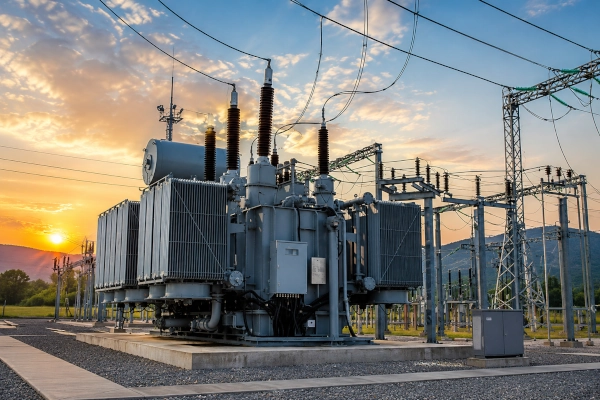
Tarapur Unit-2 is part of the historic TAPS Units 1 and 2, India’s first nuclear power reactors based on the Boiling Water Reactor design. Both units began commercial operation in 1969, making them among the oldest operating commercial nuclear power units in Asia. The restart clearance is therefore significant not only as a technical achievement, but also as a demonstration of India’s ability to extend the life of legacy nuclear assets through modern safety upgrades and strict regulatory review.

India’s Mineral Sector Crosses Major Milestone With 101 Auctioned Blocks Becoming Operational

The milestone also points to the impact of mining-sector reforms introduced over the past decade. Since 2015, India has shifted towards a more transparent and competitive auction-based system for allocating mineral resources. The Ministry said that FY 2025–26 recorded the highest-ever annual performance under the auction regime, with 212 mineral blocks auctioned in a single financial year, showing growing momentum in the country’s mineral allocation framework.

India Pushes Nationwide EV Charging Rollout Under PM E-DRIVE Scheme at Bengaluru Conference

The PM E-DRIVE Scheme, formally known as the PM Electric Drive Revolution in Innovative Vehicle Enhancement Scheme, has a total outlay of ₹10,900 crore and is aimed at accelerating EV adoption, creating charging infrastructure and strengthening India’s electric vehicle manufacturing ecosystem. The scheme covers demand incentives and infrastructure support for electric two-wheelers, three-wheelers, buses, trucks, ambulances and other emerging EV segments.