Kautilya

IIT Madras Opens Advanced Maritime Research Facility to Power India’s Ship Design and Ocean Engineering Push

The core of the new facility is a hybrid wind and circulating water channel system. It provides a stable, uniform-flow test section for hydrodynamic investigations involving ship models, propellers, bluff bodies, underwater structures, offshore systems and marine vehicles. In simple terms, the tunnel allows engineers to recreate and study water-flow behaviour around maritime objects before those designs are scaled up for real-world use.

Sri Lanka Opens Free Tourist ETA for Indians as Island Nation Sharpens Its Tourism Recovery Strategy

The decision is significant for Indian travellers because Sri Lanka is one of the most accessible international destinations from India. Short flight times, cultural familiarity, Buddhist and Ramayana-linked heritage circuits, beaches, wildlife, Ayurveda, hill-country landscapes, casinos, weddings, MICE tourism and weekend luxury travel all make the island a natural overseas getaway for Indian families, young travellers and business groups.

India Opens Single-Window Investor Support Portal to Strengthen Semiconductor Ecosystem

Under the Semicon India Programme, the government has so far approved 12 fabrication and packaging projects, along with 24 semiconductor design projects. This means the country’s semiconductor strategy is expanding across multiple layers of the value chain: chip design, fabrication, assembly, testing, packaging and ecosystem support. The new portal is meant to act as a bridge between policy ambition and investor execution.

Indian Startup Red Balloon Aerospace Sends Experimental Balloon Platform 25 km Above Earth, Opening a New Near-Space Chapter

The launch took place from Indira Gandhi Stadium in Vijayawada, Andhra Pradesh. The platform rose into the stratospheric zone, a region above normal aircraft operations and far below satellite orbits. This altitude band, roughly between 20 and 50 kilometres, is increasingly seen as a valuable “near-space” layer because it offers wide-area visibility, long dwell time and flexible deployment. Aircraft usually operate below 10 kilometres, while satellites operate far higher, leaving the stratosphere as a powerful but underused operating space.

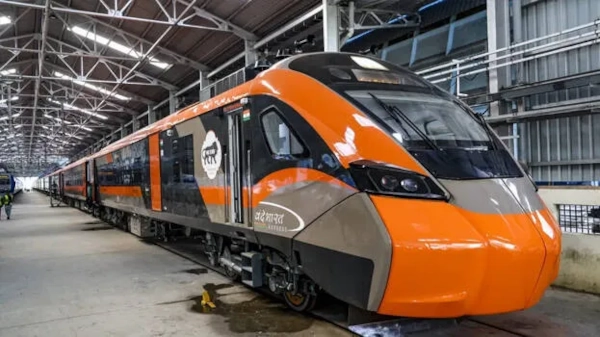
India’s First Indigenous Hydrogen Train Set to Roll Out on Jind–Sonipat Route, Marking a Clean Rail Milestone

The project places India among a small group of nations actively exploring hydrogen-powered rail mobility, alongside countries such as Germany, Japan, China and the United States. Hydrogen rail technology is still at an early stage worldwide, making India’s move significant both as a technological experiment and as a statement of intent in sustainable transport.

India Takes Yogasana to the World Stage with First Global Championship and Olympic Ambition

The championship is significant because it changes the frame around yoga. For decades, yoga has been understood globally as a path to physical health, mental balance and inner discipline. Yogasana now adds another dimension: athletic performance. In this format, participants compete through postures, balance, flexibility, control, endurance, precision and presentation under standardised rules. The move gives yoga a sporting identity without separating it from its civilisational roots.

German Agritech Firm B+H Solutions Bets on India’s Nano-Fertiliser Future with ₹11.12 Crore Investment

The company operates in India through Dr Heinisch Agro Solutions India Private Limited, and its latest expansion plan comes after securing Fertiliser Control Order registration for its AgroCopper nano-copper product. This regulatory approval is significant because fertiliser products in India need formal recognition before they can be marketed at scale. The firm is also seeking approval for nano iron, which suggests that its India strategy is not built around a single product but around a wider portfolio of metal-based nano crop inputs.

India Sets Its Textile Ambition: From Cotton Fields to a $100 Billion Export Powerhouse

India already has a strong foundation. It is the sixth-largest textile exporter in the world, contributes around 2.3% to GDP, accounts for nearly 12% of India’s total export earnings, and supports close to six crore livelihoods directly and indirectly. This makes textiles one of the rare sectors where India’s export ambition is directly linked to mass employment, rural incomes, MSMEs, women’s work participation and industrial growth.