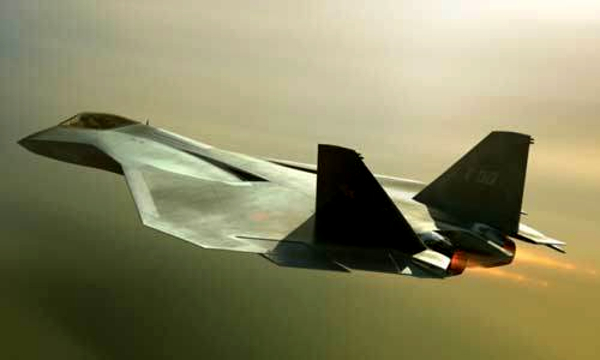
India’s drive to acquire sovereign fighter-engine technology has received a major boost as Britain’s Rolls-Royce positions its proposed powerplant for the Advanced Medium Combat Aircraft with an offer centred on deep technology transfer, Indian intellectual-property ownership and domestic development of critical propulsion technologies.
Fresh details emerging indicate that the British proposal envisages full transfer of technology for the new combat engine being offered to India. The arrangement would be substantially different from conventional licensed production, under which an Indian manufacturer assembles an overseas-designed engine without gaining complete access to the technology required to independently modify or evolve it.
Rolls-Royce had already taken a significant step on August 14 by announcing a strategic partnership with Reliance Industries to jointly offer capabilities for the design, development, manufacturing and delivery of a sovereign indigenous combat engine for India’s AMCA programme.
The companies are also exploring the creation of a dedicated Aerospace Gas Turbine Complex in India. The proposed facility is intended to build end-to-end Indian capability covering engine design, development, manufacturing, testing, series production and through-life support.
For India, the central issue is not simply where the engine is manufactured. New Delhi’s long-term objective is to acquire the technological knowledge and design authority necessary to develop, modify, upgrade and eventually create advanced combat-aircraft engines without remaining dependent on foreign original equipment manufacturers.
The Rolls-Royce proposal is therefore understood to involve particularly deep access to critical engine technologies, including high-temperature materials and the technologies associated with single-crystal turbine blades. Such components operate in some of the hottest and most demanding areas of a modern turbofan and constitute one of the major technological barriers to developing high-thrust fighter engines.
The proposed engine is expected to fall in the 120-kN-plus thrust class, appropriate for later variants of the twin-engine AMCA. Reports surrounding the British offer indicate that the architecture could provide scope for substantially higher thrust as the engine evolves, although final specifications would depend on India’s requirements and the eventual development agreement.
Another important element of the British proposal is the question of intellectual property. The reported framework would allow India to retain rights associated with the jointly developed engine rather than merely receiving manufacturing drawings for a foreign-owned powerplant. That distinction would determine how independently India could subsequently modify the engine, develop higher-thrust variants and apply the technology to future combat-aircraft programmes.
Rolls-Royce’s proposal also benefits from an established government-to-government technology framework between India and the United Kingdom. The India-UK Vision 2035 and the bilateral Defence Industrial Roadmap specifically identify Jet Engine Advanced Core Technologies, or JEACT, as an area for advanced defence cooperation and co-development.
India and the UK have been discussing combat-aircraft propulsion cooperation for several years. Their collaboration increasingly aims to move beyond component manufacturing towards technologies associated with the core of a high-performance military turbofan.
The latest initiative also marks the emergence of Reliance Industries as a potential major participant in India’s military aero-engine ecosystem. Under its partnership with Rolls-Royce, Reliance would contribute manufacturing scale, industrial execution and domestic infrastructure while the British company contributes decades of advanced propulsion expertise.
India’s requirement for a genuinely indigenous fighter engine has become increasingly important as the AMCA programme advances. Initial AMCA aircraft are expected to rely on an existing foreign engine, while the more capable later configuration is intended to transition to a substantially more powerful powerplant developed through an international partnership with extensive Indian participation.
The strategic importance extends well beyond the AMCA itself. Mastery of hot-section materials, compressors, turbines, combustion systems, engine controls and advanced manufacturing processes could provide India with the technological foundation for future fighter engines, unmanned combat aircraft and other high-performance aerospace propulsion systems.
You may also like
-
Indian Navy Vice Chief Inspects Japan’s Mogami-Class Stealth Frigate as India-Japan Shipbuilding Cooperation Expands
-
India and Russia Explore Joint Icebreaker Construction as Maritime Industrial Cooperation Expands
-
Philippine Marine Wargames Reportedly Show BrahMos Can Penetrate Chinese Destroyer Air Defences
-
Safran Signs 18 Agreements with Indian Aerospace Suppliers, Expanding Make in India Manufacturing Partnerships
-
Indian Army’s Vajra Corps Certifies First Batch of Drone Operators, Strengthens Battlefield Surveillance
