Kautilya

How The BrahMos Missile Has Evolved Since It Was Test Fired

On 12 June 2001, a relatively unknown missile, jointly developed by India and Russia, blasted off from its canister at the Integrated Test Range of the Defence Research and Development Organisation in Orissa’s Chandipur and roared majestically into a clear sky breathing out orange plume and leaving behind a cloud of smoke. It was, perhaps, the first time that the defence minister and all the service chiefs were present to witness the test launch of a missile.

NSG Signs MoU Aimed to Enhance Proficiency As Zero Error Force

With focus on a dual mission, the National Security Guard (NSG) and the Rashtriya Raksha University (RRU) signed a Memorandum of Understanding (MoU) for cooperation and collaboration aimed at strengthening the core competencies of the NSG, which are counter-terrorism, counter-IEDs, and anti-hijacking. DG NSG M A Ganapathy and Prof (Dr) Bimal N Patel, Vice-Chancellor RRU signed the MoU at the Manesar campus of NSG.

BRO Links Two More Sensitive Areas with Roads, Bridges on China Border

Sources confirmed an important bridge towards Doka La in Sikkim has been launched by the Border Roads Organisation, and Yangtse in Arunachal Pradesh has been linked with roads. “Launch of Indigenously-developed (by GRSE) 140’ double lane Class-70 modular bridge in Sikkim (to Dokala) is complete, and forward location of Yangtse in Arunachal Pradesh is now connected with road.” said the source.

Coast Guard Adds Teeth to Its Aviation Arm by Inducting ALH MK-III

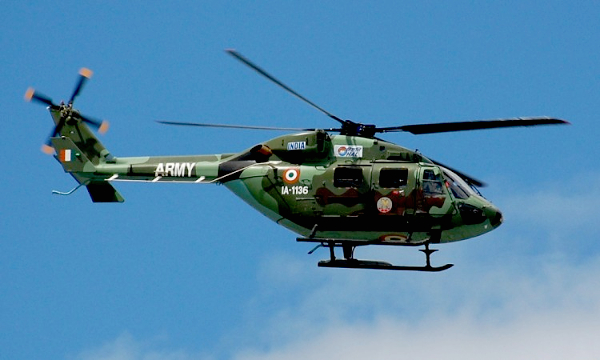
In line with Atmanirbhar Bharat vision of Prime Minister Shri Narendra Modi, Defence Secretary Dr Ajay Kumar today inducted Advanced Light Helicopters (ALH) Mk-III in Indian Coast Guard (ICG). The state-of-the-art helicopters are indigenously designed and manufactured by Hindustan Aeronautics Limited (HAL), Bengaluru.

Raksha Mantri Shri Rajnath Singh Approves Policy on Archiving, Declassification & Compilation of War/Operations Histories

Raksha Mantri Shri Rajnath Singh has approved the policy on archiving, declassification and compilation/publication of war/operations histories by the Ministry of Defence.The policy envisages that each organisation under the Ministry of Defence such as Services, Integrated Defence Staff, Assam Rifles and Indian Coast Guard, will transfer the records, including war diaries, letters of proceedings & operational record books, etc., to the History Division of Ministry of Defence (MoD) for proper upkeep, archival and writing the histories.

Myths Vs. Facts on COVID19 Mortality Figures

It is noted that a renowned international magazine in its article has speculated that ‘India has suffered perhaps five-to-seven times “excess deaths” than the official number of COVID-19 fatalities’. It is a speculative article, which is without any basis and seems to be misinformed.

The unsound analysis of the said article is based on extrapolation of data without any epidemiological evidence.

Studies which are used by the magazine as an estimate of excess mortality are not validated tools for determining mortality rate of any country or region.

The so called “evidence” cited by the magazine is a study supposedly done by Christopher Laffler of Virginia Commonwealth University. An internet search of research studies in scientific database such Pubmed, Research Gate, etc., did not locate this study and the detailed methodology of this study has not been provided by the magazine.

Another evidence given is the study done in Telengana based on insurance claims. Again, there is no peer reviewed scientific data available on suchstudy.

Two other studies relied upon are those done by Psephology groups namely “Prashnam” and “C-Voter” who are well versed in conducting, predicting and analysing poll results. They were never ever associated with public health research. Even in their own area of work of psephology, their methodologies for predicting poll results have been wide off the mark many times.

By their own submission, the magazine states that ‘such estimates have been extrapolated from patchy and often unreliable local government data, from company records and from analyses of such things as obituaries’.

Union Government has been transparent in its approach to COVID data management. As early as May 2020, to avoid inconsistency in number of deaths being reported, Indian Council of Medical Research has issued ‘Guidance for appropriate recording of COVID-19 related deaths in India’ for correct recording of all deaths as per ICD-10 codes recommended by WHO for mortality coding. States and UTs have been urged through formal communications, multiple video conferences and through deployment of Central teams for correct recording of deaths in accordance with laid down guidelines.

Union Health Ministry has also regularly emphasized the need for a robust reporting mechanism for monitoring district wise cases and deaths on a daily basis. States consistently reporting lower number of daily deaths were told to re-check their data. A case in point is the Union Government writing to the State of Bihar to provide detailed date and district wise break-up of the reconciled number of deaths to Union Health Ministry.

It’s a well-known fact that there shall always be difference in mortality recorded during a profound and prolonged public health crisis such as COVID pandemic and well conducted research studies on excess mortalities, usually done after the event when data on mortalities are available from reliable sources. The methodologies for such studies are well established, the data sources are defined as also the valid assumptions for computing mortality.