Kautilya

India Plans National Registry for Implantable Medical Devices to Strengthen Patient Safety and Accountability

According to reports, the registry is being considered at a high level and is expected to create a centralised mechanism for collecting data from hospitals, manufacturers, suppliers and healthcare providers. In the first phase, the focus is likely to be on cardiac and orthopaedic implants, before gradually expanding to other categories of medical devices. This phased approach is practical because cardiac stents, pacemakers, joint replacements and spinal implants are among the most commonly used high-risk devices in Indian hospitals.

UPI Handles 85.5% of India’s Digital Payment Transactions in H2 2025, Showing the Scale of India’s Cashless Economy

The numbers clearly show that UPI is now the backbone of India’s mass retail digital payments system. While UPI dominated transaction volume, other systems continued to serve their own specialised roles. NEFT and Prepaid Payment Instruments each accounted for 3.6% of transaction volume, while RTGS contributed only 0.1% of transaction volume because it is mainly used for large-value settlements.

Indian Study Opens New Window Into the Sun’s Corona Heating Mystery

The Sun’s corona is a strange and extreme region. Although it lies above the visible surface, it reaches very high temperatures and remains one of the most difficult parts of the Sun to understand. NASA also notes that the corona is extremely hot but very dim because it is far less dense than the Sun’s surface. This basic contradiction — a hotter outer atmosphere above a comparatively cooler surface — is known as the coronal heating problem, and scientists have studied it for decades.

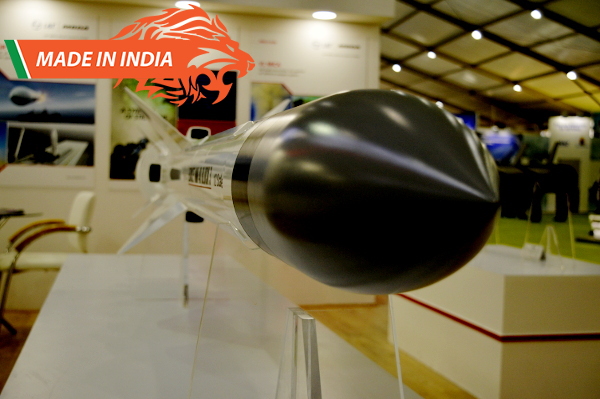
NIBE’s SURYASTRA Test Marks a Major Private-Sector Step in India’s Long-Range Rocket Artillery Push

The most eye-catching part of the announcement is the claimed accuracy. NIBE stated that the rockets achieved a Circular Error Probable of 1.5 metres at 150 km and 2 metres at 300 km. In simple terms, CEP is a standard measure used to describe weapon accuracy: the smaller the figure, the tighter the expected impact grouping around the target point. If these figures are sustained across operational conditions, they would place SURYASTRA in the category of precision rocket artillery rather than traditional area-saturation rocket fire.

India’s TEAM Initiative Opens Digital Commerce Doors for Small Businesses Across Bharat

For many artisans, home-based businesses, farmer producer organisations, small manufacturers and local retailers, the challenge has never been only production. It has often been market access. A walnut grower in a hill district, a food processor in the North-East or a small household enterprise may have a good product, but limited reach, weak buyer connectivity, poor digital visibility, high platform costs and logistical hurdles can prevent them from scaling. TEAM is aimed at solving precisely this gap by helping such enterprises with onboarding, cataloguing, packaging, logistics and customer management.

Thakazhi Sree Dharmasastha Temple: The Sacred Sastha Shrine Near Ambalappuzha

The temple stands in Thakazhi, a name that immediately evokes two different worlds of Kerala memory. One is the sacred world of Sastha worship, temple lamps, oil offerings, festival drums and ritual floor drawings. The other is the literary world of Thakazhi Sivasankara Pillai, the great Malayalam novelist who gave Kuttanad’s farmers, labourers, fishermen and ordinary families a permanent place in modern Indian literature.

BHIM App Records Over 300% Growth in FY26, Signalling India’s Deepening Digital Payments Revolution

According to NPCI BHIM Services Limited, monthly transaction volumes on the BHIM app rose from 5.93 crore in April 2025 to 21.6 crore in March 2026. The momentum continued into the new financial year as well, with the app recording 22.49 crore transactions worth ₹26,040 crore in April 2026. This shows that the growth was not just a temporary spike, but part of a larger behavioural shift towards digital payments.

India’s Digital Economy May Contribute 20% to GDP by 2030, But Cybersecurity Will Decide the Strength of the Growth Story

India’s digital transformation has already become visible in everyday life. The spread of UPI, Aadhaar-linked services, paperless governance, digital public infrastructure, optical fibre expansion and online service delivery has changed how citizens, businesses and government institutions interact. The shift from a cash-heavy and paperwork-heavy system towards a more digital economy has improved speed, transparency and accessibility in many areas of public and commercial life.