New Delhi, Aug 20 Archeologists have found remains of a sedentary village settlement possibly dating back to the Iron Age in Maharashtra”s Vidarbha region. The site is chronologically placed between 7th and 4th century BCE.
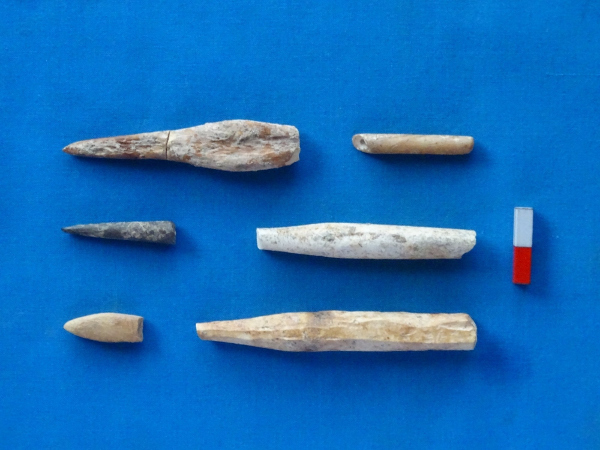
The excavations by the Archaeological Survey of India (ASI) in Phupgaon, a region in the Amravati district, has unraveled house remains and other associated features like hearth, postholes and artefacts.
“The settlement comes under the category of a small village of a small agro-pastoral community with evidence of craftsmanship in the form of beads of agate-carnelian, jasper, quartz and also the usage of other artefacts like hopscotch, wheel and barrel shaped beads,” ASI said in a Tuesday statement.
Phupgaon, situated in basin of Purna river, a major tributary of Tapi (or Tapti), is said to be a contemporary of other Iron Age settlements of Vidarbha like Naikund, Mahurjhari, Bhagimori and Thakalkat.
The river basin has witnessed archaeological sites ranging from Paleolithic to late Medieval Period, revealed by antiquities and pottery of those settlements.
The ASI has said that the excavation at Phupgaon provides key insights into Iron Age people of Purna basin. It is undertaking further study of the site with chronometric dating to reveal more on Vidarbha”s Iron Age.
Source: OL
Image Courtesy:India
You may also like
-
Kasmira: The Kashmir Valley and the Northwestern Himalayan World of the Mahabharata
-
Nepala: The Kathmandu Valley and the Central Himalayan World of the Mahabharata
-
Kirata: The Himalayan and Eastern Hill Peoples of the Mahabharata
-
Kamarupa — The Historic Kingdom of the Brahmaputra Valley and the Eastern Himalayas
-
Bharat Vandana Park: Delhi’s ‘Mini India’ Brings the Nation’s Heritage Together in One Landscape
