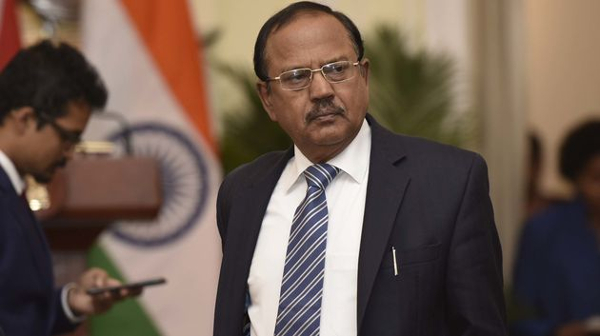
India will host a high-level BRICS security meeting in New Delhi this week, bringing together National Security Advisers and senior security officials from member nations to discuss a broad spectrum of global and regional security concerns. The two-day gathering is expected to play a crucial role in shaping the agenda ahead of the BRICS Summit scheduled to be held in India later this year.
The meeting will be chaired by National Security Adviser Ajit Doval and is likely to focus on emerging geopolitical developments, terrorism, regional instability, and the growing impact of new technologies on global security. Senior representatives from several BRICS countries are expected to participate, including Chinese Foreign Minister Wang Yi and Russian Security Council Secretary Sergei Shoigu. Officials from newer BRICS members are also anticipated to attend the discussions.
Diplomatic sources indicate that ongoing conflicts in the Middle East and Eastern Europe will feature prominently during the deliberations. Participants are expected to exchange views on the security implications of these crises and explore avenues for greater cooperation among BRICS nations in addressing global instability.
Regional security issues are also likely to receive attention, particularly developments in South Asia. India is expected to raise concerns related to cross-border terrorism and emphasize the need for stronger international cooperation to combat extremist networks and terror financing. The discussions may also cover broader regional challenges affecting peace and stability in neighbouring countries.
Another major focus of the conclave will be non-traditional security threats, including cyber risks, emerging technologies, and their implications for national security. Delegates are expected to assess evolving threats linked to digital infrastructure, information and communication technologies, and artificial intelligence, while reviewing the progress of BRICS-led initiatives in these areas.
The meeting comes at a time when BRICS has expanded its global footprint. What began as a five-member grouping has grown significantly in recent years, with the inclusion of several new countries from Asia, Africa, and the Middle East. The expanded bloc now represents a substantial share of the world’s population, economic output, and international trade, giving it greater influence in global policymaking and governance discussions.
The New Delhi gathering is also expected to provide an opportunity for bilateral interactions among participating officials. Such engagements could help strengthen strategic cooperation and facilitate dialogue on key areas of mutual interest ahead of the leaders’ summit later this year.
As India continues its chairmanship of BRICS, the security conclave is expected to reinforce the bloc’s efforts to address both traditional and emerging challenges through dialogue, cooperation, and coordinated policy responses.
You may also like
-
Tarang Shakti Delegates from 28 Countries Visit HAL and BEL to Explore India’s Defence Manufacturing Ecosystem
-
Swiss President Guy Parmelin to Visit India as EFTA Economic Partnership Deepens
-
India and Brazil Move to Expand Mercosur Trade Pact Beyond 450 Tariff Lines
-
India and Qatar Accelerate FTA and Investment Treaty Talks
-
India and Russia Review Bilateral Ties and International Developments in Moscow
