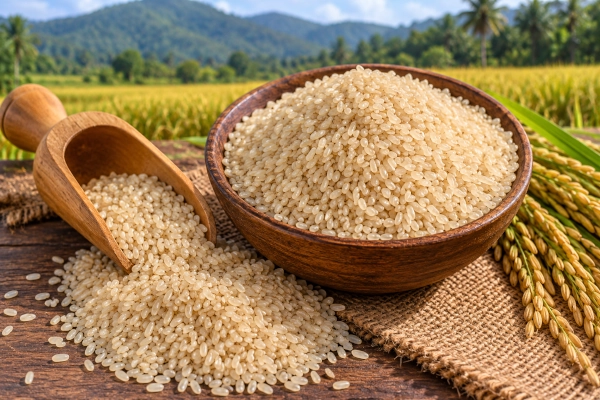
In the lush agricultural landscape of Maharashtra’s Kolhapur district, farmers have preserved a distinctive indigenous rice variety known as Ajara Ghansal Rice (आजरा घनसाळ तांदूळ) for generations. Celebrated for its rich natural fragrance, delicate grains and exceptional cooking qualities, this traditional rice represents an important part of the agricultural and culinary heritage of the Ajara region.
Ajara Ghansal is a premium non-Basmati aromatic rice variety cultivated primarily in Ajara taluka, situated near the foothills of the Western Ghats. Its distinctive aroma, pleasant flavour and tender texture have earned it a special place in traditional Maharashtrian cuisine. The variety is particularly valued for festive meals, wedding ceremonies and family celebrations, where aromatic rice forms an important part of the dining experience.
Unlike commercial rice varieties developed primarily for higher yields, Ajara Ghansal derives much of its reputation from its fragrance and grain quality. Its cultivation reflects the relationship between the region’s agricultural environment, traditional farming knowledge and the preservation of indigenous crop diversity.
Ajara Ghansal Rice received Geographical Indication (GI) recognition on 31 March 2016, becoming one of Maharashtra’s recognised traditional agricultural products. The registration formally acknowledged its association with the Ajara region and established a legal framework for protecting its geographical identity.
Historical Origins and Traditional Heritage of Ajara Ghansal Rice
The history of Ajara Ghansal Rice is closely associated with the agricultural traditions of Ajara taluka in Kolhapur district. Located near the Western Ghats, this region has long supported paddy cultivation through its abundant monsoon rainfall, fertile agricultural lands and traditional water-management practices.
The precise historical period when Ghansal emerged as a distinct rice variety has not been conclusively documented. However, its continued cultivation by farming families demonstrates its longstanding association with the region. Farmers traditionally preserved the variety through seed selection, maintaining its fragrance and cooking qualities across successive generations.
The name Ghansal is commonly associated with the rice’s distinctive fragrance and fine grain characteristics. The variety is locally known as Ghansal Tandul, with tandul being the Marathi word for rice. Its association with Ajara distinguishes it from other aromatic rice varieties cultivated across Maharashtra.
Traditional farming households maintained Ghansal primarily because of its culinary reputation. Its appealing aroma and delicate texture made it desirable for special meals, while local agricultural practices helped conserve the variety despite the growing popularity of commercially developed rice cultivars.
The preservation of Ajara Ghansal reflects a wider tradition of indigenous rice cultivation in western Maharashtra. Farmers in the region maintained varieties suited to local environmental conditions, selecting crops not only for productivity but also for taste, fragrance and household food preferences.
Geographical Origin and Cultivation Areas
Ajara Ghansal Rice originates from Ajara taluka in Kolhapur district, Maharashtra, a region characterised by its proximity to the Western Ghats, undulating agricultural landscape and extensive monsoon-fed paddy fields.
Ajara lies in the southern part of Kolhapur district, near the boundary between Maharashtra and Karnataka. The surrounding landscape includes hills, valleys and agricultural settlements where rice cultivation forms an important component of rural livelihoods.
The Hiranyakeshi River and its associated water resources contribute to the region’s agricultural environment. Seasonal rainfall and water flowing from nearby hills help sustain paddy fields during the monsoon cultivation period.
The region’s soils, rainfall patterns and local climatic conditions provide an agricultural setting suited to traditional rice production. Ghansal cultivation has developed within this environment through generations of farmer experience and adaptation.
Farmers traditionally cultivate the variety in fields where sufficient moisture is available throughout the growing period. Monsoon rainfall supports crop establishment, while local farming practices help maintain suitable water conditions during plant development.
The GI registration identifies Maharashtra as the geographical area of the product, while its distinctive agricultural identity is centred on Ajara taluka in Kolhapur district.
The association between this particular rice variety and its place of cultivation forms the foundation of the Ajara Ghansal geographical indication.
Unique Characteristics of Ajara Ghansal Rice
Ajara Ghansal belongs to the species Oryza sativa L. and is recognised for its distinctive natural aroma, attractive grain appearance and desirable cooking characteristics.
The rice possesses relatively short, fine grains with a creamy-white appearance after milling. Its grain structure differs from the long, slender profile generally associated with Basmati rice, demonstrating the diversity of India’s indigenous aromatic rice varieties.
The most celebrated characteristic of Ajara Ghansal is its fragrance. During cooking, the grains release a pleasant aroma that contributes significantly to their culinary appeal. This natural aromatic quality distinguishes the variety from ordinary non-aromatic rice.
Ajara Ghansal is also appreciated for its tender texture and appealing flavour. Properly cooked grains offer a delicate eating experience, making the variety particularly suitable for preparations where rice itself remains the principal ingredient.
Scientific research has recognised Ghansal as a valuable traditional non-Basmati aromatic rice landrace. Researchers have examined its agricultural and genetic characteristics, including opportunities for improving crop performance while retaining its distinctive qualities.
A study published in the International Journal of Radiation Biology in 2022 investigated genetic improvement in two Indian non-Basmati aromatic rice landraces, including Ghansal. The research demonstrated the scientific interest in maintaining and improving such traditional varieties.
Ajara Ghansal’s combination of fragrance, grain quality and regional reputation gives it a distinct identity within India’s aromatic rice heritage.
Traditional Cultivation and Agricultural Practices
Farmers cultivate Ajara Ghansal primarily during the kharif season, when the southwest monsoon supplies much of the water required for paddy production.
Agricultural preparation generally begins with the arrival of the monsoon in June. Farmers prepare fields through ploughing, levelling and soil management before establishing the crop. Traditional cultivation commonly involves raising seedlings in nurseries and transplanting them into prepared paddy fields.
The region’s agricultural practices reflect its high-rainfall environment. Water flowing from surrounding hills and local irrigation resources helps sustain rice cultivation during the growing season.
Seed preservation remains an important part of Ghansal cultivation. Farmers traditionally select suitable grains from previous harvests for use in subsequent planting seasons, helping maintain the variety’s characteristic appearance, fragrance and cooking qualities.
Like many indigenous aromatic rice varieties, Ghansal faces competition from modern cultivars developed for higher yields and more predictable agricultural performance. Farmers must therefore balance its distinctive market value against production costs, seasonal conditions and available market opportunities.
Scientific agricultural support can help improve seed quality, crop management and resistance to production-related stresses. Such improvements are particularly valuable when they preserve the fragrance and grain characteristics that distinguish Ajara Ghansal.
The continued cultivation of the variety demonstrates the importance of traditional farming communities in maintaining agricultural biodiversity through active production.
Culinary Importance and Traditional Uses
Ajara Ghansal Rice occupies a respected place in the food traditions of Kolhapur and surrounding areas of Maharashtra. Its natural aroma and delicate texture make it particularly suitable for meals prepared during festivals, weddings and other special occasions.
The rice is especially appreciated in simple steamed preparations, where its fragrance and flavour can be enjoyed without elaborate seasoning. It also complements traditional Maharashtrian dishes that combine rice with lentils, vegetables and regional accompaniments.
Ghansal is suitable for aromatic rice preparations such as pulao and sweet rice dishes. Its fragrance adds character to recipes where the quality of the grain contributes significantly to the final result.
The variety is also associated with traditional food processing. Rice can be used to prepare puffed rice and other regional products, while rice bran and paddy straw provide opportunities for additional agricultural uses.
Its connection with celebrations and household food preferences has contributed to its survival. Demand for naturally fragrant rice encourages farmers to maintain the variety even when higher-yielding alternatives are available.
Ajara Ghansal demonstrates how traditional cuisine helps conserve indigenous crops. The preferences of local consumers create an enduring relationship between agricultural production and cultural heritage.
Geographical Indication Recognition of Ajara Ghansal Rice
Ajara Ghansal Rice received formal GI registration under the Geographical Indications of Goods (Registration and Protection) Act, 1999.
The application was submitted by Ajara Taluka Shetkari Vikas Mandal, a farmer-oriented organisation based in Ajara, Kolhapur district. The organisation sought recognition of the rice’s distinctive characteristics and its longstanding geographical association with the region.
The application was filed on 26 March 2014, under Application No. 470.
Following the examination process, the Geographical Indications Registry published the application in Journal No. 76 on 27 November 2015. The publication formed part of the statutory process for examining and registering geographical indications in India.
The GI Registry subsequently issued Certificate No. 248 on 31 March 2016, formally registering Ajara Ghansal Rice as a Geographical Indication.
The registration placed Ajara Ghansal among Maharashtra’s recognised agricultural heritage products. It also strengthened the legal identity of the rice and acknowledged the contribution of local farming communities to its preservation.
GI protection establishes a framework for preventing unauthorised commercial use of the registered geographical indication. It also enables eligible producers to seek authorised-user registration and participate in marketing the product under its protected identity.
GI Tag Journey of Ajara Ghansal Rice
The journey of Ajara Ghansal Rice towards Geographical Indication recognition reflects the efforts of farming communities and local agricultural organisations to preserve the identity of this traditional aromatic variety.
- Traditional Agricultural Heritage: Farmers in Ajara taluka, Kolhapur district, preserved Ghansal Rice through generations of cultivation and seed selection. Its distinctive aroma and cooking qualities established its reputation as a premium regional rice.
- 26 March 2014 – GI Application Filed: Ajara Taluka Shetkari Vikas Mandal submitted the application for Ajara Ghansal Rice under Application No. 470.
- 23 July 2014 – Formality Check Report: The Geographical Indications Registry issued its initial formality examination report.
- 24 October 2014 – Applicant’s Response: The applicant submitted its reply to the formality check report.
- 27 May 2015 – Consultative Group Meeting: The GI Registry recorded the proceedings of its Consultative Group Meeting as part of the application assessment.
- 3 July 2015 – Examination Report: The Geographical Indications Registry issued its examination report assessing the application.
- 3 September 2015 – Response to Examination: The applicant submitted its reply along with additional representations and supporting documents.
- 27 November 2015 – Publication in GI Journal: Ajara Ghansal Rice appeared in Geographical Indications Journal No. 76 as part of the statutory registration process.
- 31 March 2016 – GI Certificate Issued: The Geographical Indications Registry issued Certificate No. 248, formally registering Ajara Ghansal Rice as a Geographical Indication.
- 2016 Onwards – Authorised-User Registration: Farmers from Ajara taluka began obtaining authorised-user registrations, strengthening their formal participation in the GI system.
- 22 December 2023 – Renewal Documentation: The GI Registry recorded renewal documentation relating to Ajara Ghansal Rice, extending the protection associated with its registration.
- 25 March 2034 – Registration Validity: The current GI registration remains valid until this date, subject to further renewal under India’s geographical indications legislation.
GI Details at a Glance
- Geographical Indication: Ajara Ghansal Rice
- State: Maharashtra
- Product: Agricultural
- Class: 30
- Application Number: 470
- Date of Filing: 26 March 2014
- GI Journal: No. 76
- Journal Availability Date: 27 November 2015
- Certificate Number: 248
- GI Certificate Date: 31 March 2016
- Registered Proprietor: Ajara Taluka Shetkari Vikas Mandal, Ramdev Galli, Ajara taluka, Kolhapur district, Maharashtra
- Geographical Area: Maharashtra, with traditional cultivation centred on Ajara taluka, Kolhapur district
- Registration Valid Until: 25 March 2034
Preserving an Indigenous Rice Variety
Ajara Ghansal represents an important component of Maharashtra’s traditional agricultural biodiversity. Indigenous rice varieties developed and preserved by local farming communities possess characteristics that may not be prioritised in modern high-yielding cultivars.
These include distinctive fragrances, cooking qualities, grain appearances and adaptation to regional agricultural environments.
The preservation of Ghansal is particularly significant because it remains associated with active cultivation. Farmers conserve the variety by growing it, selecting seeds and maintaining agricultural practices adapted to local conditions.
Scientific research offers opportunities to strengthen these conservation efforts. Studies of Ghansal and other aromatic rice landraces have explored methods of improving agricultural performance while retaining desirable grain characteristics.
The continued availability of authentic planting material is essential for maintaining the variety’s identity. Mixing seeds with other rice varieties can affect grain uniformity and weaken the characteristics responsible for its premium reputation.
Farmer organisations, agricultural universities and research institutions can contribute through seed conservation, varietal characterisation and improved cultivation guidance.
Such initiatives help maintain agricultural genetic resources while supporting farming communities that continue to cultivate traditional crops.
Economic Importance and Opportunities for Farmers
Ajara Ghansal Rice offers opportunities for farmers seeking to participate in specialised markets for premium indigenous agricultural products.
Its natural fragrance, traditional reputation and GI registration distinguish it from ordinary commercial rice. These characteristics provide a foundation for establishing a stronger regional brand and reaching consumers who value traditional food products.
For farming communities in Ajara, the economic potential extends beyond the sale of harvested paddy. Cleaning, grading, milling and packaging can help create value-added rice products suited to organised retail markets.
GI recognition also supports the development of traceable agricultural marketing. Clearly identifying the origin of Ajara Ghansal can help consumers distinguish authentic products from rice marketed under similar descriptions without a verified geographical association.
The formal registration of authorised users represents another important aspect of the GI system. The Geographical Indications Registry records numerous farmers from Ajara taluka as authorised users of the registered product.
This participation strengthens the connection between GI recognition and the agricultural communities responsible for maintaining the variety.
However, registration alone does not guarantee higher prices. Farmers also require reliable processing facilities, quality management, market access and effective producer organisations to benefit fully from the product’s premium identity.
Greater cooperation among farmers, local enterprises and agricultural institutions can help strengthen these commercial opportunities.
Ajara Ghansal Rice and Maharashtra’s GI Agricultural Heritage
Maharashtra possesses a diverse collection of agricultural products recognised under India’s Geographical Indications system. These products reflect the state’s varied climatic regions, farming traditions and distinctive agricultural specialisations.
Ajara Ghansal Rice forms part of this heritage alongside GI-registered products such as Ambemohar Rice, Kolhapur Jaggery, Nashik Grapes, Nagpur Orange and Sangli Turmeric.
Each product represents a different relationship between geographical conditions, traditional agricultural knowledge and regional reputation.
Ambemohar Rice is particularly associated with the Pune region and is celebrated for its characteristic fragrance. Ajara Ghansal, by contrast, reflects the aromatic rice-growing traditions of southern Kolhapur near the Western Ghats.
The recognition of both varieties highlights the diversity of Maharashtra’s indigenous aromatic rice heritage.
Ajara Ghansal also strengthens the identity of Kolhapur district as a producer of distinctive agricultural products. The district is already recognised for Kolhapur Jaggery, which received GI registration before Ajara Ghansal.
Protecting these products contributes to the preservation of regional agricultural traditions while creating opportunities for specialised marketing and value addition.
Scientific Research and Improvement of Ghansal Rice
Scientific research has identified traditional aromatic rice varieties as valuable agricultural genetic resources. Their distinctive characteristics provide opportunities for crop improvement and the study of grain quality.
Ghansal has attracted attention because of its fragrance and culinary reputation, alongside challenges associated with traditional crop production.
Research published in the International Journal of Radiation Biology examined the genetic improvement of two Indian non-Basmati aromatic rice landraces through physical and chemical mutagenesis.
The study explored approaches to generating useful genetic variation that could support crop improvement. Such research is relevant to traditional varieties whose wider cultivation may be limited by particular agricultural characteristics.
Crop improvement programmes must preserve the qualities responsible for the variety’s reputation. For Ghansal, these include its natural aroma, grain appearance and cooking characteristics.
Scientific characterisation can also help distinguish authentic Ghansal planting material from other rice varieties. Maintaining varietal identity becomes increasingly important as GI recognition creates opportunities for broader commercial distribution.
The combination of agricultural research and traditional seed conservation provides a foundation for protecting Ajara Ghansal while strengthening its long-term cultivation prospects.
Future Prospects for Ajara Ghansal Rice
The future of Ajara Ghansal Rice depends on preserving its distinctive qualities while strengthening the agricultural and commercial systems supporting its cultivation.
Improved seed conservation, scientific crop management and greater access to agricultural research can help farmers maintain the variety’s traditional characteristics. Better post-harvest handling and processing facilities can also improve grain quality and market readiness.
Farmer organisations can play an important role in developing collective marketing arrangements, improving packaging and establishing consistent quality standards.
Greater consumer awareness offers another opportunity. India’s growing recognition of indigenous food products and regional agricultural heritage creates a favourable environment for promoting traditional aromatic rice varieties.
Ajara Ghansal’s GI identity provides a foundation for building this recognition. Authentic geographical branding and transparent sourcing can strengthen consumer confidence while protecting the interests of local producers.
The variety also presents opportunities for regional food enterprises interested in premium rice products with distinctive cultural and agricultural identities.
Ajara Ghansal Rice represents the enduring relationship between Maharashtra’s Western Ghats, traditional farming communities and the culinary heritage of Kolhapur. Its GI recognition protects a distinctive geographical identity, while continued cultivation preserves generations of agricultural knowledge. With farmer-led conservation, scientific support and expanding market opportunities, Ajara Ghansal can carry the fragrance and agricultural heritage of southern Maharashtra to a wider audience.
References
- Geographical Indications Registry, Government of India — Ajara Ghansal Rice, Application No. 470, Certificate No. 248, dated 31 March 2016. Official application history, GI Journal publication, authorised-user records and registration validity.
https://search.ipindia.gov.in/GIRPublicSearch/Application/Details/470 Intellectual Property India - Agricultural and Processed Food Products Export Development Authority (APEDA) — Maharashtra’s registered Geographical Indications, including Ajara Ghansal Rice.
https://apeda.gov.in/Maharashtra APEDA - Office of the Controller General of Patents, Designs and Trade Marks, Government of India — State-wise Registered Geographical Indications of India, including Ajara Ghansal Rice.
https://ipindia.gov.in/writereaddata/Portal/Images/pdf/State_wise_Registered_Geographical_Indications_30-03-2024.pdf IP India - Council of Scientific and Industrial Research – National Institute of Science Communication and Policy Research — Geographical Indications in Maharashtra, Journal of Intellectual Property Rights.
https://or.niscpr.res.in/index.php/JIPR/article/download/4008/1426/12013 Open Research - Geographical Indications Registry – Original Application Documents — Ajara Ghansal Rice, GI Application No. 470, filed by Ajara Taluka Shetkari Vikas Mandal on 26 March 2014.
https://www.origin-gi.com/wp-content/uploads/2017/01/218-ajara-ghansal-rice.pdf origin-gi.com
You may also like
-
India’s Telephone Subscriptions Reach 136.79 Crore as Telecom Sector Records Strong Growth in September 2026
-
Government Introduces ₹1,500 Annual Highway Toll Pass for Residents Living Within 20 Kilometres of Toll Plazas
-
Indian Space-Tech Startup SpectraGaze Raises ₹3.7 Crore to Develop Indigenous Infrared Sensors
-
India’s Kaynes Space Partners with WISeSat to Develop Quantum-Secure Satellites
-
India to Track Challenges Faced by Women Entrepreneurs in New National Business Survey
