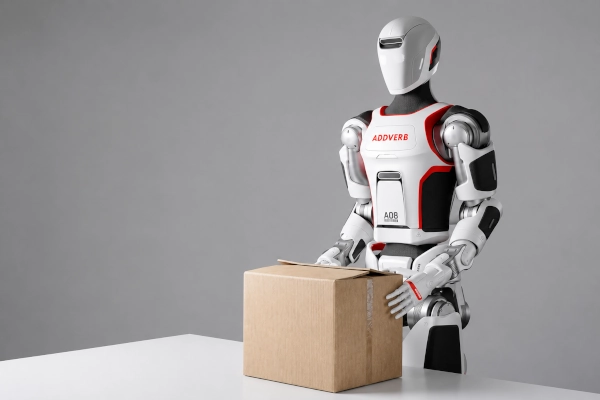
Indian robotics company Addverb is expanding into semiconductor manufacturing, developing specialised robotic systems for precision material handling, automated storage and component movement inside semiconductor and advanced-electronics facilities. The expansion marks a new phase for the Indian company, which built its business around warehouse automation and is now applying its robotics expertise to more demanding industrial environments.
Speaking during SEMICON India 2026, Addverb co-founder and Chief Business Officer Bir Singh identified semiconductor manufacturing as an emerging market for the company. Addverb is developing automation systems for semiconductor facilities while expanding into solar manufacturing, batteries, electric vehicles and other advanced-manufacturing industries.
The company’s move comes as India develops its domestic semiconductor manufacturing ecosystem. New fabrication, assembly and testing facilities require more than semiconductor production equipment. They also need automated storage, precision robotics, cleanroom-compatible material transport and software capable of tracking components throughout the manufacturing process.
From Warehouse Automation to Semiconductor Manufacturing
Founded in 2016, Addverb established its position in industrial robotics through Autonomous Mobile Robots (AMRs), Automated Storage and Retrieval Systems (ASRS), robotic sorting equipment and warehouse-management software. Its technologies have been deployed in warehouses, distribution centres and industrial facilities in India and overseas.
The company has subsequently expanded its portfolio to include robotic arms, collaborative robots, mobile manipulation systems and humanoid robotics. Addverb reports an annual manufacturing capacity of up to 100,000 robots, providing an established industrial base for its expansion into specialised manufacturing applications.
Semiconductor manufacturing presents substantially different engineering requirements from conventional warehouse operations. Silicon wafers and semiconductor components are sensitive to contamination, vibration, electrostatic discharge and handling errors. Automated systems must move these materials with considerable precision while maintaining cleanliness, accurate identification and traceability.
Addverb is adapting its existing robotics and industrial automation technologies to address these requirements, particularly in semiconductor material handling and electronics manufacturing.
Precision Robotics for Semiconductor Facilities
Addverb’s semiconductor automation portfolio includes controlled storage, precision material movement, robotic picking, cleanroom-compatible transportation and AI-enabled component tracking. The company is developing systems that can operate within tightly controlled manufacturing environments while reducing manual handling of sensitive materials.
One application involves the automated movement of Front Opening Unified Pods (FOUPs), specialised containers used to transport semiconductor wafers between different stages of fabrication. These containers protect wafers from contamination and enable automated handling within semiconductor production facilities.
Addverb is also developing mobile manipulation systems that combine autonomous mobile robots with robotic arms. Such platforms can transport components between workstations and perform controlled picking and placement operations, reducing the need for repeated manual intervention.
The company’s software systems support real-time tracking of wafers and components and can integrate with a factory’s Manufacturing Execution System (MES). This allows manufacturers to maintain digital records of material movement, inventory and production-stage transitions.
Vertix Automated Storage System Targets Electronics Manufacturing
Among the technologies Addverb showcased at SEMICON India 2026 was Vertix, its compact automated storage and retrieval system designed for high-density component management.
Vertix is being positioned for semiconductor and electronics manufacturing environments that require accurate storage, identification and retrieval of small components. The system supports the management of Surface-Mount Device (SMD) components used in Surface-Mount Technology production lines, where large numbers of component reels must be stored and supplied to manufacturing equipment.
Automated component storage reduces the time spent searching for materials and supports more accurate inventory management. In electronics manufacturing, where production lines may process thousands of different components, reliable identification and retrieval are essential to maintaining uninterrupted operations.
Addverb’s entry into this segment extends its established expertise in automated warehousing to a manufacturing environment where component accuracy, space utilisation and material traceability are particularly important.
JEN 6 Robotic Arm Expands Physical AI Development
Addverb also showcased its JEN 6 robotic arm during SEMICON India 2026, demonstrating its broader investment in advanced robotics and artificial intelligence.
The platform supports research involving Physical AI, vision-language-action models, reinforcement learning and robotic manipulation. These technologies are being developed to enable robots to interpret their surroundings, identify objects and perform physical tasks using information gathered through cameras, sensors and AI models.
Unlike conventional industrial robots that primarily follow predetermined movements, Physical AI systems are being designed to adapt their actions according to changing conditions. Such capabilities have potential applications in advanced manufacturing, where robots may need to handle different components, recognise variations in object placement and perform increasingly complex manipulation tasks.
Addverb’s work on robotic arms also contributes to its broader effort to develop training data and control systems for increasingly autonomous industrial robots.
Made-in-India Elixis-W Humanoid Joins the Robotics Portfolio
The company’s expanding technology portfolio includes Elixis-W, a Made-in-India wheeled humanoid robot introduced in February 2026. The platform combines wheeled mobility with perception systems and dual-arm manipulation for industrial applications.
Addverb is developing Elixis-W for repetitive, physically demanding and potentially hazardous tasks in factories and other industrial facilities. The company is also working on a walking version of Elixis as part of its longer-term humanoid robotics programme.
Addverb has announced a target of deploying 3,000 humanoid robots in industrial facilities by 2030. The programme reflects its ambition to develop robotic platforms capable of performing a wider range of industrial tasks beyond fixed automation and conventional warehouse operations.
Although humanoid robots are a separate product category from semiconductor material-handling equipment, both programmes draw on Addverb’s investments in autonomous navigation, robotic manipulation, sensors, artificial intelligence and industrial software.
Indian Semiconductor Expansion Creates Demand for Domestic Automation
India’s expanding semiconductor industry is creating opportunities for domestic companies involved in precision engineering, industrial robotics, specialised materials and manufacturing equipment. Semiconductor fabrication and assembly facilities depend on highly coordinated material movement, controlled storage and reliable automation throughout their operations.
Silicon wafers must move between successive manufacturing stages without contamination or physical damage. Semiconductor assembly and testing facilities also require accurate component handling, automated storage and continuous monitoring of materials moving through production lines.
These requirements create a market for specialised robotics and factory-automation equipment alongside the semiconductor manufacturing machinery itself. Addverb is positioning its technologies within this industrial segment, where its experience in autonomous material movement and automated storage can be adapted to semiconductor production requirements.
The company is also pursuing automation opportunities in solar-cell manufacturing, electric vehicles, battery production and advanced electronics, where manufacturers face similar requirements for accurate material movement and coordinated production systems.
Addverb Targets $100 Million in Semiconductor Equipment Revenue
Addverb has identified semiconductor equipment as a new business vertical and announced a target of US$100 million in revenue from the segment. The target reflects the company’s intention to establish semiconductor automation as a substantial business alongside its existing warehouse and industrial robotics operations.
Its strategy involves adapting technologies developed for automated logistics to the specialised requirements of semiconductor manufacturing. The company is combining autonomous mobile robots, robotic arms, automated storage systems and industrial software to develop equipment suitable for increasingly sophisticated production facilities.
The expansion also creates opportunities for Addverb to participate in India’s semiconductor supply chain beyond chip design and fabrication. Domestic semiconductor manufacturing requires an extensive supporting ecosystem of equipment manufacturers, automation specialists, precision-engineering companies and industrial software developers.
For Addverb, the transition from warehouse automation to semiconductor robotics represents a new application for technologies it has developed over the past decade. Its semiconductor equipment programme, Physical AI research and expanding industrial robotics portfolio position the Indian company to supply automation systems to emerging chip-manufacturing facilities and other advanced industrial sectors.
References
1. Addverb — Electronics & Semiconductor Factory Automation, official semiconductor automation portfolio. https://addverb.com/industry/semiconductor-factory-automation/
2. Addverb — Addverb Enters Semiconductor Equipment, Targets $100 Mn Revenue, official company announcement. https://addverb.com/press-release/addverb-enters-semiconductor-equipment-targets-100-mn-revenue/
3. Addverb — 10-Year Anniversary in Robotics & Automation, official company release. https://addverb.com/press-release/addverb-10-year-anniversary-robotics-automation/
You may also like
-
India Makes BIS Standards Mandatory for Smartphone Screen Protectors From April 2027
-
Netrasemi Advances Indigenous Edge AI With 12-nm Vision and Surveillance SoC
-
Integra Robotics Secures Indian Patent for VR-Controlled Remote Robotic Manipulation Technology
-
Indian Deep-Tech Startup Hylenr Completes Phase-I Fusion Reactor Validation at Texas A&M University
-
Lohum Targets Tenfold Nickel Expansion as Indian Critical-Minerals Company Looks Overseas for Mines
