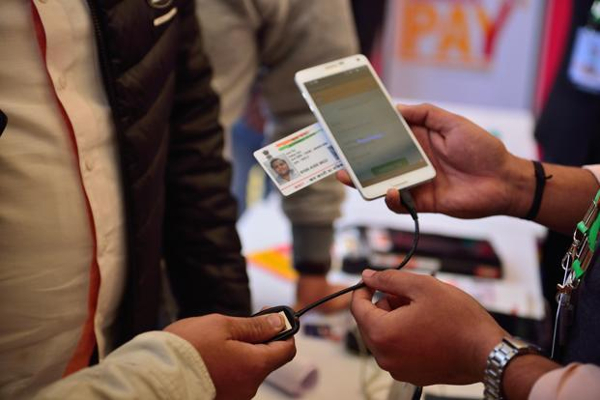
The umbrella body for digital transactions, Aadhaar enabled Payment System (AePS) crossed 200 million exchanges during July this year, according to NPCI.
AePS is a bank driven model which permits fundamental interoperable financial transactions at point of sales (PoS or MicroATM) through the business correspondent of any bank by utilizing Aadhaar authentication.
AePS has turned out to be instrumental in driving the financial inclusion program in India. In July 2019, the transaction count of AePS remained at 220.18 million with transaction value Rs 9,685.35 crore (US$ 1.34 billion), contrasted with transaction count of 194.33 million and transaction value of Rs 8,867.33 crore (US$ 1.23 billion) July.
An aggregate of 6.65 crore Indian citizens benefited banking services through AePS stage in July
AePS crossing 200 million transactions imprint is a huge accomplishment for NPCI, benefiting financial inclusion in India. AePS is conveying the 4As’ for financial inclusion to rural part of India, authentication of client, accessibility of services, availability through AePS channel and affordability as it’s free of cost to the customers, said by Praveen Rai, NPCI COO.
AePS engages a bank client to utilize Aadhaar as identity to get particular Aadhaar empowered bank account and perform fundamental banking transaction like money withdrawal, intrabank or interbank fund transfer and balance enquiry.
The only inputs required for a client to complete an AePS transaction are the name of the client’s bank, Aadhaar number and fingerprint captured during enrolment.
Source: IBEF
Image Courtesy: LM
You may also like
-
Pine Labs Expands in Singapore with Unified Merchant Payments Platform
-
VORAN Partners Italian Manufacturer to Build Light-Aviation Ecosystem in India
-
World Bank Raises India’s FY27 Growth Forecast to 7.1%
-
Adani Power and Druk Green Power to Develop 770 MW Chamkharchhu-I Hydropower Project in Bhutan
-
Cabinet Approves ₹10,000 Crore SME Growth Fund to Scale Indian Manufacturing
