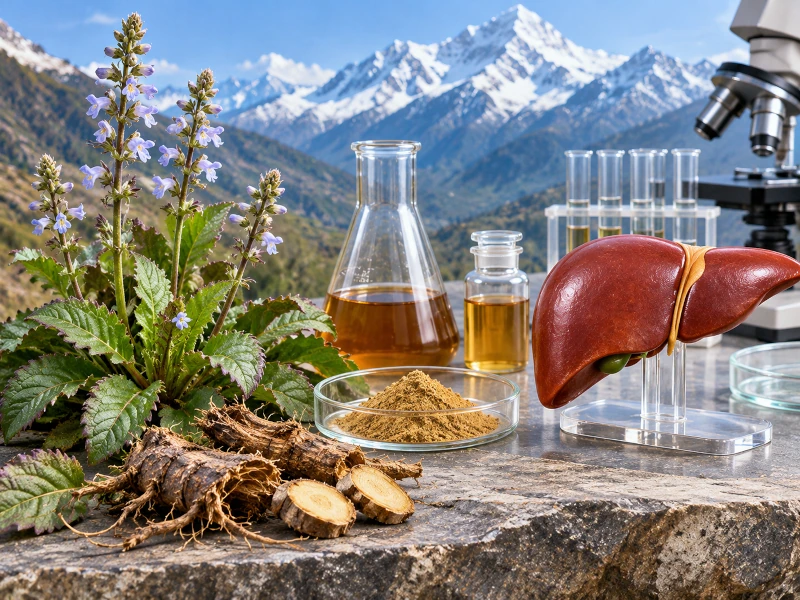
India has achieved an important milestone in indigenous pharmaceutical research with the completion of Phase III clinical trials of Picroliv, a plant-derived drug candidate developed for metabolic dysfunction-associated steatotic liver disease (MASLD), previously known as non-alcoholic fatty liver disease (NAFLD). Derived from the Himalayan medicinal plant Picrorhiza kurroa, commonly known as Kutki, the candidate has been developed through collaboration between institutions of the Council of Scientific and Industrial Research (CSIR). The development highlights India’s efforts to translate its botanical resources and scientific research capabilities into clinically evaluated pharmaceutical innovations.
CSIR-CDRI Advances Indigenous Drug Development
Union Minister of State for Science and Technology Dr Jitendra Singh announced the clinical development milestone on 27 November 2026 during his visit to the CSIR–Central Drug Research Institute (CSIR-CDRI) in Lucknow. The announcement formed part of a broader assessment of the institute’s pharmaceutical research pipeline and its contribution to India’s drug discovery capabilities. The completion of Phase III trials marks an advanced stage in the evaluation of the plant-derived therapeutic candidate.
The development programme brings together CSIR-CDRI and the CSIR–Institute of Himalayan Bioresource Technology (CSIR-IHBT) in Palampur, Himachal Pradesh. Their collaboration integrates medicinal plant cultivation, pharmaceutical standardisation, preclinical research and clinical evaluation, providing a multidisciplinary pathway for developing botanical drug candidates.
Kutki: A Himalayan Medicinal Plant with Pharmaceutical Potential
Picrorhiza kurroa is a medicinal herb native to the Himalayan region and has a longstanding association with traditional Indian healthcare practices. Known as Kutki or Kutaki in Ayurveda, the plant has traditionally been used in formulations associated with digestive and hepatobiliary health. Contemporary pharmaceutical research seeks to evaluate its biological properties through controlled scientific investigation rather than relying solely on historical therapeutic applications.
CSIR-IHBT has contributed to the development of improved plant varieties, cultivation methods and standardised extraction processes. These activities are important for maintaining consistency in botanical raw materials and ensuring reproducibility during pharmaceutical production. Standardisation distinguishes a scientifically developed botanical drug candidate from conventional herbal preparations whose chemical composition may vary.
Addressing the Growing Burden of Fatty Liver Disease
Metabolic dysfunction-associated steatotic liver disease is characterised by excessive fat accumulation in the liver associated with metabolic abnormalities. Conditions such as obesity, insulin resistance, type 2 diabetes and abnormal lipid metabolism are recognised risk factors. In some patients, the condition can progress to liver inflammation, fibrosis and more advanced liver damage.
MASLD represents an important public health challenge because it frequently develops without noticeable symptoms during its early stages. Its association with metabolic disorders has increased the importance of preventive healthcare, early diagnosis and research into effective treatment options. Indigenous pharmaceutical research targeting the condition could contribute to expanding therapeutic options, subject to appropriate clinical evidence and regulatory evaluation.
Significance of Completing Phase III Clinical Trials
Phase III clinical trials are an advanced stage of pharmaceutical development, generally undertaken to evaluate the efficacy and safety of a candidate in a larger patient population. The resulting evidence can support regulatory assessment, establish the balance of potential benefits and risks, and inform decisions regarding future clinical use.
Picroliv’s completion of this stage represents progress in its development programme. However, the official announcement does not disclose detailed trial outcomes, statistical measures of efficacy or comprehensive safety findings. Completion of the trials should therefore be distinguished from demonstration of clinical effectiveness, regulatory approval or authorisation for commercial distribution.
Industry Partnership and Pharmaceutical Translation
The Picroliv development programme has received financial support from the Indian Council of Medical Research (ICMR) and CSIR. Its clinical evaluation has involved six medical institutions, bringing together research laboratories and healthcare establishments to assess the candidate in clinical settings.
The technology has also been licensed to Themis Medicare Limited, a Mumbai-based pharmaceutical company. This industry partnership provides a mechanism for further pharmaceutical development and potential commercialisation, subject to applicable regulatory requirements. Such collaborations are important in translating publicly funded scientific research into potential healthcare products.
Two Additional Indigenous Drug Candidates Enter Clinical Development
Alongside the Picroliv milestone, CSIR-CDRI has advanced two additional drug candidates into Phase I clinical trials. These include L-Ormeloxifene, being investigated for contraception, and S007-1500, developed for potential applications in fracture healing.
Phase I represents an earlier stage of clinical development, primarily concerned with initial safety, tolerability and related pharmacological assessments. Both candidates will require further clinical investigation before their therapeutic potential can be established. Their advancement nevertheless illustrates the breadth of India’s indigenous pharmaceutical research pipeline across different healthcare requirements.
Integrating Traditional Knowledge with Modern Pharmaceutical Science
The development of Picroliv demonstrates how India’s medicinal plant heritage can provide starting points for contemporary pharmaceutical research. Botanical identification, controlled cultivation, chemical characterisation, toxicological assessment and clinical trials collectively contribute to the systematic evaluation of plant-derived drug candidates.
This approach establishes a distinction between traditional medicinal knowledge and the evidence required for modern pharmaceutical authorisation. By combining Himalayan bioresource expertise with clinical research and industrial collaboration, Indian scientific institutions are developing pathways through which botanical discoveries can be evaluated against contemporary healthcare standards.
Advancing India’s Research-Driven Pharmaceutical Ecosystem
India has established significant capabilities in generic pharmaceutical manufacturing, vaccine production and the supply of affordable medicines to international markets. The development of innovative drug candidates represents a complementary opportunity to strengthen domestic intellectual property, scientific expertise and research-led pharmaceutical manufacturing.
The completion of Picroliv’s Phase III clinical trials contributes to this broader transition towards indigenous drug discovery. Further progress will depend on the assessment of clinical findings, regulatory decisions and subsequent pharmaceutical development. Through sustained collaboration between scientific institutions, healthcare establishments and pharmaceutical companies, India can continue exploring the potential of its biological resources to address important healthcare challenges.
References
- Ministry of Science and Technology, Press Information Bureau — Announcement on CSIR-CDRI’s research facilities and indigenous drug development pipeline, 27 November 2026. Release ID: 2342644.
- Press Information Bureau — CSIR-developed technologies, including the standardised botanical drug candidate Picroliv. Release ID: 2291770.
You may also like
-
Ayurveda and Immunity: Building Ojas Through Daily Living
-
NIT Rourkela Patents Technology to Convert Pharmaceutical Protein Waste into Biomedical Hydrogels
-
Ayurveda During Spring: Lightening the Diet and Clearing Kapha
-
Ayurveda During Winter: Food, Oil Massage and Strength-Building
-
Ayurveda During the Monsoon: Protecting Agni and Immunity
