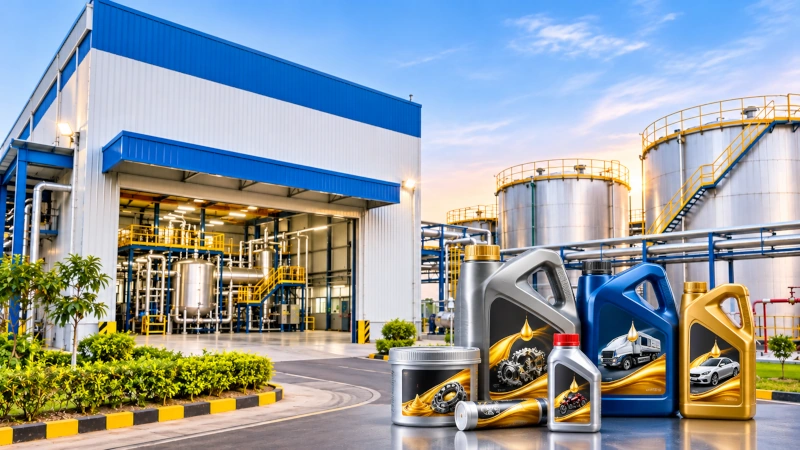
Bharat Petroleum Corporation Limited (BPCL) has reportedly inaugurated a new lubricant oil blending plant and base oil terminal at Rasayani in Maharashtra. The development represents an expansion of the public sector energy company’s downstream manufacturing infrastructure, strengthening its capabilities in lubricant production and raw material management. The inauguration was reported on 26 November 2026.
Modernising BPCL’s Lubricant Manufacturing Infrastructure
The facilities were inaugurated by BPCL Chairman and Managing Director Sanjay Khanna in the presence of senior company officials, including Vetsa Rama Krishna Gupta, Director (Finance), Subhankar Sen, Director (Marketing), and Pushp Kumar Nayar, Director (Human Resources). Developed for MAK Lubricants, BPCL’s lubricant business, the facilities incorporate modern manufacturing, storage and material-handling infrastructure. The company has officially confirmed the inauguration through its corporate social media channels.
The Rasayani project forms part of BPCL’s planned relocation and modernisation of its existing lubricant manufacturing operations at Wadibunder in Mumbai. The company’s earlier annual reports identified the development of a fully automated lubricant blending and filling facility as an important infrastructure initiative. The inauguration marks a significant milestone in implementing this modernisation programme.
Integrated Base Oil Storage and Lubricant Production
The lubricant blending plant combines base oils with specialised additives to manufacture finished lubricants used in automotive, industrial and engineering applications. The associated base oil terminal provides infrastructure for receiving and storing essential raw materials required during the manufacturing process. Integrating these facilities at Rasayani is intended to improve coordination between raw material management, production and distribution.
BPCL’s 2024–25 annual report outlined a base oil terminal with a planned storage capacity of 82,600 kilolitres at Rasayani. The terminal is expected to strengthen raw material availability and support the efficient management of lubricant manufacturing operations. However, the latest inauguration announcement did not independently specify the installed storage capacity or annual lubricant production capacity.
Advanced Automation and Smart Warehousing
The newly inaugurated facilities incorporate automated production processes, integrated manufacturing operations, intelligent warehouse management and automated product-filling systems. These technological capabilities are intended to improve manufacturing efficiency, workplace safety and inventory management. Greater automation can also support consistent product quality and reduce manual intervention across repetitive manufacturing processes.
The project was developed through collaboration between BPCL’s Engineering and Projects team and its lubricants business division. According to the company, the new infrastructure will strengthen MAK Lubricants’ manufacturing and supply-chain capabilities while establishing a foundation for future business growth and improved customer service.
Supporting India’s Automotive and Industrial Sectors
Lubricants play an essential role in maintaining the performance, reliability and operational life of machinery across automotive manufacturing, transportation, agriculture, power generation and heavy engineering. The availability of domestically manufactured lubricants supports industrial maintenance requirements and contributes to the efficient utilisation of mechanical equipment. Modern production infrastructure is particularly important as machinery manufacturers increasingly demand specialised lubricant formulations.
BPCL’s investment in automated manufacturing infrastructure reflects the broader modernisation of India’s downstream petroleum industry. By integrating raw material storage, lubricant blending, automated filling and warehouse management, the Rasayani facilities are positioned to support a more efficient domestic manufacturing and distribution ecosystem.
Strengthening India’s Downstream Petroleum Manufacturing Capabilities
The inauguration of BPCL’s lubricant blending plant and base oil terminal represents an important development in the company’s industrial infrastructure modernisation programme. Rather than simply establishing another manufacturing location, the project integrates multiple stages of lubricant production and supply-chain management within a modern industrial facility. The resulting operational capabilities are expected to support MAK Lubricants’ future growth and strengthen its ability to serve automotive and industrial customers.
The Rasayani development also illustrates the role of India’s public sector enterprises in adopting advanced manufacturing technologies and modern industrial management practices. Through continued investment in automation, infrastructure and manufacturing efficiency, BPCL is strengthening its downstream business while contributing to the development of India’s domestic industrial ecosystem.
Sources
- Bharat Petroleum Corporation Limited — Official corporate announcement, 26 November 2026.
- BPCL Annual Report 2024–25 — Rasayani Lube Oil Blending and Filling Plant development.
- BPCL Annual Report 2025–26 — Manufacturing infrastructure development.
- Official corporate announcement: Bharat Petroleum Corporation Limited
You may also like
-
Warangal Chapata Chilli — Telangana’s Brilliant Red Tomato Chilli and the Agricultural Heritage of Warangal
-
ISRO Successfully Tests Indigenous Gas Generator for Next-Generation Methane Rocket Engine
-
Indian and Russian AI Agents Conduct First Cross-Border Trade Deal on SBER Platform
-
Vindhyagiri Delivery Marks Completion of India’s Project 17A Stealth Frigate Programme
-
Hetero Begins Exporting Generic HIV Prevention Medicine to Africa
