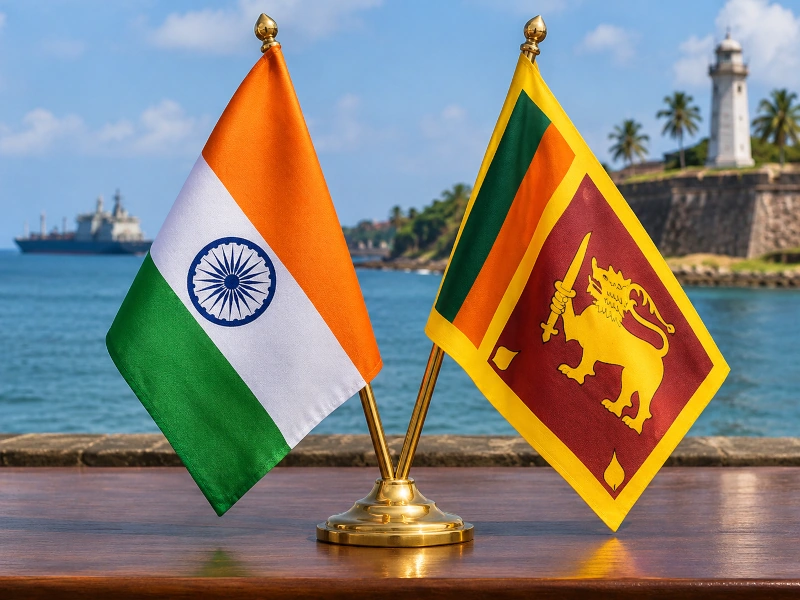
The Colombo Security Conclave (CSC) has adopted a Roadmap of Cooperation for 2026–2027, reaffirming its commitment to regional peace, maritime security and collective preparedness against emerging security challenges in the Indian Ocean Region. The decision was taken during the eighth National Security Advisor-level meeting hosted by the Maldives at Villa Nautica Paradise Island on 25 November 2026. A joint statement released on 26 November outlined the grouping’s priorities for strengthening institutional cooperation, capacity building and coordination among participating nations.
Strengthening Regional Security Partnerships
India was represented at the meeting by National Security Advisor Ajit Doval, alongside senior national security and defence officials from the Maldives, Sri Lanka and Bangladesh. Mauritius participated virtually, while Australia and Malaysia attended as guest countries. The Colombo Security Conclave comprises India, the Maldives, Mauritius, Sri Lanka, Bangladesh and Seychelles, providing a dedicated institutional mechanism for regional security cooperation.
The meeting reviewed regional security priorities and the importance of sustained engagement among Indian Ocean nations. Participating countries emphasised the need to strengthen institutional capabilities through professional training, knowledge exchange and closer coordination between national security agencies.
Roadmap of Cooperation for 2026–2027
India, the Maldives, Mauritius and Sri Lanka signed the agreed minutes and adopted the new cooperation roadmap. The document establishes planned activities and deliverables intended to translate shared security priorities into practical institutional cooperation. Its adoption provides continuity to the initiatives undertaken following the previous National Security Advisor-level meeting held in New Delhi on 20 November 2025.
Vice Admiral S. N. Ghormade (Retd.), the inaugural Secretary General of the Colombo Security Conclave, presented a review of the progress made in implementing the decisions of the previous meeting. The review provided a basis for assessing ongoing initiatives and identifying areas requiring continued collaboration.
Five Pillars of Regional Security Cooperation
The Colombo Security Conclave operates through five principal areas of cooperation: maritime safety, counterterrorism, combating trafficking and organised crime, cybersecurity and critical infrastructure protection, and humanitarian assistance and disaster relief. Together, these areas address conventional and non-conventional threats that frequently extend beyond national boundaries. The new roadmap seeks to strengthen cooperation across these domains through training programmes, institutional partnerships and the exchange of operational expertise.
Maritime cooperation remains particularly relevant to countries dependent on the Indian Ocean for commerce, fisheries, energy transportation and economic connectivity. Similarly, cooperation in cybersecurity and disaster management can help participating nations develop stronger institutional capabilities to respond to emerging technological and environmental challenges.
India’s Role in Indian Ocean Security
Addressing the meeting, National Security Advisor Ajit Doval emphasised the importance of sustained cooperation among Indian Ocean countries in advancing security, stability and economic prosperity. He highlighted the relationship between the Colombo Security Conclave, India’s Neighbourhood First policy and its MAHASAGAR vision for mutual and holistic advancement in security and growth across regions.
For India, the Conclave provides a platform for deepening security partnerships with neighbouring countries through institutional engagement and capacity building. The framework also complements India’s broader maritime diplomacy by recognising the interdependence of regional security, economic development and the protection of maritime commons.
Building a Secure and Resilient Indian Ocean Region
The adoption of the 2026–2027 Roadmap of Cooperation marks another stage in the institutional development of the Colombo Security Conclave. Its emphasis on practical collaboration provides participating countries with opportunities to improve preparedness, strengthen communication between security agencies and develop coordinated responses to shared challenges.
The effectiveness of the roadmap will depend on the implementation of its planned initiatives and the continuity of cooperation among member countries. By advancing a framework based on mutual assistance, shared responsibilities and respect for national sovereignty, the Colombo Security Conclave can contribute towards a peaceful, secure and economically resilient Indian Ocean Region.
References
- President’s Office, Republic of Maldives — Joint Press Statement of the Eighth NSA-Level Meeting of the Colombo Security Conclave, 26 November 2026.
- President’s Office, Republic of Maldives — Eighth National Security Advisors Meeting of Colombo Security Conclave Concludes in Maldives, 25 November 2026.
- News On AIR — Colombo Security Conclave Reaffirms Commitment to Promote Regional Peace Through Cooperation, 26 November 2026.
- News On AIR — NSA Ajit Doval Addresses Eighth National Security Advisors’ Meeting of Colombo Security Conclave in Maldives, 25 November 2026.
You may also like
-
Kadet Defence Systems’ Indigenous JX3-30 Jet UAV Completes 50 Flights
-
Speed4 Defence Systems to Establish ₹50-Crore Defence Manufacturing Facility in Assam
-
IAF Expected to Receive First Made-in-India C-295 by December 2026
-
India Reaffirms Commitment to Indian Ocean Security at Eighth Colombo Security Conclave
-
Apollyon Dynamics Sets Ambitious Manufacturing Target of 20,000 Nightshade MkII Drones per Month
