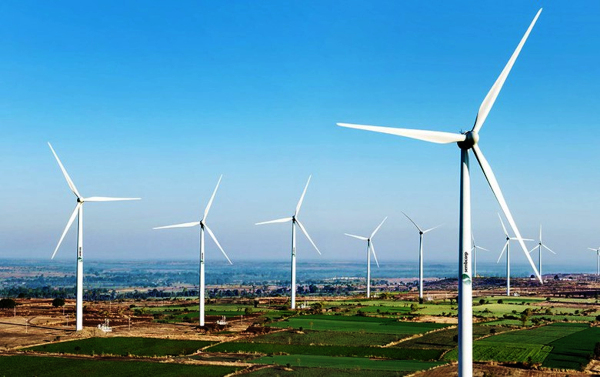
Tata Power Renewable Energy Limited (TPREL), a subsidiary of Tata Power Company Limited, has commissioned a 100.8 MW wind energy project at Ausa in Maharashtra’s Latur district. The commissioning, announced on November 16, 2026, marks another addition to the company’s operational renewable energy portfolio and strengthens its wind power generation capabilities.
The project will supply renewable electricity to Tata Power Mumbai Distribution (TPC-D) and is expected to generate approximately 308 million units of electricity annually. According to the company, the facility is also expected to reduce carbon dioxide emissions by approximately 252,560 tonnes every year, contributing to its efforts to expand clean electricity generation.
The wind farm comprises 28 wind turbine generators, each with a rated capacity of 3.6 MW, providing a combined installed capacity of 100.8 MW. The project incorporates advanced wind turbine technology and associated transmission infrastructure designed to deliver electricity to the distribution network.
28 Wind Turbines Installed at Ausa
The newly commissioned wind energy facility consists of 28 horizontal-axis wind turbine generators using the SG 3.6-145 model. Each turbine has a rated power generation capacity of 3.6 MW, bringing the total installed capacity of the project to 100.8 MW.
Horizontal-axis wind turbines convert the kinetic energy of moving air into mechanical energy, which is subsequently transformed into electricity through a generator. The SG 3.6-145 turbine configuration incorporates a large rotor designed to capture wind energy and support electricity generation under suitable operating conditions.
The Ausa project is expected to generate approximately 308 million units of electricity annually, based on the company’s projected generation potential. The electricity will be supplied to Tata Power’s Mumbai distribution operations, contributing to the renewable energy component of the power supplied through its distribution network.
The commissioning represents the completion of the project’s development and construction phase, allowing the facility to contribute to Tata Power Renewable Energy’s operational generation capacity.
Innovative Monopole Transmission Infrastructure
An important engineering feature of the project is the installation of a monopole Extra High Voltage (EHV) transmission line, undertaken for the first time by Tata Power Renewable Energy’s Wind Project Execution Division.
According to the company’s official announcement, the project encountered a significant technical challenge when its grid connectivity plan was revised during construction. The original design involved an underground cable arrangement, which was subsequently changed to a monopole transmission line configuration.
The change required modifications to the transmission system design, procurement arrangements and construction activities. Integrating the revised infrastructure into an ongoing wind energy project involved additional engineering and implementation requirements.
A monopole transmission structure uses a single vertical support to carry electrical conductors, providing an alternative to conventional lattice-type transmission towers. Such structures are used in electricity transmission networks where engineering, space utilisation and installation requirements favour their adoption.
Despite the modification to the grid connectivity arrangement, the project execution team successfully incorporated the revised configuration without affecting the overall project schedule.
The installation represents an additional engineering capability developed by Tata Power Renewable Energy in the execution of utility-scale wind power projects.
Annual Generation Estimated at 308 Million Units
With an installed capacity of 100.8 MW, the Ausa wind farm has an estimated annual generation potential of 308 million units of electricity.
The generation estimate reflects the company’s assessment of the project’s expected operating performance under local wind conditions.
Wind power generation depends on several factors, including wind speed, turbine availability, seasonal weather patterns and grid operating conditions. Consequently, actual electricity generation may vary from the annual projections.
Tata Power Renewable Energy estimates that the electricity produced by the project will help avoid approximately 252,560 tonnes of carbon dioxide emissions annually.
The emissions reduction figure represents the company’s projected environmental benefit from supplying renewable electricity that can displace electricity generated from more carbon-intensive sources.
The project adds renewable generation capacity to Maharashtra’s electricity infrastructure while supporting Tata Power’s efforts to supply cleaner electricity to its distribution consumers.
Tata Power Renewables’ Utility-Scale Portfolio Reaches 12.1 GW
Following the commissioning of the Ausa wind project, Tata Power Renewable Energy’s total utility-scale renewable energy portfolio has reached 12.1 GW.
Of this capacity, approximately 7.3 GW is operational, comprising 5.9 GW of solar power and 1.4 GW of wind energy.
The remaining 4.8 GW is under various stages of implementation, representing the company’s ongoing renewable energy development pipeline.
The company’s renewable energy activities encompass solar, wind, hybrid power projects, round-the-clock renewable energy solutions and energy storage systems.
Tata Power Renewable Energy also undertakes engineering, procurement and construction activities, as well as operations and maintenance services for renewable energy projects.
In addition to utility-scale generation, the company operates in rooftop solar installations, distributed energy solutions and electric vehicle charging infrastructure.
The Ausa commissioning contributes to the expansion of the company’s operational wind energy portfolio, which forms an important component of its renewable power generation business.
Expanding India’s Wind Energy Infrastructure
Wind energy forms an important part of India’s renewable electricity generation portfolio, alongside solar power, hydropower and other non-fossil energy sources.
Maharashtra is among the Indian states with established wind energy generation infrastructure, supported by suitable wind resources and electricity transmission networks.
The development of utility-scale wind farms contributes to the geographical diversification of renewable energy generation and provides an additional source of electricity for distribution companies and industrial consumers.
Wind and solar power also have different generation patterns, making their combined development relevant to electricity system planning and renewable energy integration.
Projects such as the Ausa wind farm add operational generating capacity while supporting the development of associated transmission infrastructure and technical capabilities in renewable energy project execution.
The successful implementation of the monopole transmission configuration further highlights the engineering requirements involved in connecting large renewable energy facilities to electricity networks.
Strengthening Tata Power’s Clean Energy Portfolio
The commissioning of the 100.8 MW Ausa wind project represents another operational milestone in Tata Power Renewable Energy’s expansion of renewable electricity generation.
The facility combines 28 wind turbine generators with a newly implemented monopole transmission arrangement and is expected to contribute 308 million units of electricity annually to Tata Power’s Mumbai distribution network.
With its operational renewable capacity reaching 7.3 GW and another 4.8 GW under implementation, Tata Power Renewable Energy continues to expand its presence in India’s utility-scale renewable energy sector.
The Ausa project demonstrates the company’s ability to complete wind energy infrastructure while addressing engineering challenges associated with grid connectivity. Its commissioning contributes to the expansion of domestic renewable power generation and supports India’s continuing development of a more diversified and sustainable electricity system.
You may also like
-
Hindustan Zinc Approves ₹80,000 Crore Expansion to Nearly Double Metal Production Capacity
-
Cochin Shipyard Signs MoU with Netherlands’ Damen Shipyards for Future Shipbuilding Projects
-
India Joins US and Eight Nations in Declaration to Secure AI Supply Chains
-
India’s PLI Schemes Achieve 76% of Investment Target and 64% of Production Goal
-
Bharat Semi Raises $24 Million to Develop AI-Enabled Image Sensors for Drones, Robotics and Autonomous Systems
