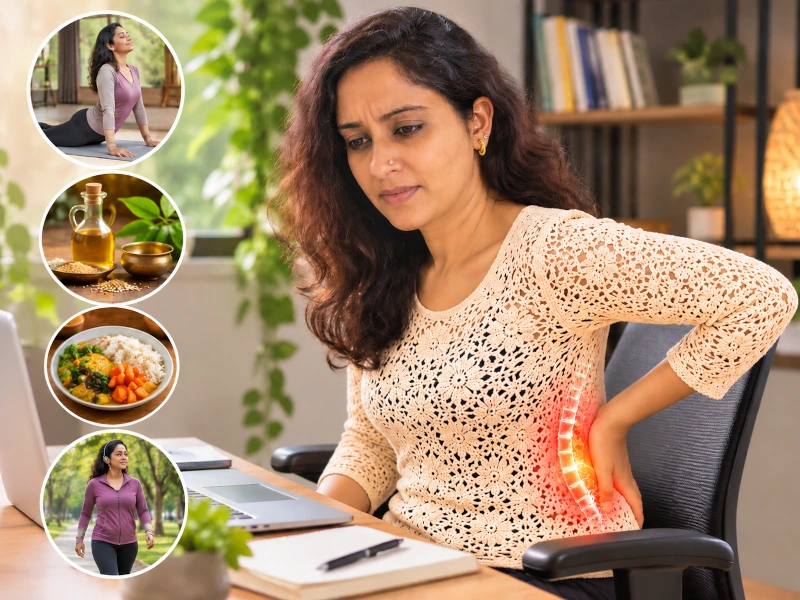
Back pain has become one of the most common physical complaints associated with modern lifestyles. Long hours of sitting, limited physical activity, repetitive movements, inadequate sleep and excessive physical strain can affect the muscles, joints and other structures supporting the spine. For many people, discomfort begins as occasional stiffness in the lower back but gradually interferes with walking, working, sleeping and everyday activities.
The World Health Organization identifies low back pain as the leading cause of disability worldwide. In 2020, approximately 619 million people were affected globally. Although back pain becomes more common with advancing age, it can affect individuals at almost any stage of life. The condition is particularly relevant to working professionals, students, older adults and people whose daily routines involve prolonged sitting or physically demanding activities.
Ayurveda approaches back pain through an understanding of bodily movement, physical strength, digestion, daily routines and the balance of the Doṣas. The traditional system places particular emphasis on Vāta Doṣa, which is associated with movement, dryness, lightness and mobility. In classical Ayurvedic understanding, disturbances involving Vāta may manifest through pain, stiffness, restricted movement and discomfort affecting the back and other parts of the musculoskeletal system.
Ayurvedic literature describes several conditions involving the back, including Kaṭiśūla, a term associated with pain in the lumbar region, and Kaṭigraha, which describes stiffness and restricted movement of the lower back. Other classical conditions, such as Gridhrasī, are traditionally associated with symptoms resembling certain forms of radiating leg pain.
Modern medicine recognises that back pain can arise from several different causes, including muscular strain, disc-related conditions, nerve irritation, inflammatory disorders and structural abnormalities. These explanations are distinct from Ayurvedic Doṣa theory, although both approaches acknowledge the importance of appropriate movement, physical conditioning and daily habits.
The central Ayurvedic approach to maintaining a healthy back is to preserve comfortable movement, avoid excessive strain, maintain regular daily routines and support the body through appropriate nourishment and rest.
Vāta Doṣa and the Ayurvedic Understanding of Back Pain
Vāta occupies an important position in Ayurvedic explanations of movement and pain. Among the three principal Doṣas—Vāta, Pitta and Kapha—it is traditionally associated with the activities of movement, communication and the functioning of several bodily processes.
Classical Ayurvedic theory attributes qualities such as dryness, coldness, lightness, roughness and mobility to Vāta. When these qualities are believed to become excessive, Ayurveda associates them with various forms of physical discomfort, including stiffness, muscular tightness, pain and restricted movement.
The lower back is particularly important within this traditional framework because the pelvic and lower abdominal regions are closely associated with the principal locations of Vāta. The traditional concept of Apāna Vāta includes functions associated with the lower part of the body.
Ayurvedic practitioners may therefore consider lower back discomfort in relation to aggravated Vāta, particularly when symptoms are associated with stiffness, dryness, irregular routines or physical overexertion.
Traditional recommendations for managing such conditions frequently emphasise warmth, suitable oil application, moderate movement, adequate rest and regular meals.
However, these descriptions belong to the theoretical framework of Ayurveda and do not establish the anatomical or physiological causes of an individual’s symptoms. A person experiencing persistent back pain may have a condition requiring medical examination, imaging in selected circumstances or specialised treatment.
The practical relevance of the Vāta-oriented approach lies in its emphasis on regularity, moderation and avoiding lifestyle habits that contribute to physical strain and discomfort.
Prolonged Sitting and the Modern Problem of Back Discomfort
One of the most significant lifestyle changes affecting physical activity is the increasing amount of time people spend sitting. Office employees, students, drivers and individuals working with computers may remain in seated positions for several hours each day.
Prolonged sitting can contribute to discomfort, particularly when combined with limited physical activity, poor muscular endurance and infrequent changes in posture. Remaining in the same position for extended periods may cause muscles to feel stiff and reduce opportunities for normal movement.
The relationship between sitting and back pain is complex, however. Sitting alone does not inevitably cause spinal damage, and no single posture has been demonstrated to prevent all forms of back pain. The more important consideration is often the ability to move comfortably, vary positions and maintain adequate physical conditioning.
Ayurveda’s emphasis on appropriate daily activity offers a useful perspective on this problem. Its traditional recommendations discourage both excessive physical exertion and habits that undermine normal movement.
Individuals who work at desks can benefit from standing periodically, walking short distances and gently moving the shoulders, hips and lower back throughout the day. Changing position every 30–60 minutes may serve as a practical reminder to avoid prolonged immobility, although there is no universally required interval.
The most useful approach is not to maintain one supposedly perfect sitting posture throughout the day, but to develop a routine that allows frequent, comfortable changes in position.
Maintaining a suitable desk height, placing the computer screen at a comfortable viewing level and arranging frequently used objects within easy reach can also reduce unnecessary muscular effort.
Daily Movement and the Importance of Vyāyāma
Ayurveda describes physical exercise through the concept of Vyāyāma, an important component of Dinacharya, or the traditional daily routine.
Classical Ayurvedic guidance recommends exercise according to an individual’s age, strength, constitution, physical condition and seasonal circumstances. Moderate activity is traditionally considered beneficial, while excessive exertion is discouraged because it may produce fatigue and disturb bodily balance.
Modern clinical guidance similarly recognises physical activity as an important component of preventing and managing many forms of non-specific lower back pain.
Walking, swimming, cycling and appropriately selected strengthening exercises can help maintain physical fitness and support the muscles involved in spinal movement. Regular movement also reduces the effects of inactivity and can improve confidence in performing everyday activities.
For people experiencing mild back discomfort, short walks may provide a practical starting point. Walking at a comfortable pace allows the body to move without requiring complicated equipment or demanding exercise techniques.
The duration and intensity can be increased gradually according to individual tolerance. People recovering from injury or experiencing persistent symptoms may require professional guidance to identify suitable activities.
The relationship between Ayurvedic Vyāyāma and modern exercise recommendations is particularly relevant: both emphasise the importance of appropriate physical activity rather than prolonged inactivity or excessive exertion.
Exercise should remain proportionate to the individual’s condition, and movements that produce worsening neurological symptoms or substantial pain should be assessed by a healthcare professional.
Strengthening the Muscles That Support the Spine
The spine depends upon the coordinated activity of numerous muscles, including those of the abdomen, back, hips and pelvis. These muscles help maintain stability and support everyday movements such as walking, bending, lifting and turning.
When muscular strength and endurance decline, certain activities may become more difficult or uncomfortable. Regular strengthening exercises can improve physical capacity and help people manage everyday demands more effectively.
Modern rehabilitation programmes for lower back pain commonly include exercises targeting the trunk, hips and surrounding muscles. Depending upon the individual’s condition, these may involve gentle abdominal activation, controlled pelvic movements, modified bridging exercises and other supervised strengthening activities.
Ayurveda does not describe these exercises through modern anatomical terminology, but its broader emphasis on Bala, or physical strength, provides a traditional basis for valuing appropriate physical conditioning.
The objective should be to build balanced muscular strength rather than concentrate exclusively on the lower back. Hip strength, abdominal endurance and general physical fitness all contribute to comfortable movement.
A strong and well-conditioned body is better prepared to meet the physical demands of everyday life, making gradual strengthening an important component of long-term back care.
Individuals with persistent back pain, osteoporosis, recent spinal surgery or diagnosed neurological conditions should seek advice before beginning unfamiliar strengthening programmes.
Yoga and Gentle Movement for Back Comfort
Yoga provides a structured approach to combining physical movement, breathing awareness and relaxation. Gentle yoga practices may help improve flexibility, muscle endurance, balance and confidence in movement.
Certain modified postures and movements may be suitable for people experiencing non-specific lower back discomfort. These can include gentle pelvic movements, comfortable spinal mobility exercises and carefully adapted standing postures.
Marjaryāsana, commonly associated with the cat movement, is often used in gentle yoga routines to encourage controlled spinal movement. Tāḍāsana can help develop awareness of standing balance and body alignment, while appropriately modified relaxation postures may reduce unnecessary muscular tension.
However, yoga practices must be selected according to individual circumstances. Deep forward bending, forceful twisting, extreme spinal extension and prolonged positions that aggravate symptoms may be unsuitable for people with particular spinal conditions.
Scientific research suggests that yoga may provide modest improvements in pain and function for some people experiencing chronic non-specific lower back pain. It should not be presented as a cure for disc disease, nerve compression or other structural conditions.
The purpose of back-friendly yoga is to restore confidence in movement and support physical conditioning rather than achieve difficult postures or force the spine into extreme positions.
People with significant pain or neurological symptoms should seek clinical assessment before undertaking exercises that place substantial strain on the spine.
Abhyanga: The Traditional Practice of Oil Massage
Abhyanga, the application of oil through massage, occupies an important position in Ayurvedic Dinacharya. Classical Ayurvedic texts describe oil massage as a practice associated with nourishment, physical comfort and the management of Vāta-related conditions.
Sesame oil is widely used in traditional Ayurvedic massage, while other oils and medicated preparations may be selected according to individual circumstances and the recommendations of qualified Ayurvedic practitioners.
For people experiencing muscular tightness, gentle massage around the lower back may provide temporary comfort and relaxation. Slow movements over the surrounding muscles, without excessive pressure, can form part of a personal relaxation routine.
In Ayurvedic understanding, oil massage is traditionally considered particularly relevant when symptoms are associated with dryness, stiffness and aggravated Vāta.
Modern clinical evidence suggests that massage may provide short-term relief for some people with lower back pain. However, the benefits vary, and there is insufficient evidence to conclude that oil massage can correct spinal abnormalities, reverse disc degeneration or cure chronic back disorders.
The practical value of Abhyanga lies in its potential to support relaxation and temporary muscular comfort, particularly when combined with suitable exercise and other evidence-based measures.
Massage should be avoided or modified when there is a suspected fracture, acute injury, infection, significant inflammation or another condition in which pressure could cause harm. Vigorous spinal manipulation should not be attempted as part of home oil massage.
Warmth and the Traditional Concept of Svedana
Ayurveda frequently incorporates warmth into traditional approaches to Vāta-related discomfort. Svedana refers to therapeutic practices intended to produce sweating or warmth and is described in classical Ayurvedic treatment systems.
Traditional applications may involve warm compresses, steam-based procedures or other methods selected according to the individual’s condition. These practices are generally distinguished from routine bathing and require appropriate supervision when used therapeutically.
For everyday muscular stiffness, a warm bath or carefully applied warm compress may provide temporary comfort. Heat can help some individuals relax tight muscles and move more comfortably.
However, heat does not treat every cause of back pain. Recent injuries, acute inflammation and certain medical conditions may require different approaches. Excessive heat can also cause burns, particularly in people with reduced skin sensation.
The objective of using warmth is to improve comfort and encourage gentle movement, not to replace rehabilitation or medical treatment.
Traditional Svedana procedures should be undertaken only with appropriate professional guidance, particularly when significant back pain or underlying medical conditions are present.
Food Habits and the Ayurvedic Concept of Nourishment
Ayurveda considers food an important foundation of health. The concepts of Āhāra, Agni and Dhātu Poṣaṇa form part of its traditional understanding of digestion, metabolism and tissue nourishment.
Agni represents the Ayurvedic concept of digestive and metabolic transformation. Classical dietary guidance emphasises regular eating habits, appropriate food quantities and meals suited to individual digestive capacity.
For people experiencing conditions traditionally associated with Vāta, Ayurveda often recommends warm, freshly prepared meals and avoidance of excessively irregular eating patterns.
Common Indian foods such as cooked rice, whole grains, pulses, vegetable preparations, soups and suitable sources of protein can be incorporated into a balanced diet.
From a modern medical perspective, nutrition supports muscular health, bone strength and general physical functioning. Adequate protein helps maintain muscle tissue, while calcium and vitamin D are important for normal bone metabolism.
These nutrients do not directly cure common forms of back pain, but deficiencies and poor overall nutrition may contribute to reduced physical resilience or musculoskeletal problems.
The most important nutritional principle is to maintain a balanced diet that supports muscle strength, bone health, healthy body weight and general well-being.
Traditional dietary practices can be retained where appropriate, provided they meet individual nutritional requirements.
Turmeric, Ginger and Traditional Dietary Ingredients
Turmeric and ginger are widely used in Indian cooking and have long associations with Ayurvedic dietary traditions.
Turmeric contains curcuminoids, including curcumin, while ginger contains several biologically active compounds. These substances have been investigated for possible anti-inflammatory and other biological effects.
However, evidence supporting their use as specific treatments for lower back pain remains limited. The presence of biologically active compounds does not establish that consuming ordinary culinary quantities of turmeric or ginger will prevent spinal degeneration, correct disc problems or relieve all forms of pain.
These ingredients can nevertheless form part of a varied and nutritionally balanced diet. Using them in conventional cooking is different from taking concentrated extracts or high-dose supplements.
People considering herbal supplements should be aware that some products may interact with medicines or cause adverse effects.
Within the Ayurvedic lifestyle approach, the reasonable emphasis is on balanced meals and suitable food habits rather than reliance upon a single medicinal ingredient.
Maintaining a Healthy Body Weight
Body weight is another important consideration in musculoskeletal health. Excess weight can increase the physical demands associated with movement and may contribute to the overall burden of lower back pain.
The World Health Organization identifies obesity among the risk factors associated with non-specific low back pain.
Maintaining a healthy body weight through balanced nutrition and regular physical activity may therefore form part of a comprehensive approach to back health.
Ayurveda traditionally emphasises dietary moderation and the avoidance of both excessive eating and excessive inactivity. Its recommendations concerning appropriate food quantities and regular exercise can be incorporated into modern weight-management routines.
However, weight management should not rely upon extreme fasting, restrictive diets or strenuous exercise programmes that place additional strain on the body.
A gradual approach that combines appropriate physical activity, adequate nutrition and sustainable eating habits is more useful than sudden or excessive attempts to reduce body weight.
The objective is to improve overall physical health and functional capacity rather than focus exclusively upon body weight as the explanation for back pain.
Lifting, Bending and Everyday Physical Strain
Back discomfort can also develop in association with repetitive lifting, demanding manual work and sudden increases in physical activity.
The spine is designed to move, including bending and rotation, and these movements are not inherently harmful. However, handling loads beyond one’s current physical capacity or performing unfamiliar strenuous tasks can increase the likelihood of discomfort.
Ayurveda’s traditional emphasis on avoiding Atiyoga, or excessive activity, provides a useful perspective on the importance of moderation.
People who regularly lift objects should develop appropriate strength and use practical handling methods that allow them to remain comfortable and in control of the load.
Keeping heavy objects reasonably close to the body, avoiding sudden uncontrolled movements and seeking assistance when handling difficult loads can reduce unnecessary strain.
Individuals returning to physically demanding activities after a period of inactivity should increase their workload gradually.
The important principle is to match physical demands with individual strength, conditioning and capacity rather than avoid ordinary spinal movement altogether.
Sleep and the Recovery of the Musculoskeletal System
Sleep plays an important role in physical recovery, pain regulation and general well-being. Poor sleep can increase fatigue and make existing discomfort more difficult to manage.
Ayurveda recognises Nidrā, or sleep, as one of the fundamental supports of health. Traditional guidance encourages regular sleeping habits and adequate rest as part of maintaining bodily balance.
People experiencing back discomfort may benefit from adjusting their sleeping position to improve comfort. Side sleeping with suitable support between the knees or lying on the back with support beneath the knees may help some individuals, although no single position is ideal for everyone.
Mattress comfort is also relevant, but the most expensive or firmest mattress is not necessarily the most suitable. Individual preference, body support and the ability to sleep comfortably are more important considerations.
A consistent sleeping schedule, reduced exposure to stimulating activities before bedtime and sufficient time for rest may improve overall sleep quality.
Adequate sleep supports the body’s ability to cope with pain and participate in physical activity, making it an important component of a balanced back-care routine.
Persistent night pain, especially when accompanied by other concerning symptoms, should be medically assessed rather than attributed automatically to an unsuitable mattress or sleeping position.
Stress, Mental Fatigue and Back Pain
Back pain is influenced not only by physical factors but also by psychological and social circumstances. Stress, anxiety, disrupted sleep and prolonged mental fatigue can affect muscle tension, pain perception and the ability to manage persistent discomfort.
Modern research increasingly recognises that chronic lower back pain may involve interactions between physical, psychological and social factors. The World Health Organization consequently recommends a person-centred approach that can include exercise, education, psychological support and selected physical therapies.
Ayurveda traditionally regards mental and physical well-being as interconnected. Practices involving regular routines, appropriate rest, meditation and breathing awareness are commonly incorporated into Ayurvedic lifestyle recommendations.
Gentle breathing practices and relaxation exercises may help individuals manage stress and reduce the tension associated with demanding daily routines. Meditation and mindfulness practices may also support coping with persistent pain, although their effects vary between individuals.
Such practices should not be used to imply that back pain is imaginary or caused exclusively by emotional distress. Physical symptoms are real, and appropriate assessment remains important.
The practical lesson is that effective back care should address physical activity, sleep, stress and daily functioning together rather than treating each factor in isolation.
Back Pain Among Office Workers and Students
Office workers and students often experience long periods of sitting, limited exercise and repeated movements involving computers, notebooks and mobile devices.
These habits can contribute to muscular fatigue and discomfort, particularly when daily activity is insufficient to maintain general physical conditioning.
For office workers, arranging the workstation to support comfortable movement is important. Computer screens should be positioned conveniently, seating should allow appropriate support and frequently used objects should remain within easy reach.
Short walking breaks and occasional changes in posture can help interrupt prolonged sitting.
Students may benefit from adjusting study arrangements, avoiding unnecessarily heavy loads and participating in regular recreational activity.
Mobile phones and laptops should be used in ways that allow comfortable changes in position rather than requiring prolonged neck or back flexion.
Ayurveda’s emphasis on balanced daily routines offers a practical framework for incorporating physical activity into educational and professional schedules.
The most effective daily habit is to ensure that work or study does not eliminate opportunities for normal movement, exercise and rest.
Back Care During Ageing
Ageing brings changes in muscle strength, bone density, flexibility and physical endurance. These changes may influence the likelihood of experiencing back discomfort, but significant pain should not automatically be regarded as an unavoidable consequence of growing older.
Regular physical activity and appropriately selected strengthening exercises can help older adults preserve mobility and independence.
Ayurveda traditionally associates later life with greater prominence of Vāta and consequently emphasises gentle movement, regularity, suitable nourishment, warmth and rest.
These recommendations can support a comfortable daily routine when adapted to the individual’s physical condition.
However, older adults may also experience specific medical conditions such as osteoporosis, vertebral compression fractures or degenerative spinal disorders.
Sudden back pain following even a minor fall can be particularly important in individuals with reduced bone strength.
People experiencing repeated falls, progressive weakness or substantial restrictions in mobility should seek professional medical assessment.
The goal of back care during ageing is to preserve strength, confidence and independence through appropriately selected activities and timely healthcare support.
Recognising When Back Pain Requires Medical Attention
Although many episodes of lower back pain improve with suitable activity and conservative care, certain symptoms require prompt medical assessment.
Back pain accompanied by progressive leg weakness, significant numbness or persistent radiating pain may indicate nerve involvement. Symptoms following a serious injury, unexplained fever, substantial unexplained weight loss or a history of cancer also warrant medical evaluation.
New loss of bladder or bowel control, difficulty passing urine, numbness around the groin or saddle region, or rapidly developing weakness in the legs requires emergency medical attention. These symptoms may indicate serious compression of spinal nerves.
Persistent pain that interferes with sleep, work or normal activity should also be assessed by a qualified healthcare professional.
Ayurvedic oil massage, herbal preparations and yoga should not be used to delay the diagnosis or treatment of potentially serious spinal conditions.
Specialised Ayurvedic therapies, including Kaṭi Basti and certain forms of Svedana, should be considered only after suitable clinical assessment and under appropriately qualified supervision.
Herbal and mineral formulations also require attention to product quality and safety. Some Ayurvedic medicinal preparations have been found to contain potentially toxic metals, and interactions with conventional medicines are possible.
The safest approach is to ensure that traditional practices complement rather than replace necessary medical care.
Developing a Practical Ayurvedic-Inspired Daily Routine
A practical back-care routine can begin with a regular waking time and a few minutes of comfortable movement. Gentle walking or suitable stretching may help the body transition from rest to daily activity without unnecessary strain.
During the morning, individuals may undertake moderate exercise appropriate to their physical capacity. This can include walking, gentle yoga or a strengthening programme designed to support the back and surrounding muscles.
Those who find oil massage relaxing may incorporate gentle Abhyanga around healthy, non-injured areas of the body. The practice should remain comfortable and should not involve excessive pressure over the spine.
Throughout the working day, brief periods of standing, walking and changing posture can interrupt prolonged inactivity. Meals should provide adequate protein, vegetables, whole grains and other essential nutrients.
In the evening, a comfortable walk or light mobility routine may help maintain activity without producing excessive fatigue.
A regular sleeping schedule and sufficient rest complete the daily routine.
People experiencing persistent or recurrent back pain may benefit from an individually designed physiotherapy or rehabilitation programme rather than relying solely upon general lifestyle advice.
The effectiveness of a daily routine depends upon consistency, suitability and gradual progression. Sustainable habits are generally more valuable than occasional periods of strenuous exercise followed by prolonged inactivity.
Ayurveda’s Enduring Approach to Back Health
Ayurveda’s approach to back health reflects its broader philosophy of maintaining physical well-being through daily discipline, suitable nourishment, moderate activity and adequate rest.
Its traditional concepts of Vāta, Dinacharya, Vyāyāma, Abhyanga and Nidrā encourage individuals to consider the cumulative effects of their everyday habits upon physical comfort and mobility.
Modern healthcare guidance supports many of the general lifestyle objectives associated with this approach, particularly regular physical activity, appropriate strengthening, healthy sleep, weight management and the avoidance of unnecessary inactivity.
At the same time, Ayurvedic concepts and treatments should be distinguished from established anatomical explanations and evidence-based medical interventions. Traditional practices may offer supportive benefits for comfort and well-being, but they cannot be assumed to cure every cause of back pain.
The enduring lesson is that a healthy back is supported by regular movement, adequate muscular strength, balanced nutrition, comfortable working habits, sufficient sleep and appropriate management of physical and mental stress.
By integrating suitable Ayurvedic lifestyle traditions with modern medical understanding, individuals can develop sustainable routines that support spinal mobility, physical confidence and long-term well-being.
You may also like
-
India Crosses One Crore HPV Vaccine Doses Under National Vaccination Campaign
-
Ayurveda and Seasonal Allergies: Adjusting Lifestyle Through the Year
-
Ayurveda and Hair Health: Daily Habits Beyond Oils and Herbs
-
Government Awards Ayush Quality Mark Certificates to Hospitals and Manufacturers to Strengthen Quality Standards
-
Ayurveda and Skin Health: The Role of Food, Sleep and Routine
