French naval defence company Naval Group’s Indian subsidiary has participated in a technical seminar organised by the Indian Navy on submarine hull maintenance, lifecycle sustainment and Air Independent Propulsion (AIP) jumboisation. The engagement focused on technical aspects of maintaining the Indian Navy’s Kalvari-class submarines and supporting their long-term operational availability.
The seminar was organised by the Indian Navy’s HITU (MBI) at the Western Naval Command in Mumbai on October 29, 2026. Naval Group India confirmed its participation in an announcement on November 12, highlighting its continued technical cooperation with the Indian Navy in maintaining and sustaining the Kalvari-class submarine fleet.
Naval Group Shares Expertise in Kalvari-Class Hull Systems
During the seminar, Naval Group India delivered a technical presentation covering the hull systems of the Kalvari-class submarines, with particular emphasis on maintenance requirements and lifecycle support. The presentation formed part of the wider discussions on submarine hull sustainment and the technical considerations associated with maintaining conventional submarines throughout their operational service.
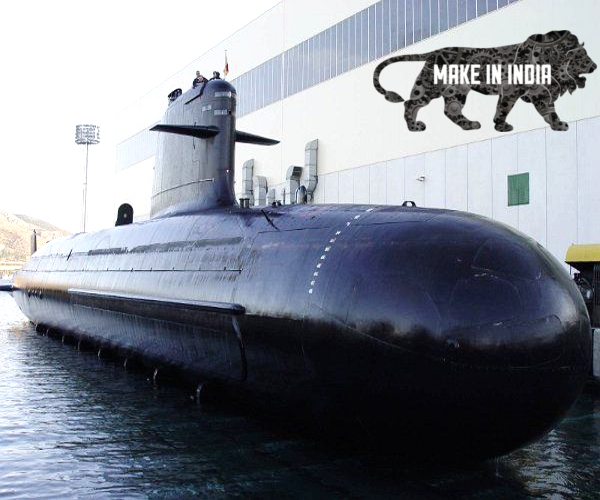
The Kalvari-class submarines are based on the French Scorpene design and were constructed in India by Mazagon Dock Shipbuilders Limited (MDL) under Project-75, with technology collaboration and support from Naval Group. The programme has established an industrial and technical partnership between India and France covering submarine construction, maintenance and associated engineering capabilities.
Naval Group India’s participation reflects its continuing role in providing technical assistance for these submarines. The company maintains an Indian industrial presence supporting submarine repair, maintenance, spare-parts management and engineering services, enabling technical support for the fleet throughout its operational lifecycle.
Focus on Submarine Maintenance and Lifecycle Sustainment
Submarine sustainment involves maintaining the structural integrity, reliability and performance of the vessel’s systems over prolonged periods of operation. Hull maintenance is particularly important because conventional submarines operate under demanding underwater conditions, where structural components and associated systems must continue to meet stringent safety and operational requirements.
The technical discussions at the Western Naval Command seminar addressed submarine hull maintenance and lifecycle support, bringing together expertise relevant to the Indian Navy’s existing submarine fleet. Naval Group’s presentation concentrated on the hull systems of the Kalvari class, drawing upon its experience as the original designer of the Scorpene submarine platform.
Naval Group India has progressively developed domestic maintenance and repair capabilities to support the Indian Navy. Its facilities include workshops and testing infrastructure in Maharashtra and Karnataka, including a technical workshop at Karwar established to support maintenance activities associated with Kalvari-class submarines.
These facilities form part of the company’s established support network in India, encompassing engineering assistance, equipment maintenance, technical services and the supply of components required for submarine sustainment.
AIP Jumboisation and India’s Indigenous Submarine Propulsion Programme
The seminar also addressed AIP jumboisation, a significant subject in India’s ongoing programme to integrate indigenous Air Independent Propulsion technology into conventional submarines.
AIP systems allow diesel-electric submarines to generate electrical power while submerged without relying as frequently on atmospheric oxygen. This reduces the need for submarines to surface or operate their snorkelling systems to recharge batteries, thereby improving submerged endurance.
Jumboisation involves modifying a submarine’s hull to accommodate an additional section containing new equipment or systems. In the context of the Kalvari-class programme, this process is associated with the planned integration of India’s indigenous AIP system into the existing submarine design.
India’s indigenous fuel-cell-based AIP technology has been developed by the Defence Research and Development Organisation’s Naval Materials Research Laboratory (NMRL). The programme involves cooperation between DRDO, the Indian Navy, Mazagon Dock Shipbuilders Limited and industrial partners.
Naval Group also has an established role in supporting the integration of the indigenous AIP system into the Kalvari-class platform. In January 2023, DRDO and Naval Group signed an agreement covering cooperation in the safe integration of the Indian-developed propulsion technology into the submarine design.
The October seminar provided a forum for technical discussions concerning submarine maintenance, sustainment and AIP-related hull modifications. Naval Group’s announcement, however, specifically confirmed its presentation on Kalvari-class hull systems and did not report the completion of any AIP installation during the event.
Indigenous AIP Programme Achieves Important Milestone
The seminar followed a significant development in India’s indigenous AIP programme. On October 24, 2026, the Ministry of Defence announced the inauguration of Setting to Work Phase-2 activities for the AIP Energy Module developed by DRDO’s Naval Materials Research Laboratory.
The activities were inaugurated at Larsen & Toubro’s A. M. Naik Heavy Engineering Complex in Hazira, Gujarat, marking progress in preparing the indigenous AIP system for further testing and eventual submarine integration.
According to the Ministry of Defence, the next phase involves energising the AIP Energy Module for power generation and conducting rigorous testing in accordance with Indian Navy protocols. Following successful completion of these activities, the module is planned to be transferred to Mazagon Dock Shipbuilders Limited for integration into a Kalvari-class submarine in early 2027.
The ministry also highlighted the importance of maintaining stringent safety standards throughout the programme, particularly because the indigenous system incorporates hydrogen and fuel-cell technologies.
The successful integration of the AIP system remains a future programme milestone, subject to completion of the prescribed testing, validation and submarine modification activities.
Supporting India’s Kalvari-Class Submarine Fleet
The Indian Navy operates six Kalvari-class submarines constructed under Project-75. The first submarine, INS Kalvari, was commissioned in December 2017, while the sixth submarine, INS Vaghsheer, entered service on January 15, 2025.
The six-submarine programme represents an important component of India’s domestic submarine construction capabilities, combining indigenous shipbuilding activities with international design and technology cooperation.
As the fleet progresses through its operational service life, maintenance, repair and lifecycle support remain important elements of submarine availability. Naval Group India’s existing support infrastructure contributes to these requirements through its engineering expertise, workshops and industrial partnerships.
The company’s continuing engagement with the Indian Navy also reflects the broader India-France defence relationship, which includes cooperation in naval platforms, submarine technologies and industrial capability development.
Continuing Indo-French Naval Technical Cooperation
Naval Group India’s participation in the October 29 seminar demonstrates the continuation of technical engagement between the French submarine designer and the Indian Navy beyond the original construction phase of Project-75.
The discussions brought attention to two interconnected aspects of India’s conventional submarine programme: maintaining the existing Kalvari-class fleet and preparing for future technological upgrades involving indigenous AIP systems.
The engagement forms part of Naval Group India’s established cooperation with the Indian Navy in supporting the Kalvari-class fleet, alongside India’s ongoing efforts to develop and integrate indigenous technologies into its underwater platforms.
You may also like
-
BSF Issues ₹49.3 Lakh Tender for Drone Simulation and Maintenance Facility in Bengaluru
-
Astrome Secures ₹64.05 Crore Government Support to Develop India’s Indigenous Space-Based AI-ELINT Constellation
-
Philippines Seeks Customised BrahMos Missile Systems as India Negotiates Potential $800 Million Defence Deal
-
CRPF Moves to Acquire Kamikaze Drones to Strengthen Counter-Insurgency Capabilities
-
India and Japan Strengthen Naval Cooperation as Japanese Warships Visit Mumbai
