GI Heritage of India Series | Mizoram | Agricultural Products
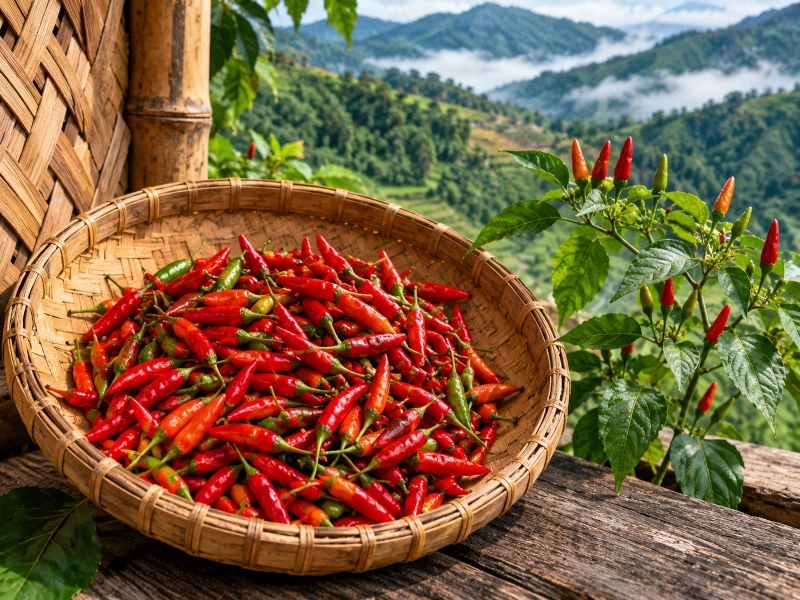
Among the mist-covered mountains and fertile hill slopes of Mizoram grows one of India’s most distinctive indigenous chilli varieties. Known as Mizo Chilli, or locally as Hmarchte, this small but exceptionally pungent bird’s eye chilli has become an important part of the state’s agricultural heritage, culinary traditions and rural economy. Its bright red colour, concentrated heat and distinctive flavour distinguish it from many of the commercially cultivated chilli varieties found elsewhere in India.
Cultivated for generations by farming communities across Mizoram, Mizo Chilli reflects the close relationship between the region’s geographical environment and traditional agricultural knowledge. The crop is particularly associated with the state’s hill farming systems, where locally preserved seeds and established cultivation practices have helped maintain its distinctive characteristics.
The chilli received Geographical Indication recognition on 23 March 2015, formally establishing its protected geographical association with Mizoram. Registered under GI Application No. 377, Mizo Chilli represents an important example of how traditional agricultural products can acquire wider economic opportunities through the protection of their regional identity.
Historical Origins and Agricultural Heritage
Mizo Chilli belongs to the species Capsicum frutescens, a member of the Solanaceae family. Although chilli peppers originated in the Americas and reached the Indian subcontinent through maritime trade following the beginning of European expansion into Asia, they gradually became deeply integrated into the agricultural and culinary traditions of different Indian regions.
In the northeastern hills, chilli cultivation developed distinctive regional characteristics as farming communities adapted planting material and cultivation practices to local environmental conditions. Mizoram’s mountainous terrain, seasonal rainfall and established systems of mixed cultivation provided suitable conditions for growing locally adapted chilli varieties.
Over generations, Mizo farmers selected and preserved seeds from plants exhibiting desirable characteristics, including strong pungency, attractive fruit colour and suitability for traditional hill cultivation. These practices contributed to the development and maintenance of the chilli variety now recognised as Mizo Chilli.
The crop became an important component of household agriculture and local food culture. Its intense flavour made it particularly valuable in traditional food preparations, while its suitability for drying allowed farming households to preserve the harvest for extended periods.
Although the precise period when Mizo Chilli became established in the region is not documented, its long association with local farming communities and traditional cultivation practices demonstrates its importance within Mizoram’s agricultural heritage.
Geographical Origin and Cultivation Region
Mizo Chilli is cultivated throughout Mizoram, a predominantly mountainous state in northeastern India. The officially registered geographical area covers the entire state, reflecting the crop’s widespread association with Mizoram’s hill farming communities.
The state’s landscape consists largely of steep hills, narrow valleys and forested slopes, with agricultural production influenced by the southwest monsoon and variations in altitude. These environmental conditions have shaped the development of traditional farming systems and the cultivation of locally adapted crops.
Mizo Chilli is grown in different agricultural areas, including the districts of Aizawl, Champhai, Kolasib, Serchhip, Mamit and other parts of the state. The extent of cultivation varies according to local land availability, farming practices and market demand.
The soils of Mizoram are generally acidic, with many cultivated areas containing substantial organic matter. Traditional jhum cultivation fields may also contain nutrients released through the burning of cleared vegetation, particularly potassium, which contributes to plant growth and fruit development.
The relationship between the chilli and its geographical environment is central to its GI identity. Its distinguishing features are associated with locally maintained germplasm, the state’s agroclimatic conditions and the cultivation practices followed by farming communities.
These characteristics make Mizo Chilli an example of a regional agricultural product whose identity has developed through the interaction of natural conditions and human agricultural knowledge.
Distinctive Characteristics of Mizo Chilli
Mizo Chilli is immediately recognisable by its small, slender fruits and intense pungency. The plant typically develops into a bushy shrub that may reach approximately 120 centimetres in height under favourable growing conditions.
The fruits generally measure between 2 and 4 centimetres in length and approximately 1 centimetre in diameter. Immature chillies are green, gradually changing to a bright or deep red colour as they reach maturity.
Its compact size distinguishes Mizo Chilli from many larger commercial chilli varieties. The fruits are frequently used whole in traditional preparations, where their appearance contributes to the visual presentation of food.
The chilli is particularly valued for its concentrated pungency. Its heat is produced by capsaicinoids, a group of naturally occurring compounds found in chilli peppers, principally capsaicin and dihydrocapsaicin.
Published descriptions provide varying Scoville Heat Unit measurements for Mizo Chilli. NERAMAC has described its pungency as approximately 50,000–100,000 SHU, while the Government of Mizoram’s Agriculture Department identifies particularly pungent Mizo Chilli at more than 200,000 SHU. Such differences reflect variation in the planting material, growing conditions and samples examined.
In addition to its intense heat, Mizo Chilli is appreciated for its distinctive taste and attractive red colour. The chilli’s flavour makes it suitable for chutneys, pickles, dried spice mixtures and other preparations requiring concentrated pungency.
The combination of small fruit size, strong heat, characteristic colour and locally adapted cultivation practices forms the foundation of its recognised geographical identity.
Traditional Cultivation Practices
Mizo Chilli cultivation has historically been closely associated with jhum, or shifting cultivation, a traditional agricultural system practised in the hills of northeastern India.
Under this system, selected plots of land are cleared and prepared for cultivation, with crops grown during the agricultural season before the land is eventually allowed to regenerate. In Mizoram, farmers have traditionally cultivated several crops together, including rice, vegetables and spices.
Mizo Chilli is frequently grown alongside paddy and other crops in these mixed farming systems. This allows farmers to make productive use of available land while maintaining a diversity of agricultural produce.
Seed preservation remains an important aspect of traditional cultivation. Farmers commonly select mature chilli fruits, extract their seeds and retain suitable planting material for subsequent growing seasons. This practice helps maintain locally adapted crop characteristics.
According to the Government of Mizoram’s Agriculture Department, the principal sowing season extends from March to May, while harvesting generally takes place between November and February. These periods correspond to the state’s seasonal rainfall patterns and the development cycle of the crop.
Traditional cultivation is often characterised by limited dependence on synthetic agricultural inputs. The use of locally available organic material and nutrients present in cultivated hill soils has historically supported chilli production.
However, cultivation using traditional methods does not automatically establish formal organic certification. Certified organic production requires compliance with prescribed agricultural standards and applicable verification procedures.
The continued use of traditional farming knowledge has played an important role in preserving Mizo Chilli’s distinctive identity, even as efforts are made to improve cultivation, productivity and market access.
Harvesting, Drying and Traditional Processing
Mizo Chilli is harvested when the fruits reach the desired stage of maturity. Green chillies may be collected for immediate consumption, while fully ripened red fruits are particularly suitable for drying and longer-term storage.
Farmers traditionally dry harvested chillies to reduce moisture content and extend their usable life. Drying makes the produce easier to store, transport and market, an important advantage in mountainous regions where agricultural settlements may be located considerable distances from commercial centres.
The dried chillies can be preserved whole or processed into flakes and powders. In traditional food preparation, they may also be roasted or smoked to develop additional flavour characteristics.
Careful drying is essential because excessive moisture can encourage fungal growth and deterioration during storage. Improved drying facilities, hygienic handling and moisture-resistant packaging can therefore help producers maintain product quality.
The compact size and relatively high value of dried Mizo Chilli make it suitable for movement from remote farming areas to larger markets. Its processing characteristics have consequently contributed to its importance as a rural cash crop.
Mizo Chilli in Traditional Mizo Cuisine
Mizo Chilli occupies an important place in Mizoram’s culinary traditions, where its intense pungency is used to flavour a wide variety of everyday preparations.
Fresh chillies are commonly crushed or ground with ingredients such as salt, tomatoes, onions and other locally available seasonings to prepare spicy chutneys. These accompaniments are often served with rice, vegetables, meat and traditional dishes.
The chilli is also used in pickles and preserved preparations. Its strong flavour allows relatively small quantities to impart considerable heat, making it particularly useful in condiments and concentrated spice mixtures.
Dried and roasted chillies are used in different traditional preparations, sometimes providing a characteristic smoky flavour. Mizo culinary traditions also include fermented foods and preserved meat products, with chillies serving as important flavouring ingredients in several such preparations.
The crop’s significance extends beyond its pungency. As an agricultural product cultivated and consumed within the region for generations, Mizo Chilli has become closely associated with the everyday food culture of Mizoram.
Its continued cultivation supports the preservation of traditional recipes and food preparation practices that form part of the state’s cultural heritage.
Economic Importance and Rural Livelihoods
Mizo Chilli is an important cash crop for farming communities in Mizoram, particularly those engaged in small-scale hill agriculture. Its cultivation provides opportunities for supplementary household income while supporting the production of a speciality agricultural commodity with an established regional identity.
The crop’s strong pungency and distinctive characteristics create opportunities for differentiated marketing. Rather than competing exclusively as a conventional chilli commodity, genuine Mizo Chilli can be promoted through its geographical identity and traditional cultivation heritage.
Historical agricultural data demonstrate the scale of chilli cultivation in the state. NERAMAC reported that Mizoram had approximately 11,000 hectares under chilli cultivation during 2016–17, with production of about 10,727.35 metric tonnes. These figures describe the wider chilli sector during that period and should not be treated as a current estimate of GI-certified Mizo Chilli production.
The Government of Mizoram’s Agriculture Department has also reported a cultivated area of approximately 7,160 hectares for Mizo Chilli, with an expected fresh yield of 57,280 quintals in its published agricultural information. These figures relate to the department’s reporting period and are not presented as current annual production statistics.
The agricultural importance of Mizo Chilli is particularly evident in its suitability for drying and storage. Dried chillies are relatively compact, can be transported more easily than many fresh agricultural products and offer opportunities for processing and organised marketing.
For rural producers, better access to collection centres, grading facilities, processing units and commercial buyers can help increase the value obtained from agricultural production.
The development of farmer-producer organisations and cooperative marketing arrangements can further strengthen the ability of small cultivators to participate in larger domestic markets.
Commercial Potential and Value Addition
Mizo Chilli offers considerable opportunities for value-added food processing because of its intense pungency, distinctive flavour and recognised geographical identity.
Potential commercial products include dried whole chillies, chilli flakes, powdered chilli, pickles, chutneys, speciality sauces and blended spice preparations. These products can serve household consumers, restaurants, speciality food retailers and food-processing enterprises.
The chilli’s high pungency also makes it suitable for concentrated flavouring applications where small quantities of chilli are required to produce substantial heat.
GI recognition provides an opportunity to distinguish authentic Mizo Chilli from similar varieties grown outside the registered geographical area. Such differentiation can support premium marketing, provided producers maintain consistent quality and comply with the requirements governing use of the geographical indication.
Improved processing and packaging are particularly important for expanding market opportunities. Hygienic drying, grading, moisture control and traceable sourcing can strengthen consumer confidence and improve the commercial presentation of the product.
The participation of local farmers, producer groups and processing enterprises can help ensure that a greater proportion of the value generated by speciality products remains within the producing communities.
GI Tag Journey of Mizo Chilli
The Geographical Indication recognition of Mizo Chilli represents an important step in protecting Mizoram’s agricultural heritage and the distinctive identity of its traditional bird’s eye chilli. Developed and preserved through generations of cultivation in the state’s hill environments, the crop acquired wider recognition for its exceptional pungency, characteristic red colour and association with local farming practices.
The formal registration process began on 27 January 2012, when the North Eastern Regional Agricultural Marketing Corporation Limited (NERAMAC) filed GI Application No. 377 under Class 30. Following examination, consultative proceedings and publication in the Geographical Indications Journal, Mizo Chilli received Certificate No. 223 on 23 March 2015. Its geographical protection was subsequently renewed, with the current registration remaining valid until 26 January 2032.
Historical and GI Registration Milestones
| Year / Date | Milestone | Historical and Agricultural Significance |
|---|---|---|
| Historical period | Establishment of chilli cultivation in the hills of Mizoram. | Farming communities adopted chilli cultivation following the introduction of chilli peppers into the Indian subcontinent and gradually maintained locally adapted varieties. |
| Generations of traditional cultivation | Preservation of Mizo Chilli through indigenous farming practices. | Farmers maintained planting material through seed selection and cultivated the chilli in traditional hill farming systems, preserving its distinctive characteristics. |
| Traditional agricultural development | Mizo Chilli became an important component of regional cuisine and rural agriculture. | Its strong pungency, characteristic colour and suitability for drying contributed to its importance as a speciality spice and cash crop. |
| 27 January 2012 | NERAMAC filed GI Application No. 377 for Mizo Chilli. | The application initiated formal geographical protection for the product under Class 30, covering spices. |
| 9 May 2012 | Formality Check Report recorded by the GI Registry. | The Registry examined the initial application documentation as part of the registration process. |
| 2013 | Submission of additional product reports and consultative proceedings. | Supporting documentation concerning the chilli’s characteristics, cultivation and geographical association was examined. |
| 27 January 2014 | Consultative group proceedings recorded by the GI Registry. | The application underwent further technical and administrative examination. |
| 30 June 2014 | Examination report issued by the GI Registry. | The Registry assessed the submitted documentation and raised matters requiring clarification. |
| 29 September 2014 | Applicant’s response and supporting annexures submitted. | NERAMAC provided additional information during the examination process. |
| 21 November 2014 | Mizo Chilli appeared in Geographical Indications Journal No. 61. | Official publication marked an important stage towards completing the registration process. |
| 23 March 2015 | GI Certificate No. 223 issued for Mizo Chilli. | The chilli received formal geographical recognition linking its protected identity to Mizoram. |
| 2016–17 | NERAMAC documented the economic importance of chilli cultivation in Mizoram. | Historical production information highlighted the commercial role of chilli cultivation within the state’s agricultural economy. |
| 18 November 2021 | GI Registry issued renewal-related documentation. | The renewal process supported the continuation of Mizo Chilli’s geographical protection. |
| 3 January 2023 | Renewal details recorded by the GI Registry. | The registration was renewed, extending its protected status. |
| 6 January 2023 | GI renewal letter recorded. | The official renewal documentation confirmed the continuation of registration. |
| 26 January 2032 | Current GI registration validity date. | Mizo Chilli remains registered until this date, subject to further renewal under the applicable legislation. |
The registration timeline demonstrates the contribution of NERAMAC and the relevant agricultural institutions in obtaining formal protection for Mizo Chilli. The application process established the connection between the crop’s geographical origin, distinctive physical characteristics and traditional cultivation practices, providing a foundation for protecting its identity under India’s Geographical Indications legislation.
The subsequent renewal has ensured the continuation of this legal protection, allowing the product’s geographical reputation to be maintained within an established intellectual property framework. GI recognition also provides opportunities for authorised producers to strengthen product differentiation, improve marketing arrangements and expand the commercial presence of genuine Mizo Chilli in speciality spice markets.
GI Details at a Glance
| Particular | Details |
|---|---|
| Geographical Indication | Mizo Chilli |
| State | Mizoram |
| Other Names | Hmarchte, Hmorchte, Mizoram Bird’s Eye Chilli |
| Botanical Name | Capsicum frutescens |
| Botanical Family | Solanaceae |
| Product Category | Agricultural |
| GI Class | 30 |
| GI Goods Description | Spices (Chilli) |
| Application Number | 377 |
| Date of Filing | 27 January 2012 |
| Registered Proprietor | North Eastern Regional Agricultural Marketing Corporation Limited (NERAMAC) |
| Registered Proprietor’s Address | 9 Rajbari Path, Ganeshguri, G.S. Road, Guwahati – 781005, Assam |
| Geographical Area | Mizoram |
| Principal Cultivation Region | Hill farming areas throughout Mizoram |
| GI Journal | No. 61 |
| GI Journal Availability Date | 21 November 2014 |
| GI Certificate Number | 223 |
| GI Certificate Date | 23 March 2015 |
| Latest Renewal Record | 3 January 2023 |
| Renewal Letter Date | 6 January 2023 |
| Registration Valid Until | 26 January 2032 |
| Current GI Status | Registered |
| Plant Type | Bushy shrub |
| Plant Height | Up to approximately 120 cm |
| Fruit Shape | Small, slender and pointed |
| Fruit Colour | Green when immature, turning bright to deep red upon maturity |
| Fruit Length | Approximately 2–4 cm |
| Fruit Diameter | Approximately 1 cm |
| Pungency | Approximately 50,000–100,000 SHU in some published descriptions; more than 200,000 SHU reported for highly pungent samples by the Mizoram Agriculture Department |
| Principal Pungent Compounds | Capsaicin and dihydrocapsaicin |
| Characteristic Flavour | Intense, clear pungency with distinctive chilli flavour |
| Traditional Cultivation System | Jhum or shifting cultivation, including mixed cropping |
| Principal Sowing Season | March–May |
| Principal Harvesting Season | November–February |
| Traditional Uses | Chutneys, pickles, roasted chillies, dried chilli flakes and traditional food preparations |
| Commercial Applications | Fresh chillies, dried chillies, chilli powders, sauces, pickles and processed spice products |
The registration details are based on the official records of the Geographical Indications Registry, Intellectual Property India. The botanical characteristics, cultivation practices, geographical information and product features are supported by publications of the Government of Mizoram, NERAMAC and institutional GI reference documentation concerning northeastern India’s registered agricultural products.
Preserving Mizo Chilli’s Agricultural Heritage
The future of Mizo Chilli depends upon preserving the locally adapted planting material and traditional agricultural knowledge that have sustained its cultivation across generations.
The continuation of farmer-led seed selection is particularly important because it helps maintain the characteristics associated with the crop’s regional identity. At the same time, agricultural research and extension services can support improvements in seed quality, disease management, productivity and post-harvest processing.
The development of organised collection and processing facilities can also reduce difficulties faced by farmers cultivating chilli in remote hill settlements. Improved infrastructure would enable producers to maintain product quality while accessing larger markets more efficiently.
GI protection offers an additional incentive for preserving the crop’s geographical identity. However, its long-term value depends upon effective participation by farmers and authorised users, consistent product standards and marketing arrangements that recognise the distinctiveness of Mizo Chilli.
The combination of traditional agricultural knowledge and modern institutional support can help ensure that this important regional spice continues to contribute to Mizoram’s rural economy.
A Fiery Expression of Mizoram’s Agricultural Identity
Mizo Chilli represents the distinctive agricultural heritage of India’s northeastern hills. Its intense pungency, compact fruits, characteristic red colour and connection with traditional cultivation practices have established its identity as one of Mizoram’s recognisable speciality spices.
The granting of Geographical Indication recognition in 2015 provided formal protection for this identity, while subsequent renewal has maintained its legally recognised geographical association with the state.
As demand for distinctive regional food products expands, Mizo Chilli offers opportunities for improved cultivation, value-added processing and stronger participation in speciality spice markets. Its commercial development can also contribute to the preservation of local farming traditions and agricultural biodiversity.
Mizo Chilli is more than a fiery ingredient in traditional cuisine. It is a symbol of Mizoram’s agricultural knowledge, regional identity and the enduring relationship between its farming communities and the land they cultivate.
You may also like
-
Singer India to Commence Manufacturing at New Bhiwadi Facility
-
Bihar Plans Two Nuclear Power Plants With ₹1.4 Lakh Crore Investment
-
NSE Becomes World’s Fifth-Largest Listed Exchange Operator by Market Capitalisation
-
GeM Partners with TICCI to Expand Government Procurement Opportunities for Tribal Entrepreneurs
-
BRIC Targets USD 300 Billion Indian Bioeconomy by 2030 and USD 1 Trillion by 2047
