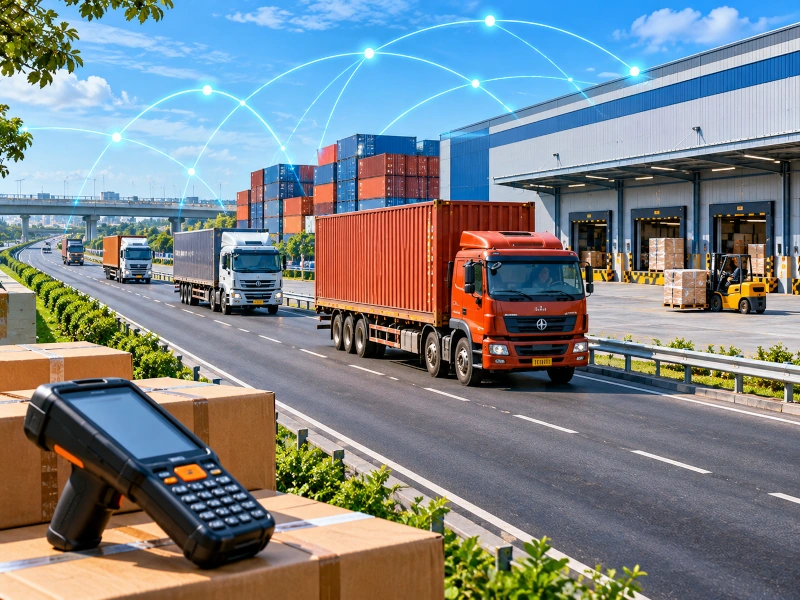
India’s e-way bill generation reached a record 15.62 crore in October 2026, registering a substantial 23.14% increase compared with the corresponding period last year. The sharp expansion in electronic documentation for goods transportation reflects increased movement of merchandise across the country, supported by festive-season demand, commercial activity and the continued formalisation of India’s supply chains.
According to Goods and Services Tax Network (GSTN) data reported by the India Brand Equity Foundation (IBEF), a total of 156.21 million e-way bills were generated during October 2026, compared with 126.86 million in October 2025. The latest figure also surpassed the previous record of 141.53 million e-way bills generated in September 2026, representing a month-on-month increase of 10.37%.
The development highlights the expanding scale of goods movement within India’s domestic market and comes as the Government advances further GST reforms aimed at reducing transportation-related compliance barriers and improving logistics efficiency.
E-Way Bill Generation Registers Strong Monthly and Annual Growth
The October 2026 figures represent an important milestone for India’s GST-based goods transportation system, with e-way bill generation exceeding 15 crore in a single month for the first time.
The increase of approximately 2.94 crore e-way bills compared with October 2025 indicates a substantial expansion in documented goods movement. Compared with September 2026, businesses generated approximately 1.47 crore additional e-way bills during October.
An e-way bill is an electronic document generally required under the Goods and Services Tax framework when goods valued at more than ₹50,000 are transported, subject to applicable exemptions and conditions. The document contains information about the consignment, supplier, recipient and transporter, enabling authorities to monitor the movement of goods.
As an indicator of transportation and commercial activity, e-way bill generation provides useful insights into the movement of merchandise across manufacturing, wholesale, retail and distribution networks.
The increase during October coincided with the festive trading period, when businesses typically experience greater demand for consumer goods and increased inventory movement across domestic markets.
Festive Demand and Business Activity Support Goods Movement
The significant increase in e-way bill generation suggests stronger merchandise movement during October, supported by seasonal consumption and increased commercial transactions.
Festive periods generally encourage businesses to expand inventory supplies, replenish retail stocks and strengthen distribution arrangements to meet consumer demand. These activities can generate additional transportation requirements across interstate and intrastate supply chains.
Industry assessments have also linked the increase to inventory adjustments and purchasing patterns following GST rate rationalisation undertaken during the previous year.
The reported expansion in e-way bills is particularly relevant for India’s manufacturing and logistics sectors, as goods transportation activity provides an indication of the movement of products between production centres, warehouses, wholesale markets and retail destinations.
However, e-way bill volumes measure the number of transport documents generated rather than the monetary value or physical quantity of goods moved. Consequently, they provide an important indicator of commercial activity but should not be interpreted as a direct measurement of economic output or consumption growth.
GST Council Recommends Major Reforms to Goods Transportation Checks
The increase in e-way bill generation comes alongside significant reforms recommended by the GST Council to simplify the movement of goods across India.
At its 57th meeting held in New Delhi on 8 October 2026, the GST Council recommended amendments to Sections 68, 129 and 130 of the Central Goods and Services Tax Act, 2017.
Under the proposed framework, vehicles transporting goods would be intercepted only on the basis of specific intelligence and with authorisation from an officer not below the rank of Joint Commissioner.
The recommendation seeks to reduce routine transportation checks while retaining enforcement powers to investigate suspected violations of GST regulations.
The Council also recommended restricting inspections, detention and seizure procedures to jurisdictions where either the supplier or recipient is located or registered. This would reduce unnecessary intervention by authorities in States through which goods are merely passing.
Exceptions have been provided for situations where the required e-way bill has not been generated or where the vehicle does not carry documents establishing the origin or destination of the goods.
Another important recommendation seeks to discontinue the application of confiscation provisions under Section 130 of the CGST Act to goods and vehicles in transit.
These measures are intended to create a more predictable transportation environment while maintaining safeguards against tax evasion and fraudulent goods movement.
Simplified Compliance Expected to Improve Logistics Efficiency
The proposed GST reforms have particular significance for India’s road transportation and logistics industries, where delays during interstate movement can increase operational costs and disrupt delivery schedules.
Reducing routine vehicle interceptions and clarifying enforcement jurisdiction could help transport operators achieve more predictable transit times, improve fleet utilisation and reduce administrative burdens.
These improvements are relevant for businesses operating extensive distribution networks, particularly manufacturers, wholesalers, e-commerce enterprises and logistics companies transporting goods across multiple States.
The GST Council’s recommendations reflect an effort to balance tax compliance with the operational requirements of a growing economy.
By strengthening intelligence-based enforcement and reducing unnecessary procedural intervention, the proposed framework seeks to support smoother movement of goods within India’s integrated domestic market.
Rising E-Way Bill Volumes Reflect Expansion of Formal Supply Chains
The continued growth in e-way bill generation also reflects the increasing use of digital documentation within India’s transportation and commercial systems.
The e-way bill mechanism, introduced under GST, has helped establish a standardised electronic framework for recording the movement of consignments across the country.
Digital documentation enables businesses to maintain consistent transportation records while providing tax authorities with information required for compliance monitoring.
As businesses expand their operations across regional markets, the increasing use of electronic documentation contributes to greater visibility of goods movement within formal supply chains.
The October record is therefore relevant not only as an indicator of transportation activity but also as evidence of the scale at which India’s digitally documented goods movement system now operates.
Stronger Goods Movement Provides Encouraging Economic Signals
The generation of 15.62 crore e-way bills during October 2026 represents a significant development for India’s domestic trade and logistics ecosystem.
The 23.14% annual increase, together with the 10.37% monthly expansion, indicates a substantial rise in documented goods transportation during the festive trading period.
While e-way bill generation does not directly establish corresponding growth in GST collections, the increase provides an additional indicator of commercial activity that can be considered alongside tax revenue, industrial production and consumption data.
The record also comes at a time when the Government is working to simplify GST procedures and reduce compliance-related disruptions to the transportation sector.
With continued improvements in digital tax administration, logistics infrastructure and interstate goods movement, India’s e-way bill system is expected to remain an important indicator of activity across the country’s expanding domestic market.
You may also like
-
India’s Worker Population Ratio Rises to 52.7% as Latest Labour Survey Shows Employment Gains
-
Mushroom Cultivation Creates New Livelihood Opportunities for Women, Farmers and Rural Entrepreneurs Across India
-
Alleppey Green Cardamom of Kerala and Tamil Nadu: The GI-Tagged Heritage of India’s Queen of Spices
-
Y Combinator-Backed Archgen Labs Develops AI Agent to Automate Advanced Semiconductor Design
-
India Positions Lakshadweep and Andaman & Nicobar Islands as Major Hubs for Blue Economy Growth
