GI Heritage of India Series | Maharashtra | Agricultural Geographical Indication
In the agricultural heartland of Maharashtra’s Vidarbha region, a small village in Wardha district has preserved a distinctive variety of turmeric cultivated by generations of farming families. Known as Waigaon Turmeric, this golden spice is celebrated for its deep yellow colour, pronounced aroma, high curcumin content and traditional methods of cultivation. Its reputation has become so closely associated with the village that Waigaon is popularly known as Haladya Waigaon, meaning the village of turmeric.
Cultivated primarily in the Samudrapur tehsil of Wardha district, Waigaon Turmeric represents an agricultural tradition shaped by local soil conditions, monsoon rainfall and the accumulated knowledge of farming communities. Unlike many commercial turmeric varieties cultivated extensively across India, Waigaon Turmeric has retained a strong association with a relatively small geographical area and a distinctive local agricultural identity.
The recognition of Waigaon Turmeric as a Geographical Indication (GI) on 3 June 2016 formally acknowledged its geographical origin, traditional cultivation practices and established reputation. The registration also provided legal recognition to a product whose identity has been preserved through successive generations of farmers.
Historical Origins: A Turmeric Tradition Rooted in Vidarbha
Turmeric has occupied an important place in the agricultural and cultural history of India for thousands of years. The plant has traditionally been cultivated for its underground rhizomes, which are used in cooking, religious ceremonies, household preparations and classical systems of Indian medicine.
In Maharashtra, turmeric became an integral part of rural agricultural life, particularly in communities where the crop could be cultivated under seasonal rainfall conditions. Its importance extended beyond the kitchen, with turmeric becoming closely associated with marriage ceremonies, religious observances and traditional practices of personal care.
The historical origins of Waigaon Turmeric are particularly interesting because the documentation submitted for its GI registration traces its cultivation to the period of Mughal administration in the region. The application refers to historical records indicating that turmeric cultivation in the Waigaon area was associated with the Mali community, traditionally engaged in horticulture and agricultural activities.
A document issued by the District Agricultural Officer, Wardha, on 9 August 2011 was cited in support of this historical association. Although the available documentation does not establish the exact year in which turmeric cultivation began in Waigaon, it confirms the longstanding local tradition and its connection with particular farming communities.
Over successive generations, cultivators continued to preserve the local planting material and agricultural methods associated with the crop. This continuity helped maintain the characteristics that distinguish Waigaon Turmeric from other varieties.
The village gradually acquired a reputation for producing turmeric of exceptional colour and aroma. Its agricultural identity became so strongly connected with the spice that the name Haladya Waigaon entered local usage, reflecting the prominence of turmeric cultivation in the community.
Geographical Origin: The Turmeric Villages of Wardha District
Waigaon Turmeric originates from the Samudrapur tehsil of Wardha district in eastern Maharashtra. The area forms part of the Vidarbha region, where agriculture is influenced by the seasonal southwest monsoon and the characteristic soils of the Deccan landscape.
The principal cultivation centre is Waigaon village, while the traditional growing belt identified in the GI application also includes Muradpur, Pawangaon, Mangrul and Dongargaon. These villages collectively represent the geographical area from which the product acquired its distinctive agricultural reputation.
Wardha district lies within an important agricultural region where cotton, soybean, pulses and several horticultural crops contribute to the rural economy. Turmeric occupies a special position within this agricultural landscape because of the particular characteristics associated with the Waigaon variety.
The region experiences hot summers followed by monsoon rainfall from June to September. These seasonal conditions influence planting schedules, crop development and the availability of moisture during the growing period.
The Wardha River and associated irrigation resources also contribute to agricultural activities in parts of the district. Nevertheless, traditional Waigaon Turmeric cultivation has remained closely associated with rainfall-dependent farming, with supplemental irrigation used where available.
The geographical identity of Waigaon Turmeric is therefore connected not merely with the village from which it takes its name but with a wider agricultural environment shaped by soil, rainfall, traditional crop management and the experience of local cultivators.
Botanical Identity and Distinctive Characteristics
Waigaon Turmeric belongs to the species Curcuma longa L., a perennial herbaceous plant of the family Zingiberaceae. The plant produces underground rhizomes that contain the naturally occurring pigments and aromatic compounds responsible for turmeric’s characteristic colour, flavour and fragrance.
Botanical name: Curcuma longa L.
Family: Zingiberaceae
Common name: Turmeric
Marathi name: Halad
GI-registered name: Waigaon Turmeric
Principal growing region: Samudrapur tehsil, Wardha district, Maharashtra
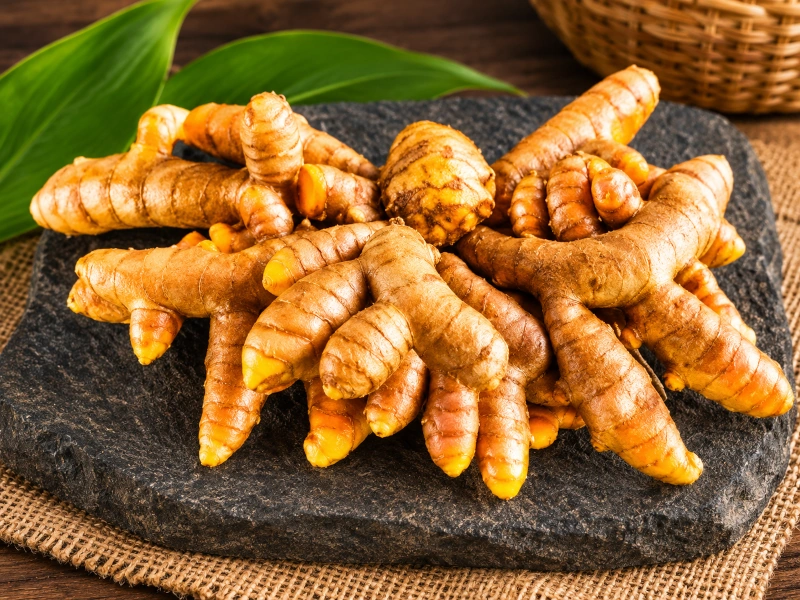
The Waigaon variety is particularly recognised for its dark mustard-yellow colour, soft powder texture, pronounced aroma and substantial rhizome fingers. These characteristics distinguish it from many other turmeric types cultivated commercially across India.
According to the original GI application, the dried fingers of Waigaon Turmeric are comparatively thick, solid and fleshy. When processed into powder, the rhizomes produce a fine-textured spice with a strong yellow colour.
Another important characteristic is the relatively short period required for the crop to mature. The traditional Waigaon variety is reported to reach maturity in approximately 180 days, making it suitable for cultivation under the seasonal agricultural conditions of the region.
The combination of colour intensity, aroma, rhizome characteristics and crop duration has contributed significantly to the reputation of Waigaon Turmeric among farmers, traders and consumers.
High Curcumin Content: A Distinctive Scientific Characteristic
One of the most notable characteristics of Waigaon Turmeric is its relatively high curcumin content. Curcumin is a naturally occurring compound belonging to the curcuminoid group, which contributes to turmeric’s familiar yellow-orange pigmentation.
The GI application records a curcumin concentration of 6.12%, based on an analytical report prepared by the Quality Evaluation Laboratory of the Spices Board in Kochi on 23 December 2013.
This concentration is an important distinguishing feature of the Waigaon variety. Turmeric cultivars differ considerably in their curcumin content, and the concentration can also vary according to growing conditions, crop maturity and post-harvest processing.
The high pigment concentration contributes to the deep yellow colour associated with Waigaon Turmeric. Consequently, relatively small quantities of the spice can provide noticeable colour when incorporated into food preparations.
The variety is also known for its pronounced aroma, which is associated with the volatile compounds naturally present in turmeric rhizomes. These aromatic constituents contribute to the spice’s distinctive sensory characteristics and influence its suitability for culinary preparations.
Scientific research has examined curcumin for its antioxidant properties and its effects on various biological processes, including inflammatory pathways. However, the concentration of curcumin in a food ingredient does not by itself establish its effectiveness in preventing or treating medical conditions.
For Waigaon Turmeric, the documented curcumin concentration is especially significant as an agricultural and quality characteristic. It provides a measurable scientific basis for understanding one of the features that contributed to the product’s geographical reputation.
Black Soils and the Agricultural Environment of Waigaon
The soil conditions of Waigaon form an important part of the geographical identity associated with its turmeric cultivation.
The GI application identifies the region’s deep black soils as particularly relevant to the cultivation of this crop. These soils possess moisture-retaining properties that can help sustain agricultural production during periods when rainfall is limited.
Soil analysis included in the application recorded a pH of approximately 8.24 in a sampled field, indicating moderately alkaline conditions. The same analysis documented the presence of organic carbon and important plant nutrients, including nitrogen, phosphorus and potassium.
These results provide useful information about the agricultural environment in which the traditional variety has developed. They also illustrate the importance of soil characteristics in understanding the relationship between a geographically identified crop and its place of origin.
Although turmeric generally benefits from well-drained soil, the ability of local soils to retain moisture is particularly valuable in a region dependent on seasonal rainfall. Farmers therefore balance moisture availability with suitable land preparation and drainage practices.
The Vidarbha region experiences a pronounced seasonal cycle, with hot and relatively dry conditions before the arrival of the southwest monsoon. Rainfall during the monsoon months supports the establishment and vegetative development of turmeric plants.
The interaction between these environmental conditions and the agricultural practices followed by local farmers has contributed to the adaptation and continued cultivation of the Waigaon variety.
Traditional Cultivation: Farming in Harmony with the Monsoon
The cultivation of Waigaon Turmeric reflects a longstanding relationship between seasonal rainfall and agricultural practices developed by the farming communities of Samudrapur.
The crop is propagated through underground rhizomes rather than botanical seeds. Farmers traditionally select healthy mother rhizomes from the previous harvest, preserving suitable planting material for the following agricultural season.
Planting may begin around the period of Akshaya Tritiya, an auspicious occasion observed during April or May, when irrigation facilities are available. However, most traditional cultivation has been associated with the arrival of the monsoon, allowing farmers to use seasonal rainfall for the establishment of the crop.
Before planting, fields are prepared to provide suitable conditions for rhizome development. The selected planting material is placed in rows or beds, with the buds positioned to encourage healthy sprouting.
Farmyard manure and compost have traditionally been important components of soil preparation. These organic inputs contribute to soil fertility and improve the physical condition of cultivated land.
The GI documentation describes Waigaon Turmeric as a crop traditionally grown using organic methods, with particular emphasis on the avoidance of synthetic chemical fertilisers and pesticides. The application also records initiatives undertaken through the Agricultural Technology Management Agency to support organic certification.
The growing plants require adequate moisture during their development. Rainfall from June to September provides much of the water needed during the principal growing period, while supplementary irrigation may be used during October and November when rainfall is insufficient.
Farmers monitor the development of the crop until the foliage begins to dry, indicating that the underground rhizomes have approached maturity.
The relatively short crop duration is an important advantage of the Waigaon variety. Its ability to mature within approximately six months allows cultivation to remain closely aligned with the seasonal agricultural calendar of the region.
Harvesting and Traditional Processing
The quality of Waigaon Turmeric is influenced not only by cultivation practices but also by the methods used to harvest, dry, cure and process the rhizomes.
Harvesting generally begins when the plants reach maturity and their leaves turn yellow and dry. The underground rhizomes are carefully lifted from the soil, cleaned and separated into mother rhizomes and lateral fingers.
Healthy mother rhizomes may be selected and preserved as planting material for the next season. This practice helps maintain continuity in the cultivation of the traditional Waigaon variety.
The remaining rhizomes undergo processing to prepare them for storage, grinding and commercial sale.
The original GI documentation describes traditional processing practices involving drying, boiling and polishing. Separated turmeric fingers are spread in thin layers for drying, while the curing process includes boiling the rhizomes in suitable vessels.
Copper vessels are specifically mentioned in the application as part of the traditional boiling process. Following curing, the rhizomes undergo additional drying and polishing to improve their surface appearance and commercial quality.
Polishing removes rough outer material and helps produce the smoother appearance expected in dried turmeric fingers. Traditional methods involve rubbing the dried rhizomes, while mechanical equipment may also be used for larger quantities.
The GI documentation records an additional drying period of approximately 15 days during traditional processing, although actual drying requirements depend on the condition of the material and prevailing weather.
Once the rhizomes have been adequately dried, they can be stored as whole turmeric fingers or ground into powder.
The resulting spice is recognised for its deep yellow colour, distinctive aroma and fine texture. These processing characteristics form an important part of the agricultural knowledge associated with Waigaon Turmeric.
Culinary Heritage: The Golden Spice of Maharashtrian Kitchens
Turmeric occupies an essential place in Maharashtrian cuisine, where it contributes colour, flavour and aroma to a wide range of traditional dishes.
Known as Halad in Marathi, turmeric is used in vegetable preparations, lentil dishes, curries, rice-based recipes and numerous regional delicacies. Its earthy flavour and golden pigmentation make it an important ingredient in everyday household cooking.
Waigaon Turmeric is particularly valued for its strong colour, which allows relatively small quantities to impart a rich yellow appearance to food. Its distinctive aroma also contributes to the flavour profile of traditional preparations.
The use of turmeric extends beyond dried powder. Fresh turmeric rhizomes are also incorporated into certain regional pickles and seasonal food preparations.
The original GI application documents a traditional preparation of fresh Waigaon Turmeric pickle using chopped turmeric rhizomes, mustard seeds, asafoetida, spices and oil. This preparation illustrates the culinary versatility of the crop and its importance beyond the conventional powdered spice market.
Turmeric is also an ingredient in spice mixtures used throughout Maharashtra and neighbouring regions. Its presence in everyday cooking reflects the continuity of a culinary tradition in which agricultural products remain closely connected with local food habits.
For the communities of Wardha and the surrounding districts, Waigaon Turmeric therefore represents both a valuable agricultural crop and a familiar ingredient in the region’s culinary heritage.
Turmeric in Maharashtrian Religious and Cultural Traditions
The cultural significance of turmeric in Maharashtra is especially visible in marriage ceremonies, religious observances and traditional household practices.
One of the most recognisable ceremonies associated with Maharashtrian weddings is the Halad or Haldi ceremony, during which turmeric paste is ceremonially applied to the bride and groom. The ritual symbolises auspiciousness, purification, prosperity and the beginning of a new phase of family life.
Turmeric is also associated with several other marriage customs, including Kankan Bandhana, in which sacred threads and ritual objects form part of ceremonial observances.
In traditional religious practices, turmeric powder and paste are used in preparations associated with worship and auspicious occasions. The spice is also employed in certain preparations of kumkum and other ceremonial substances.
The original GI documentation specifically records the use of turmeric fingers and powder in marriage ceremonies and religious rituals, demonstrating how the crop is connected with the cultural practices of the region.
Turmeric also occupies a prominent position in traditional Indian systems of personal care. Preparations containing turmeric have long been used in customary bathing practices and skin applications.
These cultural associations have contributed to turmeric’s enduring importance in Indian society. In Waigaon, where cultivation has been preserved across generations, the spice represents a direct connection between agricultural livelihoods and inherited religious and social traditions.
Traditional Medicine and the Scientific Study of Turmeric
Turmeric has been described extensively in classical Indian medical traditions, including Ayurveda, where it is known as Haridra.
Traditional Ayurvedic literature incorporates turmeric into preparations used for various purposes, including digestive support, skin care and the management of certain inflammatory conditions. Turmeric has also been used in household preparations passed down through generations.
The GI application for Waigaon Turmeric records several traditional medicinal uses associated with the crop, including its application in preparations used for coughs, colds and minor skin complaints.
These uses form part of the historical and ethnobotanical significance of the spice. They demonstrate how farming communities developed knowledge concerning the uses of cultivated plants beyond their immediate nutritional value.
Modern scientific research has focused particularly on curcumin and other naturally occurring constituents of turmeric. Laboratory and clinical investigations have examined their antioxidant activity, biological mechanisms and potential applications in medicine.
However, traditional uses and laboratory findings should be distinguished from clinically established medical treatments. The relatively high curcumin concentration of Waigaon Turmeric does not mean that consuming the spice can cure cancer, infections or other serious diseases.
Its scientific significance lies in its distinctive chemical composition and the opportunities this provides for agricultural quality assessment, food science and further research into turmeric-derived compounds.
Waigaon Turmeric and the Farming Communities of Wardha
The history of Waigaon Turmeric is closely associated with the farmers who have preserved its cultivation across generations.
The original GI application recorded that approximately 80% of farmers in Waigaon village were involved in turmeric cultivation at the time of documentation. It also estimated that around 400 farmers in Samudrapur tehsil cultivated the traditional variety.
These figures illustrate the importance of turmeric to the agricultural identity of the village during the period preceding GI registration.
Traditional cultivation depends on several forms of accumulated knowledge, including the selection of healthy planting rhizomes, the timing of sowing, moisture management, soil preparation and the identification of crop maturity.
Farmers also preserve knowledge concerning the separation of mother rhizomes, drying methods and the processing requirements of the harvested crop.
This expertise is particularly valuable because the characteristics of a traditional crop cannot be preserved through geographical conditions alone. The continued selection of suitable planting material and the maintenance of agricultural practices are equally important.
The community-based character of Waigaon Turmeric cultivation helped establish the foundation for its recognition as a geographically identified agricultural product.
The Journey Towards Geographical Indication Recognition
The distinctive reputation of Waigaon Turmeric encouraged local producers and supporting institutions to pursue formal recognition under India’s Geographical Indications framework.
The application for GI registration was submitted on 26 March 2014 by the Waigaon Halad Utpadak Sangh, an association representing turmeric producers in the Samudrapur region.
The registration initiative formed part of a wider effort to identify and protect geographically distinctive agricultural products from Maharashtra. Documentation submitted with the application referred to the support of the Maharashtra Agricultural Competitiveness Project, a World Bank-assisted initiative.
The application included information concerning the product’s botanical identity, distinctive characteristics, geographical origin, traditional cultivation methods and historical association with the region.
Scientific evidence, including an analytical report from the Spices Board’s Quality Evaluation Laboratory, was submitted to support the product’s distinctive quality characteristics.
The application was assigned Number 471 under Class 30, the classification covering spices and related products.
Following examination, the application appeared in Geographical Indications Journal Number 80, made available on 2 February 2016.
The Geographical Indications Registry subsequently issued Certificate Number 268 on 3 June 2016, formally registering the product under the name Waigaon Turmeric.
The registration represented a significant achievement for the farming communities of Samudrapur. It provided legal recognition to the product’s geographical identity and created a framework for protecting the reputation developed through generations of cultivation.
The registration was renewed in December 2023, and the official GI Registry currently records its validity until 25 March 2034.
GI Registration Details at a Glance
| Particular | Details |
|---|---|
| Registered GI name | Waigaon Turmeric |
| State | Maharashtra |
| District | Wardha |
| Principal cultivation area | Samudrapur tehsil |
| Product category | Agricultural |
| Classification | Class 30 |
| Botanical species | Curcuma longa L. |
| Local name | Halad |
| GI application number | 471 |
| Registered proprietor | Waigaon Halad Utpadak Sangh |
| Application filing date | 26 March 2014 |
| GI Journal | Number 80 |
| Journal availability date | 2 February 2016 |
| GI certificate number | 268 |
| GI registration date | 3 June 2016 |
| Renewal recorded | 22 December 2023 |
| Registration valid until | 25 March 2034 |
| Documented curcumin content | Approximately 6.12% |
| Traditional crop maturity | Approximately 180 days |
| Principal growing villages | Waigaon, Muradpur, Pawangaon, Mangrul and Dongargaon |
| Important characteristics | Deep yellow colour, strong aroma, thick rhizomes and fine powder texture |
The geographical identity of the registered product is associated with the traditional turmeric-growing belt identified in the GI documentation. Its legal protection is governed by the specifications and geographical boundaries recorded with the Geographical Indications Registry.
Economic Importance and the One District One Product Initiative
Waigaon Turmeric contributes to the agricultural economy of Wardha district through cultivation, harvesting, processing, storage and marketing activities.
The crop provides opportunities for farming households to participate in the spice economy while maintaining a distinctive agricultural product associated with their region.
The Government of Maharashtra has recognised Waigaon Turmeric under its One District One Product (ODOP) initiative, which seeks to strengthen the commercial identity of traditional and regionally significant products.
The Maharashtra ODOP booklet published in March 2022 identified Waigaon as the principal district hub for the product. It reported cultivation across approximately 1,300 hectares in Waigaon and neighbouring villages, with production estimated at around 19,500 tonnes.
These figures reflect the scale of the product’s agricultural importance at the time of the state government’s assessment.
The ODOP framework seeks to support local products through improved marketing, branding, processing and access to wider commercial networks.
For Waigaon Turmeric, the combination of GI recognition and ODOP identification provides a foundation for promoting the crop as a distinctive agricultural product of Maharashtra.
Value-added turmeric powder, graded whole rhizomes and appropriately processed turmeric products offer opportunities for farmers and producer organisations to participate more directly in the commercial value chain.
The product’s recognised geographical identity also creates opportunities for marketing based on authenticity, origin and documented agricultural characteristics.
Scientific Quality, Processing and Market Opportunities
The commercial reputation of Waigaon Turmeric is strongly influenced by its appearance, aroma and chemical composition.
The documented curcumin concentration of approximately 6.12% provides a distinctive quality characteristic that can support product identification and quality-based marketing.
However, curcumin concentration represents only one aspect of turmeric quality. Moisture content, cleanliness, freedom from contamination, proper curing, storage conditions and consistency between batches are also important considerations.
Improved post-harvest infrastructure can help farmers preserve the quality of harvested rhizomes. Hygienic drying facilities, appropriate storage systems and reliable grinding equipment contribute to the production of consistent marketable products.
The development of quality testing and traceability systems can further strengthen the association between turmeric sold under the Waigaon name and the registered geographical area.
These measures are particularly relevant as domestic and international buyers increasingly examine the authenticity, composition and safety of agricultural products.
The establishment of the National Turmeric Board has also strengthened the institutional framework for the development of India’s turmeric sector. In March 2026, the National Turmeric Board and Spices Board India announced a buyer–seller initiative in Maharashtra focused on export quality, integrated pest management and direct market connections.
The announcement specifically acknowledged GI-tagged turmeric varieties from Maharashtra, including Waigaon Turmeric, as part of the state’s recognised turmeric heritage.
Such initiatives provide opportunities to connect traditional producing regions with agricultural research, modern processing practices and wider commercial markets.
GI Protection and the Preservation of Traditional Agricultural Knowledge
Geographical Indication registration provides legal protection for products whose reputation, qualities or characteristics are associated with a particular place of origin.
In the case of Waigaon Turmeric, the registration recognises the connection between the traditional growing region, the distinctive characteristics of the crop and the agricultural knowledge maintained by local cultivators.
The protection of the registered name is important because geographical reputations can acquire commercial value over time. Without appropriate identification and traceability, products from unrelated areas may be marketed using a recognised regional name.
GI registration creates a legal framework for distinguishing qualifying products from imitations and misleading geographical claims.
The continued participation of farmers and producer organisations is particularly important in maintaining this protection.
Authorised-user registration, quality monitoring and suitable product identification can help ensure that the benefits of geographical recognition reach the communities associated with the registered product.
Equally important is the preservation of traditional planting material. The genetic characteristics of regionally adapted turmeric varieties form part of India’s agricultural diversity and represent valuable resources for future crop improvement.
The documentation of traditional cultivation methods, supported by agricultural research and farmer participation, can help maintain this agricultural heritage while encouraging improvements in productivity and quality.
Future Prospects: Strengthening Waigaon’s Golden Identity
Waigaon Turmeric possesses several characteristics that support its continued development as a distinctive agricultural product of Maharashtra.
Its deep yellow colour, pronounced aroma, documented curcumin content and relatively short growing period provide an agricultural identity that can be communicated through quality-based marketing.
GI recognition offers an opportunity to strengthen the value associated with authentic regional production, while the ODOP initiative provides an institutional platform for promoting the crop beyond its traditional markets.
Farmer producer organisations and local processing enterprises can play an important role in developing graded turmeric products, improving packaging and creating stronger relationships with buyers.
Agricultural research can support the preservation of the traditional Waigaon variety through the identification of healthy planting material, improved crop management and the documentation of desirable characteristics.
Sustainable cultivation practices, efficient water use and suitable soil management can further contribute to the resilience of turmeric farming in the region.
The continued involvement of farming communities will remain central to these developments. Their knowledge of the crop, its seasonal requirements and traditional processing practices constitutes an important resource for preserving the product’s geographical identity.
Waigaon Turmeric: A Golden Symbol of Vidarbha’s Agricultural Heritage
The story of Waigaon Turmeric is one of agricultural continuity, geographical identity and the preservation of traditional knowledge.
From its historical association with farming communities in Wardha district to its recognition as a Geographical Indication in 2016, the crop reflects the enduring relationship between local cultivators and the agricultural landscape of Vidarbha.
Its distinctive colour, aroma and chemical composition have established a reputation that extends beyond the boundaries of Waigaon village. At the same time, its role in Maharashtrian cuisine, religious traditions and household practices demonstrates the broader cultural importance of turmeric in Indian society.
The formal recognition of Waigaon Turmeric has helped document an agricultural tradition that might otherwise have remained known primarily through local experience and oral history.
Today, its identity is supported by the combined contributions of farmers, producer associations, scientific institutions and government initiatives promoting geographically distinctive agricultural products.
The village known as Haladya Waigaon continues to represent an important example of how a local crop can become a recognised symbol of regional agricultural heritage.
Waigaon Turmeric stands as a golden expression of Maharashtra’s Vidarbha region, where generations of farming knowledge, distinctive geographical conditions and traditional cultivation practices have created one of India’s notable GI-recognised spices.
References
- Geographical Indications Registry, Government of India: Waigaon Turmeric, Application Number 471, Certificate Number 268, registration dated 3 June 2016. Official registration record and renewal documentation.
- Geographical Indications Journal Number 80: Waigaon Turmeric, publication dated 2 February 2016.
- Waigaon Halad Utpadak Sangh: Original Geographical Indication application and Statement of Case, submitted on 26 March 2014.
- Spices Board India: Quality Evaluation Laboratory, Kochi, analytical report on Waigaon Turmeric, dated 23 December 2013, as referenced in the GI application.
- District Agricultural Officer, Wardha: Documentation concerning the historical cultivation and characteristics of Waigaon Turmeric, dated 9 August 2011.
- Government of Maharashtra, Directorate of Industries: Maharashtra One District One Product Booklet, March 2022, Wardha district profile.
- Agricultural Technology Management Agency, Wardha: Documentation concerning traditional turmeric cultivation, agricultural practices and organic farming initiatives, as included in the GI application.
- Agricultural and Processed Food Products Export Development Authority (APEDA): Geographical Indications of Maharashtra, Waigaon Turmeric.
- National Portal of India: One District One Product profile, Waigaon Turmeric, Wardha district, Maharashtra.
- Ministry of Commerce and Industry, Press Information Bureau: National Turmeric Board and Spices Board India buyer–seller initiative at Nanded, 8 March 2026.
- Geographical Indications of Goods (Registration and Protection) Act, 1999: Government of India.
You may also like
-
Mankind Pharma Signs Exclusive Licensing Agreement with Betta Pharmaceuticals for Lung Cancer Drug Ensartinib
-
Hathor Rockets Plans ₹250 Crore Rocket Engine Manufacturing and Testing Facility in Andhra Pradesh
-
Lupin’s Ranluspec Biosimilar Launched Across Europe Through Sandoz Partnership
-
Alembic Pharmaceuticals Secures USFDA Approval for Generic Cancer Drug, Eligible for 180-Day Exclusivity
-
Escorts Kubota Plans New Tractor Manufacturing Plant in Uttar Pradesh with Initial Capacity of 60,000 Units
