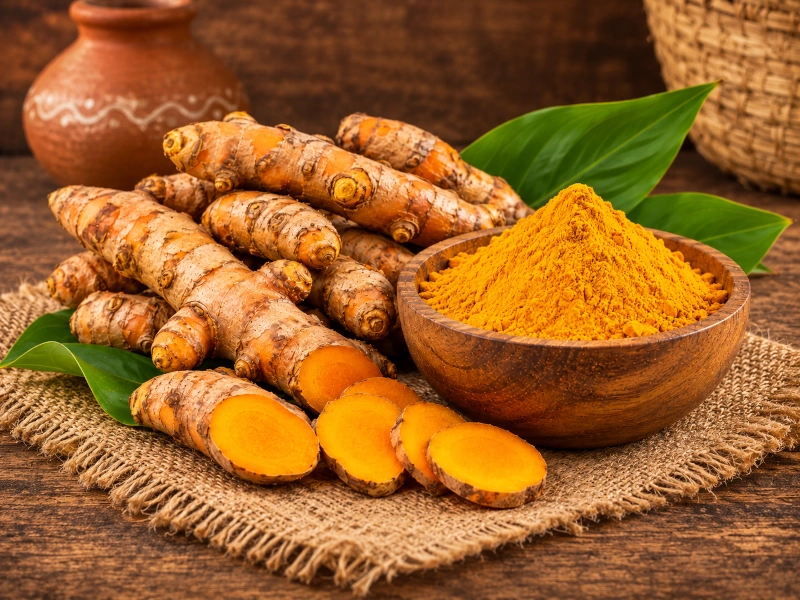
GI Heritage of India Series | Tamil Nadu | Agricultural Geographical Indication
In the fertile agricultural landscapes of western Tamil Nadu, where the River Cauvery and its tributaries have sustained farming communities for generations, a golden spice has become inseparable from the identity of an entire region. Erode Manjal, or Erode Turmeric, represents one of India’s most celebrated turmeric-growing traditions, combining agricultural knowledge, distinctive soil conditions, traditional processing techniques and an extensive network of spice markets.
Known locally as Manjal, turmeric occupies an important place in Tamil Nadu’s cuisine, religious ceremonies, traditional medicine and household customs. In Erode, however, its importance extends beyond cultural tradition. The crop has shaped the region’s agricultural economy, supported generations of farmers and traders, and established the city as one of India’s prominent turmeric marketing centres.
The recognition of Erode Manjal as a Geographical Indication (GI) on 6 March 2019 formally acknowledged the reputation of this agricultural product and its association with the geographical and cultural environment of western Tamil Nadu.
Historical Origins: Turmeric in the Agricultural Traditions of Tamil Nadu
Turmeric has been cultivated and used in the Indian subcontinent for thousands of years. Its association with food preparation, religious observances, traditional medicine and personal care made it an important plant in the agricultural and cultural development of southern India.
In Tamil society, turmeric became closely associated with purity, prosperity, marriage and auspicious occasions. The spice was valued not merely as a culinary ingredient but also as a substance possessing considerable ritual and social importance. Turmeric paste, turmeric-coloured threads and preparations containing the powdered rhizome became familiar elements of domestic and ceremonial practices.
Traditional accounts of Tamil agricultural life describe turmeric cultivation as an established activity during the period associated with the ancient Tamil kingdoms. The GI application for Erode Manjal refers to turmeric cultivation in early Tamil society and its movement through commercial networks associated with the Chera, Chola and Pandya kingdoms. These references reflect the longstanding place of turmeric in the region’s agricultural heritage, although they do not establish a precise date for the beginning of cultivation in Erode.
The emergence of Erode as a major turmeric-growing and trading centre was closely connected with the development of irrigated agriculture in the Cauvery basin. The availability of suitable soils, access to agricultural water and the growth of regional markets encouraged the cultivation of turmeric as a commercial crop.
By the colonial period, turmeric from the Erode region had acquired a wider commercial reputation. The name Madras Finger Turmeric became associated with turmeric traded through the markets of the former Madras Presidency. Historical references also indicate that turmeric cultivation was firmly established around Erode by the early twentieth century.
Over successive generations, the relationship between farmers, merchants, processors and warehouse owners helped transform Erode from a regional agricultural centre into a significant turmeric trading hub.
Geographical Origin: The Turmeric-Growing Belt of Western Tamil Nadu
Erode Manjal derives its geographical identity from the agricultural landscape of Erode and adjoining areas of western Tamil Nadu. The principal cultivation belt extends across fertile plains, river valleys and irrigated agricultural settlements influenced by the Cauvery and Bhavani river systems.
The traditional growing areas associated with Erode Manjal include Kodumudi, Sivagiri, Bhavani, Gobichettipalayam, Anthiyur, Chennampatti, Sathyamangalam and Thalavady. The GI-associated cultivation region also extends into specified neighbouring areas of Coimbatore and Tiruppur.
These agricultural landscapes possess favourable conditions for turmeric cultivation, including warm temperatures, cultivable loamy soils and access to irrigation. The combination supports the development of the underground rhizomes that constitute the commercially valuable portion of the crop.
Erode’s position within western Tamil Nadu has also contributed to its agricultural importance. The region connects the interior farming areas of the Kongu country with commercial centres elsewhere in Tamil Nadu, Karnataka and Kerala. These geographical connections helped establish trade networks through which turmeric could reach domestic markets and buyers beyond the region.
The relationship between cultivation and commerce remains central to Erode Manjal’s identity. Its geographical reputation is based not only on the crop grown in local fields but also on the agricultural practices, processing knowledge and marketing institutions that developed around it.
Botanical Identity and Distinctive Characteristics
Erode Manjal belongs to the species Curcuma longa L., a perennial herbaceous plant of the family Zingiberaceae, which also includes ginger and cardamom. The plant is cultivated primarily for its underground rhizomes, which contain the pigments and aromatic compounds responsible for turmeric’s familiar colour, flavour and fragrance.
Botanical name: Curcuma longa L.
Family: Zingiberaceae
Common name: Turmeric
Tamil name: Manjal
GI-registered name: Erode Manjal (Erode Turmeric)
Principal growing region: Erode and adjoining designated areas of western Tamil Nadu
The plant produces broad green leaves from an underground rhizome system consisting of a central mother rhizome and several lateral branches commonly called fingers. These rhizomes are harvested, cleaned, cured, dried and polished before being marketed as whole turmeric or processed into powder.
One of the best-known traditional types associated with Erode is Erode Local, also identified in agricultural literature with the regional name Chinna Nadan. Tamil Nadu Agricultural University describes Erode Local as a vigorous, tall-growing cultivar with good yield potential and strong market acceptance.
Its fingers are relatively short and slightly curved, with a deep orange inner core. These characteristics distinguish it from Salem Local, another important turmeric cultivar grown in Tamil Nadu, which generally produces larger rhizomes and longer fingers.
The reputation of Erode Manjal is closely associated with its attractive colour, distinctive aroma, suitable processing characteristics and longstanding commercial acceptance. Its identity as a GI product, however, relates to the specified geographical origin and associated product characteristics rather than to the name of a single modern turmeric cultivar.
Commercial Forms and Traditional Grades
Turmeric from the Erode region enters the market in several forms, reflecting the structure of the harvested rhizome and the requirements of processors and consumers.
The two principal commercial forms are the mother rhizome, commonly marketed as bulb turmeric, and the lateral branches, known as finger turmeric. Finger turmeric is particularly important in the dried spice trade because of its convenient shape, appearance and suitability for grinding.
The classification of turmeric for commercial purposes takes into account several physical and quality characteristics. Colour intensity, size, hardness, surface condition, cleanliness and the degree of drying all influence market acceptance.
Tamil Nadu Agricultural University’s agricultural marketing guidance identifies desirable qualities in dried turmeric, including a bright yellow colour, sound rhizomes, a smooth surface and freedom from impurities. Properly cured turmeric becomes sufficiently hard to produce a characteristic sound when broken.
These grading practices are important because dried turmeric is traded in substantial quantities and may be stored before reaching processors or consumers. Consistent physical quality helps traders assess different lots and supports the commercial reputation of turmeric marketed through Erode.
Traditional Cultivation: Agricultural Knowledge Passed Through Generations
Turmeric cultivation in Erode is based on a combination of traditional farming experience and agricultural practices adapted to the region’s climate and irrigation conditions.
Unlike crops propagated primarily through botanical seeds, turmeric is generally cultivated using pieces of underground rhizomes. Farmers select healthy mother rhizomes or fingers from the previous harvest and use them as planting material for the next season.
In the conventional cropping calendar followed in much of Tamil Nadu, planting is commonly undertaken during May and June, when environmental conditions support the establishment of the crop. Farmers prepare the land through ploughing and the formation of ridges, furrows or raised beds to encourage drainage and healthy rhizome development.
The crop requires adequate soil moisture during establishment and vegetative growth. Farmers traditionally supplement natural rainfall with irrigation, particularly in areas where rainfall alone cannot sustain the crop throughout its growing period.
Organic manure has long been important in maintaining soil fertility and improving the physical condition of cultivated fields. Farmyard manure and other organic inputs help support soil structure, while modern cultivation may also incorporate balanced nutrient management, improved planting materials and biological methods of disease management.
Turmeric requires several months to reach maturity. During this period, the plants develop foliage above the ground while the rhizomes gradually enlarge beneath the soil. Farmers monitor crop growth, irrigation, weed development and plant health until the leaves begin to turn yellow and dry, indicating that harvesting can commence.
Traditional knowledge concerning planting material, field preparation, soil moisture and harvest timing remains an important component of the region’s turmeric-growing heritage.
Harvesting, Boiling, Drying and Polishing
The distinctive appearance of commercial turmeric is developed through a sequence of post-harvest operations that transform freshly harvested rhizomes into a stable dried spice.
Once the crop reaches maturity, farmers remove the plants and carefully lift the underground rhizomes using suitable agricultural implements. The harvested material is separated from the foliage and roots, cleaned and sorted according to size and intended use.
Fresh turmeric contains substantial moisture and is not immediately suitable for long-term storage in the form commonly traded in spice markets. It must therefore undergo curing, which traditionally involves boiling followed by drying.
In conventional processing, cleaned rhizomes are placed in boiling water until they soften sufficiently. This treatment helps develop the characteristic qualities of cured turmeric and prepares the material for drying.
Tamil Nadu Agricultural University’s documentation of indigenous agricultural practices in Erode records traditional boiling methods in which turmeric was heated for approximately 45–60 minutes, depending on the material and conditions. Experienced processors assessed readiness through the softening of the rhizomes and changes in their appearance and aroma.
The boiled turmeric is subsequently spread on suitable drying surfaces and exposed to sunlight. Traditional drying may continue for approximately 10–15 days, depending on weather conditions and the size and moisture content of the rhizomes.
Careful drying is essential because excess moisture can reduce storage quality, while improper curing can adversely affect colour, texture and market value.
Once sufficiently dried, turmeric may be polished to remove rough outer surfaces and improve its commercial appearance. The finished rhizomes are then graded, packed and transported to markets or processing facilities.
These operations illustrate the considerable post-harvest knowledge involved in producing marketable turmeric. The value of Erode Manjal is consequently linked to the expertise of processors as well as the agricultural skill of cultivators.
Climate, Soil and the Cauvery Basin
The agricultural character of Erode Manjal is strongly influenced by the warm tropical environment of western Tamil Nadu.
Turmeric performs well in friable, well-drained soils that permit the expansion of underground rhizomes. Red loamy and other suitable cultivated soils provide favourable conditions when combined with sufficient organic matter and appropriate moisture management.
The Erode region experiences relatively warm temperatures through much of the year. This climate supports the development of turmeric, although the crop requires adequate water and protection from prolonged waterlogging.
The Cauvery and Bhavani river systems have historically contributed to the development of irrigated agriculture in the region. Irrigation infrastructure and established farming practices have enabled cultivators to grow commercial crops, including turmeric, across areas where seasonal rainfall alone may be insufficient.
The importance of drainage is particularly significant for turmeric because prolonged water accumulation can encourage rhizome diseases. Farmers therefore rely on proper land preparation, irrigation management and suitable field conditions to maintain crop health.
The combination of local geography, irrigation resources, soil characteristics and accumulated agricultural knowledge has helped establish Erode as an enduring turmeric cultivation centre.
Scientific Characteristics: Curcumin, Colour and Aroma
Turmeric owes its characteristic golden-yellow to orange colour primarily to a group of naturally occurring compounds known as curcuminoids. Curcumin is the best-known member of this group and has attracted considerable scientific interest because of its chemical and biological properties.
Tamil Nadu Agricultural University records a curcumin content of approximately 3.9% for the Erode Local cultivar. This figure provides a useful scientific reference for one of the region’s established agricultural types, although actual curcumin concentration can vary according to cultivar, growing conditions, maturity and processing methods.
The pigment concentration contributes to the intensity of turmeric’s colour, an important quality factor in culinary and commercial applications. Turmeric also contains volatile aromatic constituents that contribute to its characteristic fragrance and flavour.
Besides curcuminoids and aromatic compounds, turmeric rhizomes contain carbohydrates, dietary fibre and other plant constituents. Their proportions vary with the variety and the conditions under which the crop is cultivated and processed.
Scientific interest in turmeric has expanded into studies of antioxidant activity, inflammatory pathways and potential pharmaceutical applications. However, laboratory findings concerning isolated curcumin should not be interpreted as evidence that ordinary dietary turmeric can prevent or treat specific diseases.
For Erode Manjal, the significance of its chemical composition lies in the relationship between agricultural quality, natural pigmentation, aroma and commercial suitability. These characteristics have contributed to its reputation among spice traders, food processors and consumers.
Culinary Heritage: The Golden Spice of Tamil Kitchens
Turmeric is one of the most widely used spices in Tamil cuisine, where it contributes colour, flavour and an earthy aromatic quality to numerous traditional preparations.
In household cooking, turmeric powder is commonly added during the preparation of vegetable dishes, lentil-based recipes, sambar, rasam, curries and various regional gravies. Its distinctive colour gives many cooked dishes their familiar golden appearance.
Turmeric is also used in certain pickles and traditional food preparations where its flavour and appearance are valued. In some households, fresh turmeric rhizomes are incorporated into seasonal dishes, while dried turmeric remains the more widely traded and commonly used culinary form.
The importance of turmeric extends across the cuisines of southern India. From Tamil Nadu and Kerala to Karnataka and Andhra Pradesh, the spice forms part of an extensive culinary tradition in which regional ingredients are combined with local methods of preparation.
Erode’s position as a major turmeric market has helped connect its agricultural production with this wider food culture. The dried rhizomes and turmeric powder traded through the region enter commercial distribution networks serving households, restaurants and food-processing enterprises.
Turmeric in Tamil Religious and Cultural Traditions
The cultural importance of turmeric in Tamil Nadu is deeply rooted in its association with auspiciousness, prosperity, fertility and traditional ceremonial practices.
Turmeric is commonly used during weddings, religious observances and household rituals. The application of turmeric paste, the use of turmeric in ceremonial preparations and the presence of turmeric-coloured threads reflect its special place in Tamil cultural life.
During Pongal and other harvest-related celebrations, fresh turmeric plants may be incorporated into festive arrangements. The plant’s association with agriculture and prosperity gives it particular relevance during occasions that celebrate the relationship between farming communities, seasonal renewal and household well-being.
Turmeric also occupies a longstanding position in traditional systems of personal care. Preparations containing turmeric have been used in bathing practices and customary skin applications, particularly in southern India.
Within Ayurveda and other Indian medical traditions, turmeric is known as Haridra and has been incorporated into numerous classical preparations. Its traditional applications are extensive, although specific therapeutic claims require evaluation according to the preparation, intended use and available clinical evidence.
For the communities of western Tamil Nadu, Erode Manjal therefore represents more than an agricultural commodity. It links cultivation and trade with religious symbolism, family ceremonies, food traditions and inherited knowledge.
The Journey Towards Geographical Indication Recognition
The commercial reputation of Erode turmeric encouraged local traders and warehouse owners to seek formal protection for the name associated with their product.
An application for Geographical Indication registration was filed on 4 January 2011 by the Erode Manjal Vanigarkal Matrum Kidangu Urimaiyalargal Sangam, an association representing turmeric merchants and warehouse owners in Erode.
The application was submitted under Class 30 of the Geographical Indications classification system and registered as Application Number 231. The process involved examination of the product’s geographical identity, reputation and characteristics associated with the region of production.
The application subsequently appeared in Geographical Indications Journal Number 113, with the official record listing 5 November 2018 as the journal availability date.
The Geographical Indications Registry issued Certificate Number 340 on 6 March 2019, formally registering the product under the name Erode Manjal (Erode Turmeric).
The recognition represented an important milestone for the region’s turmeric farmers, merchants and processors. It established formal legal recognition for a product whose agricultural and commercial reputation had developed over generations.
GI Registration Details at a Glance
| Particular | Details |
|---|---|
| Registered GI name | Erode Manjal (Erode Turmeric) |
| State | Tamil Nadu |
| Product category | Agricultural |
| Classification | Class 30 |
| Botanical species | Curcuma longa L. |
| GI application number | 231 |
| Applicant | Erode Manjal Vanigarkal Matrum Kidangu Urimaiyalargal Sangam |
| Application filing date | 4 January 2011 |
| GI Journal | Number 113 |
| Journal availability date | 5 November 2018 |
| GI certificate number | 340 |
| GI registration date | 6 March 2019 |
| Registration validity | Up to 3 April 2031 |
| Principal geographical association | Erode and adjoining designated cultivation areas |
| State of registration | Tamil Nadu |
| Commercial forms | Dried finger turmeric, bulb turmeric and processed turmeric |
| Important associated cultivar | Erode Local |
The official registration record confirms the product’s GI status and identifies the applicant association as the registered proprietor. The geographical scope of protection is governed by the detailed registered specifications rather than by the general state name appearing in the summary record.
The Role of Farmers and Traditional Knowledge
The agricultural reputation of Erode Manjal has been sustained by generations of cultivators who adapted turmeric production to the environmental conditions of western Tamil Nadu.
Farmers developed practical knowledge concerning the selection of planting rhizomes, the preparation of suitable fields, the maintenance of soil moisture and the identification of crop maturity. These practices were refined through experience and passed between generations.
Small and marginal cultivators have played an important role in this agricultural system. Their involvement connects turmeric production with the wider rural economy, including agricultural labour, irrigation services, transport, processing and local trading activities.
The traditional skills of turmeric processors are equally important. Decisions concerning boiling, drying and grading influence the appearance and storage quality of the finished product, linking commercial value to accumulated practical expertise.
GI recognition provides an institutional framework through which this association between geographical origin and traditional agricultural reputation can be preserved. It also creates opportunities to strengthen traceability, producer participation and the visibility of genuinely region-specific agricultural products.
Agricultural Research and Improved Turmeric Varieties
Agricultural research has played an important role in the development of turmeric cultivation in Tamil Nadu, particularly through the work of Tamil Nadu Agricultural University and its associated research institutions.
Erode Local has contributed directly to the development of improved turmeric varieties. The university identifies CO 1, released in 1983, as a mutant selection derived from Erode Local. The variety was developed to provide desirable agricultural and processing characteristics, including improved rhizome size and attractive internal colour.
Another important development was BSR 2, released in 1994, which was also derived from Erode material. The variety offered a shorter crop duration and resistance to scale insects, making it relevant to turmeric-growing areas of Tamil Nadu.
Agricultural research in the region has also addressed disease management, planting material, crop productivity, curcumin content and post-harvest processing. These subjects are particularly important because turmeric cultivation involves a relatively long growing period and requires considerable investment in seed rhizomes, labour, irrigation and field management.
Modern techniques such as improved nursery methods, healthy planting material, biological disease management and efficient irrigation can complement established farming practices.
The continued development of turmeric varieties demonstrates how a traditional regional crop can contribute to agricultural innovation while retaining its connection with local farming heritage.
Erode as a Major Turmeric Trading Centre
Erode’s reputation as a turmeric-producing region is reinforced by its importance as a commercial trading centre.
The city’s turmeric markets bring together farmers, commission agents, merchants, warehouse operators, processors and buyers from different parts of India. These commercial relationships have developed over many decades, making turmeric an established component of the region’s agricultural economy.
The Erode District Administration identifies turmeric as one of the district’s prominent horticultural crops and recognises the importance of its extensive cultivation and marketing activities.
Important marketing institutions include the Erode Regulated Market and agricultural producers’ cooperative marketing societies operating in Erode and neighbouring agricultural centres such as Gobichettipalayam.
Turmeric trading has also encouraged the development of related economic activities, including grading, drying, storage, transportation, packaging and spice processing.
The availability of warehouses and established commercial networks allows harvested turmeric to be stored and marketed according to demand. These facilities are particularly important because dried turmeric is capable of being traded over an extended period when appropriately processed and stored.
The economic contribution of Erode Manjal therefore extends beyond cultivation. It supports a wider network of agricultural and commercial services that has become closely associated with the identity of Erode.
GI Protection, Authenticity and Quality Assurance
Geographical Indication recognition provides a legal mechanism for protecting the name Erode Manjal when used in relation to qualifying products from the registered geographical area.
Under India’s Geographical Indications of Goods (Registration and Protection) Act, 1999, GI protection is intended to safeguard products whose qualities, reputation or other characteristics are attributable to their geographical origin.
For Erode Manjal, this protection reinforces the connection between the registered name and the region in which the turmeric is produced. It also provides a framework for preventing misleading commercial use of the GI designation.
The practical value of GI recognition can be strengthened through producer awareness, authorised-user registration, appropriate product identification and reliable traceability systems.
These measures help distinguish turmeric legitimately associated with the registered region from products that may be marketed using the same geographical name without satisfying the applicable requirements.
Quality assurance remains an important part of this process. Proper curing, hygienic drying, grading and storage contribute to the consistency of turmeric sold to consumers and processors.
Together, geographical identification and sound quality practices can help protect the commercial reputation developed by Erode’s farming and trading communities.
Preserving India’s Agricultural Heritage
The history of Erode Manjal illustrates the close relationship between agriculture, geography, traditional knowledge and regional economic development.
Turmeric cultivation in western Tamil Nadu evolved through the interaction of suitable environmental conditions, irrigation resources, experienced farmers and established commercial networks. Over time, these elements created a distinctive agricultural reputation associated with Erode.
The formal GI recognition of 2019 acknowledged this connection and placed Erode Manjal among India’s geographically identified agricultural products.
Its significance also extends to the preservation of traditional crop diversity. Local cultivars such as Erode Local represent valuable agricultural resources, while historical processing practices preserve knowledge accumulated through generations of cultivation and trade.
The documentation of these traditions, supported by scientific research and institutional recognition, contributes to a broader understanding of India’s agricultural heritage.
Erode Manjal demonstrates how an ordinary ingredient used in countless Indian kitchens can also embody a complex history of farming, commerce, science and cultural identity.
Future Prospects: Strengthening the Identity of Erode Manjal
The GI recognition of Erode Manjal provides opportunities to strengthen the relationship between regional agricultural production and value-added spice markets.
Greater emphasis on geographical traceability and quality-based marketing can help distinguish authentic Erode turmeric in domestic and international markets. Improved processing facilities, hygienic drying systems and suitable packaging can further support product consistency and market acceptance.
Agricultural research can contribute through improved planting material, sustainable soil management, efficient irrigation and better control of diseases affecting turmeric crops.
There are also opportunities for farmers and producer organisations to participate more directly in value addition through graded whole turmeric, packaged spice products and other appropriately processed turmeric-based goods.
The continued involvement of cultivators, processors, merchant associations, research institutions and government agencies can help preserve the reputation associated with Erode Manjal while strengthening the economic foundations of its cultivation.
Erode Manjal: A Golden Symbol of Tamil Nadu’s Agricultural Civilisation
The golden rhizomes of Erode Manjal tell a story extending far beyond the spice markets of western Tamil Nadu. They represent the work of generations of farmers, the agricultural possibilities created by the Cauvery basin, the skills of traditional processors and the commercial networks that carried turmeric from local fields to distant markets.
Its place in Tamil cuisine, religious traditions and household customs gives the crop a cultural significance that cannot be measured through agricultural output alone. At the same time, its contribution to regional trade and agricultural research demonstrates the continuing economic and scientific relevance of this traditional spice.
The Geographical Indication recognition granted in 2019 brought formal acknowledgment to a reputation built over generations. It strengthened the identity of Erode Manjal as a product associated with a particular region, its agricultural practices and its accumulated expertise.
Erode Manjal stands as a golden expression of Tamil Nadu’s agricultural heritage, where geography, tradition, scientific knowledge and commerce have combined to create one of India’s most recognisable regional spices.
References
- Geographical Indications Registry, Government of India: Erode Manjal (Erode Turmeric), Application Number 231, Certificate Number 340, registered on 6 March 2019.
- Office of the Controller General of Patents, Designs and Trade Marks: Geographical Indications Journal Number 113 and official registration records for Erode Manjal.
- Agricultural and Processed Food Products Export Development Authority (APEDA): Tamil Nadu Geographical Indications catalogue and Erode Manjal registration details.
- Tamil Nadu Agricultural University: Agritech Portal, Turmeric Varieties, including Erode Local, Salem Local and improved turmeric cultivars.
- Tamil Nadu Agricultural University: Turmeric cultivation, harvesting, curing, processing and commercial grading practices.
- Tamil Nadu Agricultural University: Indigenous Technical Knowledge documentation relating to turmeric boiling and drying practices in Erode district.
- Department of Horticulture and Plantation Crops, Erode District Administration, Government of Tamil Nadu: Horticultural crops, turmeric cultivation and market importance.
- Geographical Indications of Goods (Registration and Protection) Act, 1999: Government of India.
You may also like
-
Belrise Industries Expands into Aerospace and Electronics Manufacturing, Reports 26% Manufacturing Revenue Growth
-
Agnikul Cosmos Plans ₹510 Crore Orbital Data Centre Manufacturing Facility in Andhra Pradesh
-
Kaynes Technology Partners with Toyokawa Techno for TFT Display Module Manufacturing in India
-
Waaree Energies Commissions 5.15 GWh Battery Pack Manufacturing Line in Gujarat
-
India Reclaims World’s Fifth-Largest Stock Market Position as Market Capitalisation Reaches $5.5 Trillion
