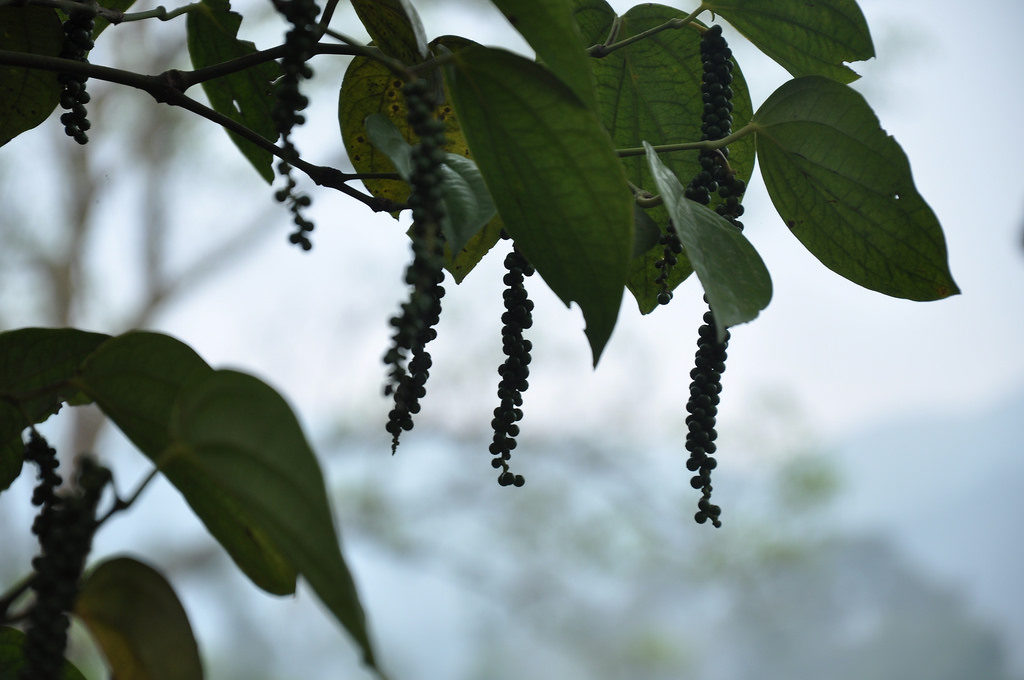
Along the humid slopes of the Western Ghats, where monsoon rains nourish dense forests and agricultural plantations, grows a spice that helped establish India’s reputation as one of the world’s great centres of maritime commerce. Malabar Pepper, renowned for its pungency, distinctive aroma and rich flavour, represents an agricultural heritage that has connected the southwestern coast of India with international markets for centuries. Known as the King of Spices, black pepper occupied an important position in the exchange of goods between India, West Asia, the Mediterranean and later Europe, making the Malabar Coast one of the most significant regions in the history of global spice trading.
Derived from the dried berries of Piper nigrum L., Malabar Pepper is cultivated across recognised geographical areas in Kerala, Karnataka and Tamil Nadu. Its commercial identity is closely associated with the tropical climate of southwestern India, the agricultural landscapes of the Western Ghats and generations of farmers who developed specialised knowledge of pepper cultivation, harvesting and processing. The spice is valued for its characteristic sharpness, aromatic complexity and versatility in culinary preparations, while its historical importance extends far beyond its use as a seasoning.
Malabar Pepper received Geographical Indication (GI) registration on 21 January 2008, formally recognising its geographical association and established reputation under India’s Geographical Indications of Goods (Registration and Protection) Act, 1999. The registration, obtained by the Spices Board under the Ministry of Commerce and Industry, protects the identity of a product whose history is inseparable from the agricultural and commercial development of southern India. Its GI recognition acknowledges not only the characteristics of the spice but also the traditional production system and regional expertise associated with one of India’s most internationally recognised agricultural commodities.
Historical Origins and the Maritime Heritage of Malabar Pepper
Black pepper is considered native to the hills of the southwestern Western Ghats, where favourable climatic conditions supported its growth long before its cultivation expanded to other tropical regions. The Spices Board of India identifies this part of the country as the place of origin of Piper nigrum, establishing a direct connection between the plant’s botanical history and the landscapes of present-day Kerala and adjoining areas.
The development of pepper cultivation contributed to the emergence of the Malabar Coast as a major commercial region in the ancient world. Merchants travelling across the Arabian Sea sought Indian spices for their flavour, preservative applications and commercial value. Pepper became an important commodity in maritime trade networks linking Indian ports with the Arabian Peninsula, the Red Sea and Mediterranean markets.
Historical evidence demonstrates that pepper was traded between southern India and the Roman world during the early centuries of the Common Era. The Periplus of the Erythraean Sea, a first-century maritime trading account, describes commercial activity involving ports on India’s southwestern coast, including the celebrated trading centre of Muziris. Pepper occupied an important place in this exchange, contributing to the prosperity of coastal settlements and the merchant communities associated with them.
The significance of pepper continued through subsequent centuries as Arab and Persian merchants maintained extensive commercial connections with the Malabar Coast. Indian spices travelled through established maritime networks to markets across West Asia, North Africa and Europe, creating a sustained demand for pepper grown in the tropical regions of southwestern India.
During the medieval period, ports such as Kozhikode became important centres of Indian Ocean commerce. Arab merchants, local trading communities and rulers associated with the Malabar Coast participated in a commercial system that connected agricultural production in the hinterland with international maritime trade.
The arrival of Vasco da Gama at Kozhikode in 1498 marked a significant development in European efforts to establish direct maritime access to India’s spice markets. Portuguese commercial expansion was followed by Dutch, British and other European trading interests, each seeking access to the profitable spice trade. Pepper was among the principal commodities influencing these commercial and political developments.
The historical importance of Malabar Pepper therefore extends beyond agriculture. The spice contributed to the growth of Indian Ocean trade, the development of port cities, the exchange of cultural traditions and the emergence of commercial relationships that connected India with distant regions of the world.
Geographical Origin and Cultivation Areas
Malabar Pepper is associated with the humid tropical environments of southern India, particularly the Western Ghats and adjoining agricultural regions. Its registered geographical area includes specified districts across Kerala, Karnataka and Tamil Nadu, reflecting the historical distribution of pepper cultivation and the broader geographical identity of the Malabar pepper trade.
In Kerala, the GI documentation identifies cultivation across districts including Wayanad, Idukki, Kannur, Kasaragod, Kozhikode, Malappuram, Palakkad, Ernakulam, Thrissur, Kottayam, Kollam, Pathanamthitta, Alappuzha and Thiruvananthapuram. These regions encompass highland plantations, midland agricultural settlements and traditional mixed-cropping systems in which pepper has been cultivated alongside other agricultural commodities.
Karnataka forms another major component of the registered geographical area. Important pepper-producing regions include Kodagu, Chikkamagaluru, Hassan, Shivamogga, Uttara Kannada, Dakshina Kannada and Udupi, together with other districts specified in the original registration. The humid conditions of the Western Ghats and surrounding plantation landscapes support extensive cultivation, particularly in mixed agricultural systems involving coffee and other crops.
The registered geographical area also extends into Tamil Nadu, including the Nilgiris, Coimbatore, Theni, Dindigul, Kanyakumari, Tirunelveli, Salem and other districts identified in the GI specification. Pepper cultivation in these areas reflects the suitability of selected hill slopes and tropical agricultural environments for the growth of climbing pepper vines.
The geographical identity of Malabar Pepper is therefore not restricted to the modern administrative boundaries of the Malabar region in northern Kerala. It represents a wider agricultural and commercial tradition that developed across interconnected pepper-growing regions of southern India.
The GI registration recognises this broader geographical relationship while preserving the connection between Malabar Pepper, its traditional growing environments and the commercial reputation established through centuries of cultivation and trade.
Unique Characteristics of Malabar Pepper
Malabar Pepper is produced from the dried fruits of Piper nigrum L., a perennial climbing vine belonging to the botanical family Piperaceae. The plant produces small flowers arranged along spikes, which subsequently develop into clusters of rounded berries. These berries change colour as they mature, passing through green and other intermediate stages before becoming red when fully ripe.
Black pepper is generally produced by harvesting mature berries and drying them until they develop the characteristic dark colour and wrinkled surface associated with commercial peppercorns. During drying, moisture is removed and physical and chemical changes contribute to the appearance, aroma and flavour of the final product.
The Spices Board describes Malabar Pepper as highly aromatic, with a distinctive fruity bouquet and a sharp, hot, biting taste. These characteristics distinguish it as an important commercial type of Indian black pepper and contribute to its demand in domestic and international markets.
The pungency of pepper is primarily associated with piperine, a naturally occurring alkaloid concentrated in the pepper fruit. Piperine contributes the characteristic sharp sensation experienced when black pepper is consumed, while various volatile compounds contribute to its complex aroma.
The aromatic characteristics of pepper depend on a combination of compounds present in its essential oil. Differences in growing conditions, harvesting maturity, drying methods and storage practices can influence the concentration and balance of these substances.
Malabar Pepper is generally recognised by its rounded, dark brown to black peppercorns, irregularly wrinkled surface and strong flavour. Properly processed pepper should be clean, sufficiently dried and free from significant contamination, excessive foreign matter and visible deterioration.
These characteristics are central to its reputation as a premium agricultural commodity, while established grading standards help distinguish different commercial presentations of the spice.
Traditional Commercial Grades: Malabar Garbled and Ungarbled Pepper
An important feature of the GI specification is the classification of Malabar Pepper into two principal commercial categories: garbled and ungarbled pepper. These forms reflect differences in cleaning, grading and processing rather than separate botanical species.
Malabar Garbled Pepper is subjected to cleaning and grading operations intended to remove extraneous matter and improve the uniformity of the final product. The processed peppercorns are generally dark brown to black, approximately globular and characterised by a pronounced wrinkled surface.
Commercial specifications distinguish different grades of Malabar Garbled Pepper according to factors such as physical characteristics, cleanliness and prescribed quality requirements. The Spices Board’s grading framework includes Malabar Garbled Grade 1 and Grade 2, reflecting the importance of standardised commercial classification.
Malabar Ungarbled Pepper is a less extensively cleaned commercial form in which the dried peppercorns retain a greater degree of natural variation in appearance and size. Its colour typically ranges from dark brown to black, while the surface remains characteristically wrinkled.
Ungarbled pepper may undergo additional cleaning, grading or processing before reaching particular markets. The distinction is important in commercial transactions because buyers often specify requirements relating to cleanliness, density, moisture content and uniformity.
The use of established grades demonstrates the relationship between traditional agricultural production and modern commodity standards. While the crop’s identity originates in its geographical environment and cultivation heritage, commercial grading allows producers and traders to supply pepper according to defined market requirements.
The Spices Board also recognises Tellicherry grades of black pepper, including Tellicherry Garbled Special Extra Bold and Tellicherry Garbled Extra Bold. These are associated with larger peppercorn sizes and form part of India’s established pepper grading system. Tellicherry Pepper was originally the subject of a separate GI application, subsequently merged with Malabar Pepper’s registration.
Traditional Cultivation and Agricultural Practices
Pepper cultivation in southern India is closely associated with mixed farming and plantation agriculture. Unlike many annual crops, black pepper is a perennial climbing vine that requires suitable support for its growth and development.
Traditionally, farmers cultivate pepper vines alongside living support trees, allowing the plants to climb as they develop. Trees such as Erythrina and other suitable species have been used as standards, while pepper is also commonly grown in agricultural systems involving coconut, arecanut and coffee.
The use of living supports reflects an agricultural system in which multiple plant species occupy the same cultivated landscape. Such arrangements can contribute to efficient land use and allow farmers to combine pepper cultivation with other economically important crops.
Pepper is commonly propagated through vegetative cuttings obtained from suitable portions of established vines. Healthy planting material is selected and raised before being transferred to prepared cultivation sites, where the young plants are established near support trees or other suitable structures.
Soil preparation, organic matter management, drainage and appropriate shade are important components of the cultivation system. Pepper responds to humid tropical conditions but can suffer when water stagnates around its roots, making drainage particularly important in regions receiving heavy monsoon rainfall.
The vines produce flowering spikes that gradually develop into clusters of berries. Farmers monitor the maturity of these berries to determine the appropriate harvesting period, taking into account the intended commercial product and prevailing growing conditions.
Harvesting is traditionally undertaken by hand, with mature spikes collected carefully to minimise damage to the vines. The berries are subsequently separated from the spikes and subjected to appropriate processing before drying and grading.
These operations reflect specialised knowledge developed through generations of cultivation. The successful production of high-quality pepper depends on the combined management of plant health, soil conditions, moisture, harvesting maturity and post-harvest handling.
The Role of the Western Ghats and Monsoon Climate
The Western Ghats form one of the most important geographical foundations of Malabar Pepper cultivation. The mountain system influences the rainfall, temperature, humidity and vegetation patterns of southwestern India, creating conditions favourable for tropical agricultural crops.
The Spices Board identifies a warm, humid climate and well-distributed annual rainfall of approximately 125–200 centimetres as generally suitable for black pepper cultivation. The crop can be grown across a range of elevations, including areas extending from near sea level to approximately 1,500 metres, depending on local environmental conditions.
Monsoon rainfall plays a significant role in the annual growth cycle of pepper vines. Moisture availability influences vegetative growth, flowering and the development of berries, while prolonged dry periods can affect plant performance.
The quality of drainage is equally important because excessive soil saturation can favour disease development. Farmers must therefore balance the crop’s requirement for moisture with the need to maintain healthy root conditions.
The Western Ghats also support agricultural systems in which pepper is cultivated beneath or alongside other vegetation. Such arrangements form part of the traditional landscape of southern India’s plantation regions, where farmers frequently combine pepper with coffee, coconut, arecanut and other crops.
The geographical environment contributes to the distinctive identity of Malabar Pepper, but the final quality of the product also depends on cultivation practices, harvesting maturity and post-harvest management.
The relationship between climate, soil, vegetation and human agricultural knowledge illustrates why the geographical origin of Malabar Pepper remains central to its commercial identity.
Scientific Characteristics and Quality Assessment
Modern scientific research has examined the chemical composition of black pepper, its aromatic compounds, processing characteristics and factors influencing crop productivity. These investigations have contributed to improvements in cultivation practices, quality assessment and post-harvest management.
Piperine is the principal compound associated with black pepper’s characteristic pungency. Its concentration can vary according to plant material, growing conditions, berry maturity and processing methods.
The essential oil of black pepper contains numerous volatile compounds that contribute to its aroma. Their composition influences the sensory characteristics of the spice, including the balance of woody, warm, citrus-like and other aromatic notes.
Scientific quality assessment considers physical and chemical parameters such as moisture content, cleanliness, foreign matter, berry size, bulk density and the presence of undesirable contaminants. These characteristics influence both commercial grading and the suitability of pepper for food processing.
The Spices Board has established quality standards for different commercial grades of black pepper. The prescribed specifications address physical characteristics and permissible limits for selected quality parameters, allowing products to be classified according to recognised commercial requirements.
Research institutions, particularly the ICAR-Indian Institute of Spices Research in Kozhikode, have contributed to the development of improved cultivation practices, disease-management strategies and post-harvest technologies.
Scientific improvements complement traditional agricultural knowledge by helping farmers manage crop health, reduce avoidable losses and maintain the qualities associated with commercially valuable pepper.
Culinary Importance and Traditional Uses
Malabar Pepper occupies an important place in the culinary traditions of southern India, where it contributes pungency, warmth and aroma to a wide range of preparations. Its use reflects the long-standing familiarity of local communities with the spice and its ability to enhance the flavour of both simple and elaborate dishes.
In Kerala, black pepper is an important ingredient in traditional curries, vegetable preparations, meat dishes and selected medicinally inspired household foods. Freshly ground pepper is frequently used to provide a distinctive flavour, while whole peppercorns are incorporated into spice mixtures and slow-cooked preparations.
Tamil culinary traditions also make extensive use of black pepper. Dishes such as milagu rasam and milagu kuzhambu demonstrate the spice’s importance in regional cooking, where it contributes a characteristic sharp flavour and is often combined with cumin, tamarind and other traditional ingredients.
In Karnataka, pepper features in regional spice preparations and foods associated with the Western Ghats and plantation areas. Its use extends to various vegetarian and non-vegetarian dishes, reflecting the diversity of culinary traditions across the state.
Pepper is also used in pickling, commercial food processing, spice blends, sauces, bakery products and preserved foods. Its adaptability has made it one of the most widely used seasonings in international cuisine.
Beyond food preparation, black pepper has a long history of use in Indian systems of traditional medicine. Known as Maricha in Sanskrit, it appears in classical Ayurvedic formulations and is traditionally associated with digestive applications.
One widely recognised Ayurvedic preparation is Trikatu, which combines black pepper, long pepper and dried ginger. Its traditional use reflects the importance assigned to pungent spices in Ayurvedic formulations, although medicinal applications require appropriate professional guidance and should not be equated with the ordinary culinary consumption of pepper.
The continuing relevance of pepper in food, traditional knowledge and commercial processing demonstrates its versatility as both an agricultural commodity and a cultural ingredient.
Geographical Indication Recognition of Malabar Pepper
Malabar Pepper received formal GI recognition following an application submitted by the Spices Board, a statutory commodity board operating under the Ministry of Commerce and Industry, Government of India.
The application was filed on 13 February 2006 under Application No. 49, seeking registration of Malabar Pepper as an agricultural product associated with specified geographical areas in Kerala, Karnataka and Tamil Nadu.
The registration process involved examination of the product’s geographical identity, historical reputation, cultivation practices and distinguishing characteristics. The application also documented the commercial importance of Malabar Pepper and its association with the traditional pepper-producing regions of southern India.
The Geographical Indications Registry constituted a consultative group during 2006 to examine the application. Subsequent proceedings included examination reports, responses from the applicant and supporting documentation concerning the product’s geographical and commercial identity.
The application was published in Geographical Indications Journal No. 19, with the official registry recording public availability on 3 October 2007. This publication formed part of the statutory process through which the proposed GI registration was made available for examination and possible opposition.
Following completion of the registration procedure, the Geographical Indications Registry issued Certificate No. 47 on 21 January 2008, formally recognising Malabar Pepper under Class 30.
An important aspect of the registration history concerns Tellicherry Pepper. The Spices Board had separately filed Application No. 56 for Tellicherry Pepper on 20 July 2006. The Geographical Indications Registry subsequently merged that application with Application No. 49, establishing Malabar Pepper as the registered GI.
The registration provides legal protection for the geographical indication and establishes a framework through which eligible producers and authorised users can participate in the protected identity of the product.
The official GI record confirms that the registration was renewed in 2026 and is currently valid until 12 February 2036, subject to the provisions of India’s geographical indications legislation.
GI Tag Journey of Malabar Pepper
The GI recognition of Malabar Pepper represents the formal protection of an agricultural tradition whose commercial importance extends back many centuries.
Ancient Period — Origins in the Western Ghats: Black pepper became established in the tropical landscapes of southwestern India, where the species is considered to have originated. The favourable climate and traditional knowledge of local communities contributed to its cultivation and commercial development.
Early Maritime Trade — Indian Ocean Commercial Networks: Pepper emerged as an important commodity in trade between the Malabar Coast, the Arabian Peninsula and Mediterranean markets. Historical references to pepper trading demonstrate the integration of southwestern India into international commercial networks.
First Century CE — Indo-Roman Trade: The Periplus of the Erythraean Sea documented maritime commerce involving southwestern Indian ports, including the region associated with Muziris. Pepper formed part of the valuable commodities exchanged through these routes.
Medieval Period — Expansion of Arab Maritime Commerce: Merchants operating across the Arabian Sea maintained strong commercial connections with the Malabar Coast. Pepper continued to support the growth of coastal trading centres and regional merchant communities.
1498 — Arrival of Vasco da Gama: Portuguese maritime expansion brought renewed European attention to India’s pepper trade, contributing to major changes in the commercial and political history of the Indian Ocean.
13 February 2006 — GI Application Filed: The Spices Board submitted Application No. 49 seeking Geographical Indication registration for Malabar Pepper.
20 July 2006 — Tellicherry Pepper Application Filed: The Spices Board submitted Application No. 56 for Tellicherry Pepper, which was subsequently merged with the Malabar Pepper application.
2006–2007 — GI Examination Process: The Geographical Indications Registry examined the historical, geographical and commercial characteristics of the product through consultative proceedings and formal reports.
October 2007 — GI Journal Publication: Malabar Pepper appeared in Geographical Indications Journal No. 19, documenting the application and its associated specifications.
21 January 2008 — GI Registration Granted: The Geographical Indications Registry issued Certificate No. 47, formally registering Malabar Pepper as an agricultural Geographical Indication.
2026 — GI Registration Renewed: Official registry records document the renewal of Malabar Pepper’s GI protection, extending the registration validity until February 2036.
12 February 2036 — Current Registration Validity: The registered Geographical Indication remains protected until this date, subject to further renewal under the applicable legislation.
GI Details at a Glance
| Particular | Details |
|---|---|
| Geographical Indication | Malabar Pepper |
| States | Kerala, Karnataka and Tamil Nadu |
| Botanical Name | Piper nigrum L. |
| Botanical Family | Piperaceae |
| Product Category | Agricultural |
| GI Class | 30 |
| Application Number | 49 |
| Date of Filing | 13 February 2006 |
| Registered Proprietor | Spices Board, Ministry of Commerce and Industry, Government of India |
| Registered Proprietor’s Address | Sugandha Bhavan, Palarivattom, Kochi, Kerala |
| GI Journal | No. 19 |
| GI Journal Availability Date | 3 October 2007 |
| Certificate Number | 47 |
| GI Certificate Date | 21 January 2008 |
| Registered Geographical Area | Specified regions of Kerala, Karnataka and Tamil Nadu |
| Principal Commercial Categories | Malabar Garbled and Malabar Ungarbled |
| Tellicherry Pepper Application | Application No. 56, merged with Application No. 49 |
| Current GI Status | Registered |
| Registration Valid Until | 12 February 2036 |
Farmer Participation and Traditional Agricultural Knowledge
The continued production of Malabar Pepper depends on farmers who maintain pepper vines across the diverse agricultural landscapes of southern India. Cultivation is undertaken in plantation systems, mixed farms and smaller agricultural holdings, where pepper contributes to household income and the commercial value of cultivated land.
Small and medium-scale growers play an important role in maintaining traditional cultivation practices. Many farmers manage pepper alongside other crops, allowing the spice to form part of diversified agricultural systems rather than depending exclusively on large monoculture plantations.
The management of support trees, selection of healthy planting material, maintenance of soil conditions and identification of suitable harvesting stages require practical knowledge developed through years of experience.
Traditional knowledge is particularly important in responding to the environmental conditions of the Western Ghats. Heavy seasonal rainfall, changes in humidity, soil moisture and disease pressure require farmers to adapt cultivation practices to local circumstances.
Women also participate in agricultural and post-harvest activities associated with pepper production, including sorting, cleaning, grading and other operations involved in preparing the crop for commercial markets.
The GI registration provides a legal framework for recognising eligible producers and authorised users associated with the registered geographical area. Such participation can help maintain the connection between the product’s commercial identity and the farming communities responsible for its cultivation.
Supporting farmers through improved agricultural knowledge, access to suitable planting material, quality-management facilities and organised marketing can strengthen the long-term value of the Malabar Pepper geographical indication.
Scientific Research and Agricultural Development
Scientific research has played an important role in improving black pepper cultivation in India. The ICAR-Indian Institute of Spices Research, headquartered in Kozhikode, has undertaken extensive work on pepper varieties, crop management, disease resistance and post-harvest technologies.
Research on black pepper has addressed the development of improved planting material and the identification of varieties suited to different growing conditions. Such work is particularly important because pepper is a perennial crop, and the choice of planting material influences production over several years.
Disease management is another major area of agricultural research. Black pepper vines can be affected by foot rot and other diseases, particularly under conditions involving excessive moisture and poorly drained soils.
Integrated crop-management approaches seek to improve plant health through appropriate drainage, sanitation, healthy planting material and suitable disease-control measures. These interventions can help farmers manage important production constraints while maintaining desirable quality characteristics.
The management of soil fertility also influences vine growth and productivity. Scientific recommendations increasingly emphasise balanced nutrient management, organic matter conservation and cultivation methods suited to local environmental conditions.
Post-harvest research has contributed to improvements in harvesting, drying, cleaning, grading and storage. These activities are essential because the commercial quality of pepper can deteriorate when moisture levels remain excessive or when dried peppercorns are exposed to contamination.
The integration of traditional agricultural knowledge with scientific improvements strengthens the productive capacity of the pepper sector while preserving the geographical identity of Malabar Pepper.
Economic Importance and India’s Spice Export Industry
Malabar Pepper forms part of an Indian spice industry that has maintained extensive commercial relationships with international markets. Although pepper is cultivated in several countries today, India retains an important position as a producer, consumer, processor and exporter of the commodity.
Official Spices Board statistics show that black pepper cultivation remains concentrated in southern India, particularly Karnataka and Kerala. Tamil Nadu also contributes to production, while cultivation has expanded into selected areas of northeastern India and other suitable regions.
For 2025–26, the Spices Board’s provisional statistics record national black pepper production at approximately 93,716 tonnes from 288,602 hectares. Karnataka accounted for approximately 63,387 tonnes, followed by Kerala with 21,714 tonnes and Tamil Nadu with 1,800 tonnes. These figures refer to total state-level black pepper production, not exclusively to GI-certified Malabar Pepper.
The data demonstrate the substantial economic role of the traditional southern pepper-growing belt. Karnataka has become a major production centre, while Kerala continues to maintain its historical association with pepper cultivation, processing and trade.
The Spices Board’s 2024–25 annual report recorded Indian pepper exports valued at approximately ₹1,062.40 crore. This figure relates to pepper exports as a commodity category and should not be interpreted as the export value of GI-certified Malabar Pepper alone.
The commercial importance of pepper extends beyond the sale of whole dried peppercorns. Value-added products include ground pepper, essential oils, oleoresins and preparations used by the food-processing and flavouring industries.
The development of specialised markets for authenticated geographical products provides additional opportunities for farmers, processors and exporters. GI recognition can support the commercial differentiation of Malabar Pepper by linking its geographical identity with recognised quality standards and transparent sourcing practices.
Protecting Authenticity and Quality
The commercial value of Malabar Pepper makes product authenticity and quality assurance important considerations for producers, traders and consumers. Reliable identification is essential for maintaining the reputation of a geographical indication associated with a historically important agricultural commodity.
The GI registration protects the name Malabar Pepper within the legal framework established by India’s geographical indications legislation. Its use must comply with the registered geographical identity and the applicable requirements governing authorised producers and users.
Quality assurance begins with cultivation and extends through harvesting, drying, cleaning, grading, packaging and storage. Each stage can influence the physical and sensory characteristics of the finished product.
Moisture management is especially important because black pepper is hygroscopic and can absorb moisture from surrounding air. Unsuitable storage conditions may encourage mould development, insect infestation and deterioration in product quality.
Scientific recommendations emphasise adequate drying, appropriate packaging and storage conditions that protect peppercorns from excessive moisture and contamination. The use of clean processing equipment and suitable storage facilities contributes to consistent commercial standards.
Traceability also has an important role in supporting geographical authenticity. Records identifying the producer, cultivation location, harvest period and processing activities can help establish the origin of marketed pepper.
The GI framework and modern quality-management systems are complementary. Geographical registration identifies and protects the product’s regional association, while grading, testing and traceability help maintain the characteristics expected by commercial buyers and consumers.
Malabar Pepper and India’s Agricultural Heritage
The recognition of Malabar Pepper as a Geographical Indication reflects the importance of protecting agricultural products whose identities have developed through long-standing relationships between farming communities and geographical environments.
India’s GI system encompasses a wide variety of agricultural commodities, including rice, fruits, spices, tea and other products associated with distinctive regional cultivation traditions. Malabar Pepper occupies an important place within this heritage because of its botanical origin, historical reputation and contribution to international trade.
Its geographical identity also demonstrates that agricultural heritage does not always correspond to a single modern administrative region. The registered area extends across three southern Indian states, reflecting historical agricultural and commercial relationships that developed before the formation of present-day state boundaries.
The association of pepper with the Malabar Coast is particularly significant because the crop helped establish southern India as an important participant in the Indian Ocean trading system. Its history connects inland farming communities with coastal markets, maritime merchants and international consumers.
The geographical indication therefore protects more than a familiar commercial name. It recognises a product that embodies the interaction of tropical agriculture, traditional processing knowledge, regional trade and historical reputation.
Malabar Pepper also demonstrates the contribution of Indian agricultural products to global culinary traditions. The widespread use of black pepper in international cooking reflects a commodity whose commercial journey began in the tropical landscapes of southwestern India and eventually reached markets throughout the world.
Future Prospects for Malabar Pepper
The future development of Malabar Pepper is closely connected with sustainable cultivation, improved productivity, quality assurance and the commercial opportunities associated with its registered geographical identity.
Scientific research offers opportunities to strengthen pepper cultivation through improved planting material, better disease management, appropriate soil and water conservation, and more efficient post-harvest processing. These measures can support farmers working in the diverse climatic and agricultural conditions of Kerala, Karnataka and Tamil Nadu.
The conservation of traditional pepper-growing landscapes is equally important. Mixed agricultural systems involving pepper, coffee, coconut, arecanut and suitable support trees form part of the regional production heritage and provide opportunities for diversified farming.
Climate-related changes in rainfall patterns, temperature and moisture availability create additional reasons to strengthen agricultural research and promote cultivation practices suited to local environments. Maintaining healthy vines and reducing avoidable crop losses can contribute to more dependable production.
Value addition offers further opportunities for farmers and agricultural enterprises. Improved grading, hygienic processing, suitable packaging and authenticated marketing can help differentiate high-quality Malabar Pepper in domestic and international markets.
The continued development of traceability systems can also support the geographical indication by providing buyers with reliable information about the origin and handling of the product. Stronger connections between producers, processors, exporters and consumers can help translate geographical recognition into greater commercial value.
The preservation of traditional knowledge remains central to this process. Farmers who understand the growth patterns, environmental requirements and harvesting practices of pepper vines possess experience that complements scientific research and contributes to the identity of the registered product.
Malabar Pepper represents a remarkable agricultural heritage that links the tropical landscapes of southern India with centuries of global trade and culinary exchange. Its distinctive aroma, sharp flavour and established commercial reputation reflect the combined influence of geography, cultivation practices and generations of farming expertise.
The Geographical Indication registration granted in January 2008 formally recognised this heritage, while its renewal in 2026 extended legal protection to February 2036. As one of India’s historically significant agricultural commodities, Malabar Pepper continues to connect traditional farming communities with modern markets and international consumers.
From the monsoon-fed slopes of the Western Ghats to the trading ports of the Malabar Coast, the story of this spice reflects India’s enduring contribution to the world’s agricultural and commercial history. Malabar Pepper remains not merely the King of Spices, but a living symbol of India’s maritime heritage, agricultural knowledge and centuries-old connection with global trade.
References
1. Geographical Indications Registry, Government of India — Malabar Pepper, Application No. 49. Official registration record confirming the registered proprietor, geographical area, filing date, certificate details and renewed registration validity up to 12 February 2036.
https://search.ipindia.gov.in/GIRPublicSearch/Application/Details/49
2. Geographical Indications Registry, Government of India — Tellicherry Pepper, Application No. 56. Official record documenting the separate application filed on 20 July 2006 and its subsequent merger with Malabar Pepper Application No. 49.
https://search.ipindia.gov.in/GIRPublicSearch/Application/Details/56
3. Spices Board India, Ministry of Commerce and Industry — Indian Spice News, July 2023. Official publication describing the distinctive characteristics, geographical association and commercial classifications of GI-registered Malabar Pepper.
https://www.indianspices.com/sites/default/files/INDIAN%20SPICE%20NEWS%20JULY%20%202023.pdf
4. Spices Board India — Pepper: Botanical Description, Origin, Distribution and Uses. Official information concerning the botanical characteristics of Piper nigrum, its origins in the Western Ghats, growing conditions and traditional applications.
https://www.indianspices.com/spice-catalog/pepper-1.html
5. Spices Board India — Quality Marking Regulations, 1992. Official grading specifications for Malabar Garbled and Tellicherry Garbled black pepper.
https://www.indianspices.com/sites/default/files/SpicesBoard%28QualityMarking%29Regulations1992.pdf
6. ICAR-Indian Institute of Spices Research — Black Pepper Cultivation Practices. Scientific guidance concerning climate, planting material, crop management, harvesting, processing, storage and quality assurance.
https://www.indianspices.com/sites/default/files/cultivation_practices-pepper_1.pdf
7. Spices Board India — Major Spices: State-Wise Area and Production Statistics, 2021–22 to 2025–26. Official production statistics for black pepper, including Kerala, Karnataka and Tamil Nadu.
https://www.indianspices.com/sites/default/files/Major%20spice%20state%20wise%20area%20production%202024-25%20web.pdf
8. Spices Board India — Annual Report 2024–25. Official documentation of India’s spice sector, export performance, agricultural development and quality-management activities.
https://www.indianspices.com/sites/default/files/Spices%20Annual%20Report%202024-25%20final%20%282%29%20%281%29.pdf
9. Spices Board India — Trade Information and Export Performance. Official information concerning India’s spice exports and international markets.
https://www.indianspices.com/box2info
10. Agricultural and Processed Food Products Export Development Authority (APEDA) — Food and Agricultural Products Registered as Geographical Indications. Government compilation of India’s registered agricultural and food geographical indications.
https://apeda.gov.in/Food_Agri_Products_Registered_GI
