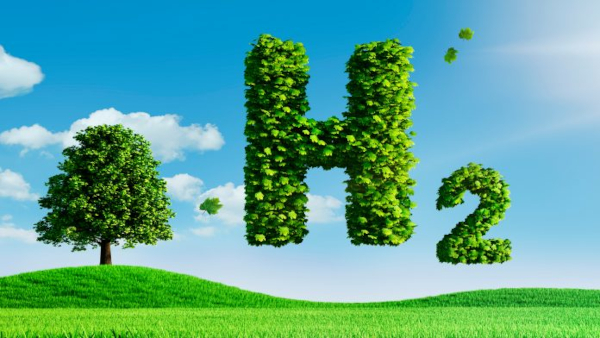
India has emerged as a leading participant in the global green hydrogen market, with Indian companies securing firm and signed offtake commitments equivalent to 5,55,610 metric tonnes of green hydrogen annually as of October 2026. The Ministry of New and Renewable Energy announced the development on October 29, describing the commitments as the largest in the world and a significant milestone in India’s efforts to establish itself as an international supplier of clean hydrogen and its derivatives.
The progress follows the launch of the National Green Hydrogen Mission in January 2023, which aims to develop India’s green hydrogen production capabilities, reduce dependence on imported fossil fuels and support industrial decarbonisation. Since the mission’s introduction, Indian enterprises have secured 23 offtake contracts covering approximately 5.55 lakh metric tonnes per annum (MTPA) of green hydrogen equivalent, with more than 70% of the committed quantities designated for international markets.
The momentum has accelerated considerably during 2026, when Indian companies signed 18 new offtake agreements representing more than four lakh MTPA of green hydrogen equivalent. According to the ministry, fulfilling the domestic and international commitments would require capital investments exceeding ₹90,000 crore, or approximately USD 9.5 billion.
Green Hydrogen Commitments Reach 11% of India’s 2030 Production Target
The cumulative offtake commitments secured by Indian companies represent approximately 11% of the National Green Hydrogen Mission’s production target of at least five million metric tonnes annually by 2030.
The mission was approved by the Union Cabinet with an initial financial allocation of ₹19,744 crore for implementation up to the financial year 2029–30. It seeks to establish an integrated green hydrogen ecosystem encompassing renewable electricity generation, hydrogen production, manufacturing technologies, transportation infrastructure, storage facilities and industrial applications.
The government expects the mission to facilitate the addition of approximately 125 gigawatts of renewable energy capacity and attract investments exceeding ₹8 lakh crore by 2030. The programme also targets the creation of more than six lakh full-time jobs and the avoidance of approximately 50 million metric tonnes of carbon dioxide emissions annually.
These projected outcomes depend on the successful development and commercial operation of green hydrogen projects across the country.
The latest offtake commitments provide an indication of emerging demand for Indian-produced green hydrogen and its derivatives. However, contracted supply quantities should not be confused with actual production capacity already commissioned or hydrogen currently being delivered to customers.
Indian Companies Secure Major Green Ammonia and Methanol Export Agreements
Indian enterprises have established commercial partnerships with companies in Japan, Germany, South Korea, Sri Lanka and other international markets, reflecting growing interest in green hydrogen-based industrial fuels.
ACME Group has signed an agreement with Japan’s IHI Corporation for the supply of 4,88,000 metric tonnes of green ammonia annually. The company has also entered into an agreement to supply 1,00,000 MTPA of green methanol to Mitsubishi Gas Chemical of Japan.
Larsen & Toubro and Japan’s ITOCHU Corporation have formed a special purpose vehicle for the supply of 3,00,000 tonnes of green ammonia annually. Deliveries under the proposed arrangement are expected to begin in December 2029.
Reliance Industries Limited has entered into a long-term supply and purchase agreement with South Korea’s Samsung C&T Corporation valued at more than USD 3 billion. The agreement, involving green ammonia, is among the major commercial commitments highlighted by the government, with deliveries expected to commence in 2028.
These partnerships demonstrate the increasing importance of long-term supply arrangements in supporting investment decisions for large green hydrogen projects. By securing potential buyers before commencing commercial production, developers can improve demand visibility and strengthen the financial viability of their proposed facilities.
AM Green Expands India’s Presence in European and Japanese Markets
AM Green has emerged as another important participant in India’s expanding international green ammonia market, securing agreements with major European and Japanese energy companies.
The company was selected as the sole winner of the Asian lot in the H2Global auction conducted by HINT.CO GmbH, securing a long-term purchase arrangement for renewable ammonia supplied to Germany.
Under the agreement, HINT.CO will purchase ammonia from AM Green with a minimum contractual value of EUR 585 million over ten years. The first deliveries are expected to begin in 2029.
AM Green has also signed a firm offtake agreement with German energy company Uniper for the supply of 2,50,000 metric tonnes of green ammonia annually.
In Japan, the company has entered into a binding heads of agreement with major power producer JERA for the long-term supply of 70,000 MTPA of green ammonia.
The agreements reflect growing demand for lower-emission fuels among countries seeking to reduce their reliance on conventional fossil-based hydrogen, ammonia and other industrial feedstocks.
The Ministry of New and Renewable Energy has also highlighted an agreement between Jouno Joules and Select Energy GmbH for the supply of approximately 600 tonnes of green ammonia daily, equivalent to around 2,19,000 tonnes annually.
Separately, Agastya is pursuing an offtake arrangement involving 2,50,000 MTPA of green methanol for SAR in Sri Lanka. The ministry identifies this arrangement as being in progress rather than a completed contract.
Domestic Green Hydrogen Demand Expands Through Fertiliser and Refinery Industries
Alongside international export agreements, India is developing domestic demand for green hydrogen and its derivatives through the Strategic Interventions for Green Hydrogen Transition (SIGHT) programme.
Under the programme, agreements have been signed for the production and supply of 6,70,000 metric tonnes of green ammonia annually to 11 fertiliser manufacturing units across the country.
The fertiliser industry represents an important market for green ammonia because ammonia is a fundamental input in the manufacture of nitrogen-based fertilisers.
Conventional ammonia production relies predominantly on hydrogen obtained from fossil fuels, particularly natural gas. Replacing fossil-based hydrogen with hydrogen produced using renewable electricity could significantly reduce emissions associated with ammonia manufacturing, depending on the electricity sources and production processes used.
The SIGHT programme has also awarded projects for the production and supply of 30,000 metric tonnes of green hydrogen annually to refineries operated by Indian Oil Corporation Limited, Bharat Petroleum Corporation Limited, Hindustan Petroleum Corporation Limited and Numaligarh Refinery Limited.
Petroleum refineries currently use hydrogen in several industrial processes, including the removal of sulphur from petroleum products. Green hydrogen offers a potential pathway for reducing emissions associated with these operations.
The domestic agreements are expected to encourage the development of production facilities and establish demand for green hydrogen within India’s existing industrial infrastructure.
Green Ammonia and Methanol Gain Importance in Global Shipping
Green ammonia and green methanol are attracting growing international attention as potential alternatives to conventional marine fuels.
Both products can be manufactured using green hydrogen, although their production pathways differ. Green ammonia combines hydrogen with nitrogen, while green methanol requires hydrogen and a suitable carbon source.
Methanol is increasingly being considered for marine propulsion because it can be used in appropriately designed engines and fuel systems. Ammonia is also being explored as a future marine fuel, although its toxicity, combustion characteristics and handling requirements present additional technical and safety challenges.
The Ministry of New and Renewable Energy has identified maritime bunkering as an emerging market for green hydrogen derivatives.
The potential expansion of low-emission shipping fuels could create export opportunities for Indian producers, particularly as international shipping companies seek alternatives to conventional petroleum-based fuels.
However, the environmental performance of these fuels depends on their production methods, energy sources and emissions across their full life cycles. Green ammonia and methanol should therefore not be regarded as automatically emissions-free at every stage of production and use.
Green Ammonia Offers Opportunities for Cleaner Thermal Power Generation
Another potential application of green ammonia is its use in thermal power plants through ammonia co-firing.
The process involves using ammonia alongside conventional fuels in power generation systems, potentially reducing the quantity of fossil fuel required to generate electricity.
Countries including Japan are exploring ammonia co-firing technologies as part of their efforts to reduce emissions from existing thermal power infrastructure.
For Indian green ammonia producers, this emerging application could provide an additional international market beyond fertiliser manufacturing and maritime transportation.
The effectiveness of ammonia co-firing in reducing overall greenhouse gas emissions depends on the proportion of ammonia used, its production pathway, combustion efficiency and the management of associated pollutants.
These technical considerations will influence the commercial viability and environmental benefits of large-scale ammonia deployment in the power sector.
Competitive Pricing Strengthens India’s Green Hydrogen Export Prospects
According to the Ministry of New and Renewable Energy, Indian suppliers are offering internationally competitive prices for green ammonia and green methanol, helping strengthen India’s position in European and Japanese markets.
India’s expanding renewable energy sector provides an important foundation for green hydrogen production. Electricity generated from renewable sources can be used to power electrolysers, which split water into hydrogen and oxygen.
The cost of renewable electricity is a major factor influencing green hydrogen production economics, alongside electrolyser investment, equipment utilisation, water availability, storage, transportation and financing costs.
Long-term offtake agreements can help developers plan production investments while providing prospective buyers with greater certainty over future fuel supplies.
The growing number of international agreements indicates that Indian companies are positioning themselves to participate in emerging clean fuel supply chains.
Nevertheless, successfully translating these commitments into commercial exports will require substantial investments in manufacturing facilities, renewable energy generation, port infrastructure, storage systems and specialised transportation capabilities.
Green Hydrogen Mission Supports India’s Clean Energy Ambitions
India’s National Green Hydrogen Mission forms part of the country’s broader strategy to expand renewable energy deployment, strengthen energy security and develop new industrial capabilities.
Green hydrogen could help reduce fossil fuel consumption in sectors where direct electrification is technically difficult or commercially challenging.
Industries such as fertiliser manufacturing, petroleum refining, steel production and certain transport applications are among the potential beneficiaries of hydrogen-based decarbonisation technologies.
The mission also seeks to promote domestic manufacturing of electrolysers and other equipment required for hydrogen production, creating opportunities for Indian engineering companies, renewable energy developers and technology manufacturers.
With export agreements accounting for more than 70% of the cumulative hydrogen-equivalent commitments reported by the government, international trade is expected to play an important role in supporting the sector’s development.
The Ministry of New and Renewable Energy’s October 29 announcement marks a significant milestone in India’s efforts to establish a commercial green hydrogen industry.
While the offtake commitments demonstrate substantial market interest, the next stage of development will depend on converting these agreements into operational projects, achieving competitive production costs and establishing reliable supply chains.
If implemented successfully, the planned investments could strengthen India’s position as a major producer and exporter of green hydrogen derivatives while contributing to industrial decarbonisation and the country’s long-term energy transition objectives.
Reference
Ministry of New and Renewable Energy, Government of India. “India Leads Globally with Green Hydrogen Offtake Commitments Exceeding 5.5 Lakh MTPA Till October 2026.” Press Information Bureau, October 29, 2026.
Official Source: https://www.pib.gov.in/PressReleseDetailm.aspx?PRID=2329940&lang=1®=1
You may also like
-
Pratt & Whitney Signs Over $40 Million in Aerospace Supply Agreements with Indian Manufacturers
-
India Post and UTI Mutual Fund Expand Partnership to Provide Doorstep KYC Verification Across India
-
Ambemohar Rice of Maharashtra: The Mango-Blossom Fragrant Heritage Grain of the Sahyadri Hills
-
India Advances Research in Reusable Rockets, Green Propulsion and Autonomous Spacecraft Technologies
-
India Advances $4 Billion Thoothukudi Mega Shipyard Project with South Korea’s HD Hyundai
