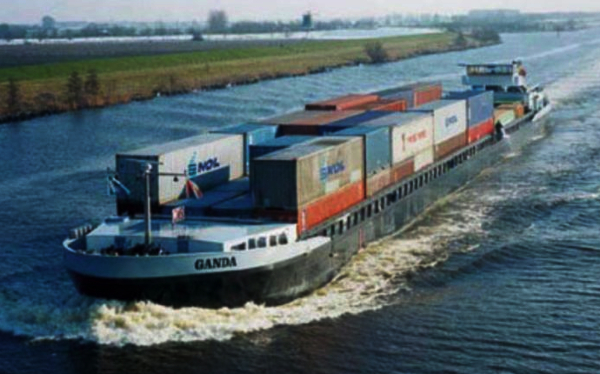
The Union Cabinet has approved a ₹10,000 crore Container Manufacturing Promotion Scheme (CMPS) aimed at transforming India into a globally competitive manufacturing hub for shipping containers. The ambitious programme seeks to increase domestic container manufacturing capacity nearly tenfold to 7.5 lakh Twenty-foot Equivalent Units (TEUs) annually, reduce dependence on imported containers and strengthen the country’s maritime logistics infrastructure.
The Cabinet, chaired by Prime Minister Narendra Modi, approved the scheme on 28 October 2026, establishing a long-term framework for expanding domestic manufacturing capabilities in a sector essential to international trade.
The programme, originally announced in the Union Budget 2026–27, will operate from the financial year 2027–28 to 2039–40. It provides three years for establishing manufacturing facilities, followed by ten years of production-related support.
The initiative is expected to encourage substantial investments in container manufacturing, stimulate associated engineering industries and strengthen India’s position within international maritime supply chains.
India Targets Tenfold Increase in Container Manufacturing Capacity
India currently possesses an annual shipping container manufacturing capacity of approximately 70,000 TEUs. The newly approved scheme aims to increase this capacity to 7.5 lakh TEUs annually, representing an expansion of nearly eleven times the existing level.
A Twenty-foot Equivalent Unit is the standard measurement used in container shipping, representing the capacity of a conventional 20-foot shipping container. A standard 40-foot container is generally counted as two TEUs.
Shipping containers form an essential component of modern international trade, enabling goods to move efficiently between ships, railway networks and road transport systems without repeated handling of individual consignments.
Despite being a major trading economy, India remains substantially dependent on containers manufactured overseas. This dependence exposes shipping companies, exporters and logistics operators to international supply disruptions, equipment shortages and fluctuations in procurement costs.
By developing a competitive domestic manufacturing industry, the government aims to establish a more reliable supply of containers for Indian shipping lines, ports, logistics companies and international customers.
₹10,000 Crore Incentive Package to Support New Factories and Expansion
The Container Manufacturing Promotion Scheme introduces a combination of financial incentives, operational assistance and testing infrastructure support to encourage investment in domestic manufacturing.
The largest component is an allocation of ₹8,891 crore for operational expenditure assistance. Under this provision, eligible manufacturers will receive financial support for containers manufactured to international shipping standards and sold commercially.
This assistance is intended to bridge the cost difference between domestically manufactured containers and imported alternatives, allowing Indian manufacturers to gradually improve competitiveness as production volumes increase.
The scheme also provides ₹859 crore for interest subvention assistance. Eligible manufacturers establishing new production facilities with an annual capacity of at least one lakh TEUs will qualify for interest support of three percentage points annually on eligible term loans.
Existing manufacturers expanding their production capacity by at least 25,000 TEUs annually will also be eligible under the prescribed conditions.
An additional ₹150 crore has been allocated for establishing common testing and certification infrastructure, while ₹100 crore has been earmarked for scheme administration, monitoring and capacity development.
The government will also facilitate access to land at major ports through leasing support at 25 per cent of the notified rate, potentially encouraging container manufacturing facilities near important maritime logistics centres.
Domestic Content Requirement to Rise to 90 Per Cent
An important feature of the scheme is its emphasis on increasing domestic value addition in container production.
The government has stipulated a progressive increase in domestic content requirements from 70 per cent to 90 per cent during the programme.
This requirement is intended to encourage manufacturers to source a greater proportion of materials, components and industrial inputs from Indian suppliers.
Shipping container production requires specialised steel, corner castings, flooring materials, welding equipment, protective coatings and various engineered components.
Greater domestic sourcing could therefore create business opportunities across several manufacturing industries, including steel processing, fabrication, industrial chemicals, engineering components and specialised materials.
The initiative could also encourage the development of dedicated supplier networks capable of supporting large-scale container manufacturing while meeting international safety and performance requirements.
Testing Infrastructure to Support International Certification
Shipping containers must comply with internationally recognised technical and safety standards to ensure their suitability for repeated handling, stacking and transportation across different modes of freight movement.
Manufacturers must demonstrate that their products can withstand substantial structural loads, mechanical stresses and demanding operational conditions.
The scheme allocates ₹150 crore for common testing and certification facilities, including infrastructure for dynamic longitudinal impact testing.
Developing these facilities domestically is expected to reduce dependence on overseas testing services and improve access to certification infrastructure for Indian manufacturers.
Such capabilities are particularly important for companies seeking to supply containers to international shipping lines, which require products that meet established global standards.
The availability of domestic testing infrastructure could also support improvements in product engineering, materials research and manufacturing quality.
Over 53,000 Employment Opportunities Expected
The government estimates that the programme could generate approximately 3,000 direct jobs and more than 50,000 indirect employment opportunities across manufacturing and associated industries.
Direct employment is expected to emerge from the establishment of new container production facilities and the expansion of existing factories.
Indirect employment opportunities could arise across steel manufacturing, component supply, fabrication, industrial coatings, transportation, logistics and supporting engineering services.
The development of an integrated container manufacturing ecosystem may also encourage investments in specialised industrial machinery, automated production systems and skilled technical training.
According to government projections, the programme could generate approximately ₹75,000 crore in economic output by the financial year 2039–40.
This projected economic activity would represent more than seven times the scheme’s budgetary allocation, although actual outcomes will depend on manufacturing investments, market demand and the international competitiveness of Indian-made containers.
Growing Container Traffic Creates Long-Term Manufacturing Opportunity
The expansion of India’s container manufacturing capabilities is closely linked to the expected growth of maritime trade and port infrastructure.
Under the Maritime Amrit Kaal Vision 2047, India’s container traffic is projected to increase from approximately 24 million TEUs in 2024 to 175 million TEUs by 2047.
This anticipated expansion reflects the government’s long-term plans for port modernisation, improved logistics connectivity and increased participation in international maritime commerce.
Major port development projects, including Vadhavan Port in Maharashtra and the proposed Galathea Bay transshipment port in the Andaman and Nicobar Islands, could contribute to growing demand for container-related services and infrastructure.
The proposed Bharat Container Shipping Line is also expected to create opportunities for domestic container procurement as India seeks to strengthen its presence in international shipping.
Importantly, container traffic represents the volume of cargo containers handled through ports, while container manufacturing capacity measures the production of new equipment. The two figures are different indicators and should not be considered directly equivalent.
Nevertheless, the projected expansion of maritime trade provides an important economic rationale for developing a stronger domestic container manufacturing industry.
Strengthening India’s Maritime Supply Chain Independence
Union Minister of Ports, Shipping and Waterways Sarbananda Sonowal welcomed the Cabinet decision, describing it as an important step towards strengthening domestic manufacturing and reducing dependence on imported shipping equipment.
The minister emphasised that shipping containers are fundamental to the functioning of international trade and that domestic production would contribute to greater resilience across India’s maritime logistics network.
The initiative aligns with the government’s Make in India programme and its broader objective of developing indigenous capabilities in strategically important manufacturing sectors.
The scheme also supports efforts to strengthen the integration of Indian manufacturing industries with ports, shipping companies and international logistics networks.
For exporters, improved domestic container availability could help reduce exposure to shortages of shipping equipment, although freight costs and container availability will continue to depend on wider market conditions and international shipping operations.
Building a Globally Competitive Container Manufacturing Industry
The Container Manufacturing Promotion Scheme represents a long-term industrial intervention aimed at creating manufacturing capacity in a sector traditionally dominated by overseas suppliers.
Its emphasis on production incentives, domestic sourcing, international certification and industrial infrastructure is intended to address several structural challenges facing Indian container manufacturers.
An Inter-Ministerial Steering Committee chaired by the Secretary of the Ministry of Ports, Shipping and Waterways will oversee the approval of implementation guidelines and sanction financial assistance under the programme.
The success of the initiative will depend on attracting private investment, achieving competitive production costs, developing reliable domestic supplier networks and securing orders from Indian and international shipping companies.
If these objectives are realised, India could progressively establish itself as an important supplier of internationally certified shipping containers while strengthening its own maritime logistics capabilities.
The Cabinet’s approval marks a significant step towards developing a self-reliant container manufacturing ecosystem and supporting India’s long-term ambitions under the Maritime Amrit Kaal Vision 2047.
You may also like
-
India-Russia Bilateral Trade Surges 24.3% to $47.7 Billion in First Seven Months of 2026
-
India Simplifies Nearly 48,000 Business Compliances as DPIIT Advances Trust-Based Governance
-
India and Mexico Launch Preferential Trade Agreement Negotiations to Expand Bilateral Trade and Investment
-
Ajara Ghansal Rice of Maharashtra: The GI-Tagged Aromatic Heritage of Kolhapur
-
India’s Telephone Subscriptions Reach 136.79 Crore as Telecom Sector Records Strong Growth in September 2026
