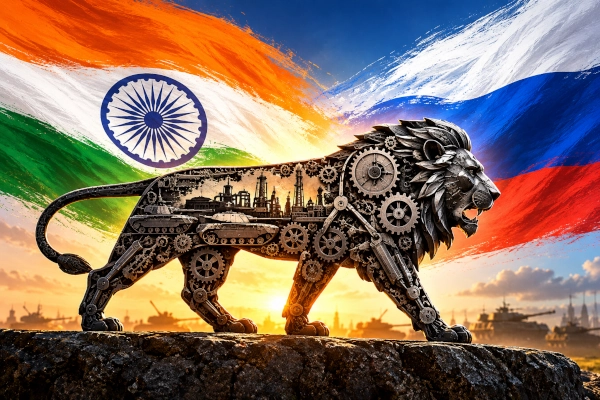
Armoured Vehicles Nigam Limited (AVNL), a Defence Public Sector Undertaking under India’s Ministry of Defence, has initiated discussions with a Russian delegation and senior Indian Army officials to explore opportunities for modernising armoured vehicles currently serving with the Indian Armed Forces. The interaction reflects continuing India–Russia defence industrial cooperation and India’s efforts to strengthen the operational capabilities, reliability and service life of its existing military equipment.
AVNL announced the development through its official social media account in October 2026. The discussions brought together senior Indian Army officers responsible for capability development, equipment sustenance and mechanised warfare. Their participation highlights the importance of maintaining and upgrading armoured fighting vehicles as the Army prepares to meet evolving operational requirements.
India operates several armoured platforms with Russian and Soviet design origins, including T-72 Ajeya main battle tanks, T-90 Bhishma tanks and BMP-2 Sarath infantry combat vehicles. AVNL possesses extensive experience in manufacturing, overhauling and supporting these vehicles through its specialised production facilities. The latest interaction provides an opportunity to explore further cooperation in modernising existing equipment while strengthening India’s domestic defence manufacturing capabilities.
AVNL Initiates Discussions with Russian Delegation and Indian Army
Armoured Vehicles Nigam Limited confirmed that it had initiated an interaction involving a Russian delegation and the Indian Army to examine potential bilateral collaboration in the modernisation of in-service armoured platforms.
According to AVNL’s official announcement, the meeting was attended by the Deputy Chief of Army Staff (Capability Development and Sustenance), the Master General Sustenance and the Director General Mechanised Forces. These senior appointments are associated with important aspects of the Army’s capability planning, equipment maintenance and mechanised operations.
The participation of officers representing capability development and sustenance reflects the broad requirements involved in maintaining modern armoured formations. Effective armoured warfare depends on the coordinated development of mobility, protection, firepower, surveillance, communications and logistical support.
AVNL’s involvement brings India’s domestic manufacturing and overhaul capabilities into the discussions. The company supports several major armoured vehicle platforms and maintains industrial facilities equipped for heavy engineering, precision manufacturing and specialised vehicle maintenance.
The interaction forms part of the broader defence relationship between India and Russia, which includes longstanding cooperation in military equipment manufacturing, technology transfer, maintenance and industrial support.
Armoured Vehicles Nigam Limited Plays a Major Role in India’s Defence Manufacturing
AVNL was established in 2021 following the restructuring of the erstwhile Ordnance Factory Board into seven government-owned defence enterprises. The company specialises in manufacturing armoured fighting vehicles, military transport vehicles, engines, specialised equipment and associated defence products.
Headquartered in Chennai, AVNL operates several important industrial establishments that support India’s land warfare capabilities. These include Heavy Vehicles Factory at Avadi, Engine Factory Avadi, Ordnance Factory Medak, Vehicle Factory Jabalpur and Machine Tool Prototype Factory at Ambarnath.
The company’s manufacturing portfolio includes T-72 Ajeya and T-90 Bhishma main battle tanks, BMP-2 Sarath infantry combat vehicles, armoured engineering vehicles, mine-protected vehicles and specialised military transport platforms.
AVNL also undertakes the overhaul, repair and maintenance of armoured equipment. These activities are essential for maintaining the serviceability of military vehicles that remain operational over extended periods.
The company’s industrial infrastructure includes advanced machining facilities, forging equipment, heat-treatment systems, specialised welding capabilities and quality assurance laboratories. These manufacturing resources allow AVNL to produce complex mechanical assemblies and support the restoration and modernisation of existing armoured platforms.
T-72 Ajeya Remains an Important Indian Army Armoured Platform
The T-72 Ajeya is among the major Russian-origin armoured platforms manufactured and supported by AVNL. The Indian Army introduced the T-72 into service during the late twentieth century, and domestic manufacturing subsequently expanded through Heavy Vehicles Factory at Avadi.
AVNL’s official milestones record the rollout of the first overhauled T-72 in 1983 and the production of the Ajeya variant in 1984. These developments established a substantial domestic industrial foundation for maintaining and manufacturing the platform.
The T-72 is a tracked main battle tank equipped with a 125mm smoothbore gun. Its compact design, mobility and established maintenance infrastructure have supported its long service with the Indian Army.
AVNL continues to undertake overhaul and improvement activities associated with the platform. The company’s manufacturing facilities possess capabilities in major mechanical systems, vehicle structures, powertrains and associated assemblies.
Modernisation programmes for established armoured vehicles can improve their operational utility by introducing updated subsystems while retaining serviceable portions of the existing platform. Such approaches allow armed forces to maintain equipment availability and benefit from advances in automotive and electronic technologies.
AVNL’s experience with the T-72 provides an important industrial foundation for any future modernisation activities involving India’s established tank fleet.
T-90 Bhishma Manufacturing Demonstrates India–Russia Industrial Cooperation
The T-90 Bhishma represents another major component of India’s armoured warfare capabilities. The platform was introduced through defence cooperation with Russia and subsequently manufactured in India at Heavy Vehicles Factory, Avadi.
The Indian Army signed its initial contract for 310 T-90 tanks in February 2001. Domestic production and subsequent manufacturing programmes helped establish the industrial capabilities required to support the platform within India.
AVNL’s official records identify the T-90 as a main battle tank equipped with a 125mm smoothbore gun, automatic loading system, advanced sighting equipment and integrated protection systems.
The vehicle incorporates mechanical, electrical and electronic subsystems that require specialised manufacturing and maintenance expertise. Its operational effectiveness depends on the coordinated performance of its propulsion, fire-control, communication and protection systems.
India has progressively expanded domestic manufacturing capabilities for T-90 tanks and associated components. AVNL’s official milestones record the delivery of T-90 Mark-III tanks to the Indian Army in 2024, reflecting continued development of the platform.
The company’s experience in producing and supporting the T-90 demonstrates the established industrial relationship between Indian manufacturers and Russian-origin armoured vehicle technologies.
BMP-2 Sarath Provides a Foundation for Infantry Combat Vehicle Modernisation
The BMP-2 Sarath infantry combat vehicle is another important example of India’s indigenous manufacturing capabilities developed through earlier cooperation with the Soviet Union and Russia.
Ordnance Factory Medak, now an AVNL unit, began manufacturing the Sarath during the 1980s. The facility produced its first infantry combat vehicle in 1987 and subsequently expanded its expertise in vehicle assembly, precision engineering and specialised armoured systems.
The BMP-2 is designed to transport infantry personnel while providing mobility, protection and fire support. Its principal armament includes a 30mm automatic cannon, a 7.62mm coaxial machine gun and an anti-tank guided missile system.
The vehicle also possesses amphibious capabilities, enabling it to operate across certain water obstacles without requiring separate bridging equipment.
AVNL’s official documentation states that the Medak facility has achieved an indigenisation level of approximately 98.5% for the BMP-2 platform.
The company has also developed several specialised variants based on the vehicle, including command post vehicles, tracked mortar carriers, armoured ambulances and engineering reconnaissance vehicles.
These manufacturing capabilities provide India with an established industrial base for maintaining and improving infantry combat vehicles. Modernisation of such platforms can help sustain their effectiveness as the Army develops its future mechanised infantry capabilities.
AVNL Already Undertaking Major BMP-2 Modernisation Programme
AVNL has an established role in upgrading armoured vehicles operated by the Indian Army. One of its major ongoing programmes involves the modernisation of BMP-2 infantry combat vehicles to improve their night-fighting capabilities and fire-control performance.
On March 13, 2024, the Ministry of Defence signed a contract with AVNL for 693 armament upgrades of BMP-2 infantry combat vehicles to the BMP-2M configuration. The programme includes night-fighting equipment, improved gunner sights, commander panoramic sights and a fire-control system incorporating automatic target tracking.
The modernisation solution integrates technologies developed by the Defence Research and Development Organisation (DRDO) and Bharat Electronics Limited (BEL), Chennai. AVNL is responsible for producing the upgrade systems using equipment and subsystems sourced from Indian manufacturers.
The programme falls under the Buy (Indian–Indigenously Designed, Developed and Manufactured) procurement category, strengthening domestic participation in advanced military electronics and armoured vehicle modernisation.
Improved night-fighting equipment enables crews to identify and engage targets in low-light conditions, while modern fire-control systems support more effective target acquisition and weapon operation. The integration of these technologies can significantly improve the operational capabilities of existing infantry combat vehicles.
This programme demonstrates AVNL’s ability to undertake substantial modernisation activities through cooperation with Indian defence research organisations and industrial partners.
Indigenous Manufacturing Reduces Dependence on Imported Components
AVNL has progressively increased the indigenous content of several major armoured platforms manufactured in India.
According to the company’s official Make in India documentation, indigenisation levels have reached approximately 96% for T-72 tanks, 80% for T-90 tanks and 98.5% for BMP-2 infantry combat vehicles. These figures reflect the localisation achievements recorded in the company’s published manufacturing information.
Domestic production of major components supports the availability of spare parts, reduces dependence on external suppliers and strengthens the industrial capabilities required to maintain military equipment.
AVNL has identified several important subsystems for indigenous development, including electric motors, starter generators, cooling systems, specialised loading assemblies and vehicle navigation components.
Its indigenisation efforts involve developing local suppliers, undertaking engineering work and validating components for use in established military platforms.
The company has also pursued improvements in armoured vehicle engines, mechanical assemblies and associated automotive systems.
These activities contribute to India’s broader objective of developing a domestic supply network capable of supporting complex military equipment throughout its operational life.
India–Russia Defence Cooperation Supports Equipment Sustenance
India and Russia maintain a longstanding defence partnership covering military equipment production, technology transfer, spare parts manufacturing and technical support.
Russian and Soviet-origin equipment has formed an important part of India’s armoured vehicle inventory for several decades. Consequently, cooperation in maintenance, component manufacturing and modernisation remains relevant to the continued operation of these platforms.
In 2019, India and Russia signed an intergovernmental agreement covering cooperation in the joint manufacturing of spare parts, components, assemblies and other materials associated with Russian- and Soviet-origin military equipment.
AVNL’s annual report for 2022–23 identifies the agreement as an important development supporting the maintenance and serviceability of Russian-origin equipment operated by the Indian Army.
The agreement provides a framework for expanding manufacturing cooperation and strengthening the availability of components through domestic industrial participation.
India’s established facilities for manufacturing and maintaining T-series tanks and BMP infantry combat vehicles provide a substantial industrial foundation for such cooperation.
The latest interaction involving AVNL, the Indian Army and the Russian delegation builds upon this longstanding relationship by exploring additional opportunities for modernising equipment already in service.
Modernisation Extends the Operational Value of Existing Armoured Fleets
Modernising existing armoured fighting vehicles is an important component of long-term military capability development.
Main battle tanks and infantry combat vehicles represent substantial investments in manufacturing, infrastructure, training and logistical support. Their operational value can often be extended through improvements in selected components and subsystems.
Technological advances in sensors, communications, navigation, fire-control equipment and automotive systems create opportunities to improve established platforms without replacing every vehicle.
For the Indian Army, maintaining the effectiveness of existing armoured fleets is important as new-generation equipment enters service alongside established platforms.
Upgraded vehicles can benefit from improved situational awareness, more effective target acquisition and greater mechanical reliability. Modernisation can also support the standardisation of selected components and simplify maintenance requirements.
AVNL’s manufacturing and overhaul infrastructure plays a significant role in supporting these activities. Its experience with T-72, T-90 and BMP-2 platforms allows the company to contribute to the continuing development and maintenance of India’s mechanised forces.
Advanced Navigation Systems Strengthen Armoured Vehicle Capabilities
India is also pursuing improvements in armoured vehicle navigation and battlefield mobility through indigenous defence technologies.
On July 29, 2024, the Defence Acquisition Council approved the procurement of an Advanced Land Navigation System for Indian Army armoured fighting vehicles.
The approved ALNS Mk-II system supports navigation using India’s NavIC satellite navigation system alongside GPS and GLONASS. It incorporates security features and compatibility with defence mapping systems to support military navigation requirements.
The Ministry of Defence identified Bharat Electronics Limited, Chennai, as the supplier under the Buy (Indian–Indigenously Designed, Developed and Manufactured) category.
Advanced navigation capabilities support the movement and coordination of armoured formations, particularly during operations involving complex terrain and limited visibility.
Such systems illustrate the increasing importance of electronics, software and indigenous navigation technologies in modern armoured warfare.
Together with improvements in fire-control systems, vehicle protection and automotive reliability, these technologies contribute to the continued development of India’s mechanised combat capabilities.
AVNL’s Manufacturing Infrastructure Supports Atmanirbhar Bharat
AVNL plays an important role in India’s Atmanirbhar Bharat initiative by developing indigenous manufacturing capabilities for armoured fighting vehicles and their associated systems.
The company’s facilities combine established heavy engineering expertise with modern manufacturing technologies, including computer-controlled machining, precision fabrication, specialised welding and advanced inspection systems.
Heavy Vehicles Factory at Avadi supports the production and overhaul of main battle tanks, while Ordnance Factory Medak specialises in infantry combat vehicles and their variants.
Engine Factory Avadi manufactures and supports powerplants used in armoured vehicles, contributing to domestic capabilities in military automotive engineering.
Vehicle Factory Jabalpur undertakes vehicle manufacturing and overhaul activities, while Machine Tool Prototype Factory supports the production of specialised mechanical assemblies and precision-engineered components.
These facilities form an integrated industrial network capable of supporting different stages of armoured vehicle production and maintenance.
The development of indigenous subsystems also creates opportunities for Indian MSMEs, engineering companies and technology enterprises to participate in defence manufacturing supply chains.
AVNL’s existing modernisation programmes demonstrate how cooperation between public-sector enterprises, research organisations and domestic manufacturers can strengthen India’s defence industrial capabilities.
India and Russia Explore Further Cooperation in Armoured Vehicle Modernisation
The interaction between Armoured Vehicles Nigam Limited, senior Indian Army officers and the Russian delegation represents a continuation of India’s efforts to strengthen its existing armoured vehicle capabilities through industrial cooperation.
The discussions bring together operational requirements, equipment sustenance expertise and manufacturing capabilities within a framework of longstanding India–Russia defence relations.
AVNL’s experience in manufacturing and maintaining T-72, T-90 and BMP-2 platforms provides a strong foundation for evaluating future modernisation opportunities. Its established industrial facilities and increasing indigenous manufacturing capabilities also support India’s objective of maintaining critical defence equipment through domestic resources.
The company’s ongoing BMP-2 modernisation programme, expanding component indigenisation and investments in specialised manufacturing demonstrate the role of Indian defence enterprises in sustaining and improving existing military platforms.
The latest engagement reinforces cooperation between the Indian Army, AVNL and international defence industry partners while highlighting the importance of modernisation alongside the development of new military equipment.
As India continues to expand its indigenous armoured vehicle manufacturing and support infrastructure, such industrial interactions contribute to the broader objective of strengthening operational readiness, technological capabilities and self-reliance in defence production.
References
1. Armoured Vehicles Nigam Limited — Official Announcement, October 2026.
Interaction with Russian Delegation and Indian Army on Modernisation of In-Service Armoured Platforms.
https://x.com/AVANI_PR
2. Armoured Vehicles Nigam Limited — Official Website.
Products, Manufacturing Facilities and Armoured Fighting Vehicle Capabilities.
https://avnl.co.in/products
3. Armoured Vehicles Nigam Limited — Official Milestones.
Development and Manufacturing Milestones of AVNL.
https://avnl.co.in/index.php/milestone
4. Ministry of Defence, Press Information Bureau — March 13, 2024.
MoD Inks Contract with AVNL for 693 Armament Upgrades of Infantry Combat Vehicle BMP-2 to BMP-2M.
https://www.pib.gov.in/PressReleasePage.aspx?PRID=2014345
5. Armoured Vehicles Nigam Limited — Make in India.
Indigenisation of Armoured Fighting Vehicles and Critical Components.
https://avnl.co.in/make-in-india
6. Armoured Vehicles Nigam Limited — Annual Report 2022–23.
Manufacturing Capabilities, Modernisation and India–Russia Defence Industrial Cooperation.
https://www.avnl.co.in/files/inline-documents/AnnualReport2022-23.pdf
7. Ministry of Defence, Press Information Bureau — July 29, 2024.
DAC Clears Capital Acquisition Proposals to Enhance the Capabilities of Indian Army and Indian Coast Guard.
https://www.pib.gov.in/PressReleasePage.aspx?PRID=2038476
You may also like
-
Rolls-Royce and Reliance Advance Indigenous 120 kN AMCA Engine Plans with Focus on Indian Design and Manufacturing
-
Indian Coast Guard and Korea Coast Guard Strengthen Maritime Cooperation at 14th High-Level Meeting in Incheon
-
Ministry of Defence Signs ₹4,106 Crore Contracts for GSAT-7C Satellite and Varunastra Torpedoes
-
JSR Dynamics Develops Indigenous Miniature Ground-Launched Decoy for Electronic Warfare Applications
-
Bharat Electronics and Sahana Defence Partner for AK-203 Rifle Components
