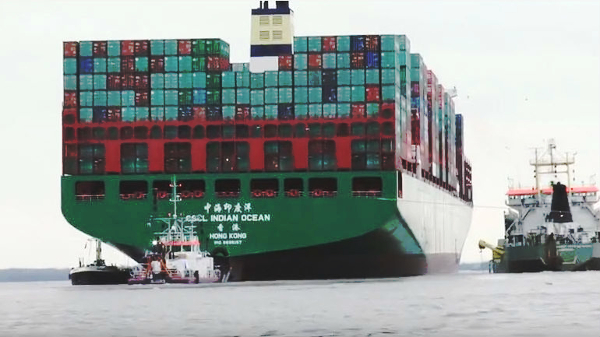
India is preparing to expand its domestically controlled merchant fleet as part of a wider strategy to strengthen maritime capacity, reduce dependence on foreign shipping and support indigenous shipbuilding. The Shipping Corporation of India is expected to play a central role in this effort as the government advances its Maritime Amrit Kaal Vision 2047.
Union Minister for Ports, Shipping and Waterways Sarbananda Sonowal has called on SCI to take a leading role in building a self-reliant and globally competitive Indian shipping sector. Speaking at an event marking 65 years of SCI operations in Mumbai on October 2, 2026, the minister linked expansion of the national fleet with India’s economic resilience and long-term shipbuilding ambitions.
SCI Fleet Grows From 19 Ships to 58 Vessels
The Shipping Corporation of India began operations in 1961 as a liner shipping company with 19 vessels. It has since developed into a diversified maritime enterprise with a fleet of 58 vessels representing approximately 5.26 million deadweight tonnes.
SCI’s current fleet includes crude oil and product tankers, gas carriers, bulk carriers, container vessels and offshore support ships. Its operations extend across LNG and LPG transportation, coastal and passenger shipping, project cargo, offshore services, ship management and shipbuilding consultancy.
The company’s official fleet data lists 12 crude oil tankers, 11 product tankers, three gas carriers and five very large crude carriers. SCI also operates 15 bulk carriers, two liner vessels and ten offshore vessels across anchor-handling, platform-supply and multipurpose categories.
This mix places SCI across several segments central to India’s trade, energy movement and industrial supply chains.
India Wants a Larger Share of Its Trade Carried by Indian Ships
The government’s renewed emphasis on fleet expansion reflects India’s continued dependence on foreign shipping services for a large share of its overseas trade.
Increasing the number of Indian-owned and Indian-flagged vessels can retain more freight earnings within the domestic economy while giving Indian operators a larger role in transporting energy, commodities and manufactured goods.
Sonowal also referred to SCI’s role during recent disruption in the Strait of Hormuz, underlining the practical value of maintaining national shipping capacity during periods of stress in global maritime routes.
SCI Plans Major Fleet Expansion Towards 2047
SCI has already outlined a much larger long-term fleet expansion programme. During India Maritime Week 2025, the company announced plans to expand its fleet to 216 vessels by 2047, backed by an envisaged investment of around ₹1 lakh crore.
The programme is intended to add approximately 10 million gross tonnage to SCI’s capacity and contribute to India’s goal of becoming a major ship-owning and shipbuilding nation.
SCI Chairman and Managing Director Capt. B.K. Tyagi reaffirmed the company’s intention to develop a larger, modern and internationally competitive fleet during the October 2026 anniversary programme.
The expansion is expected to progress alongside proposed joint ventures involving public-sector oil companies and the development of the Bharat Container Shipping Line.
Building Ships in India Becomes Part of the Strategy
India’s maritime policy is increasingly connecting fleet expansion with domestic shipbuilding. Increasing the number of Indian-owned ships without developing domestic construction capacity would continue to leave the country dependent on overseas shipyards for a substantial portion of new tonnage.
The government is therefore promoting the principle of building more vessels within India as shipping capacity expands.
At India Maritime Week 2025, oil and gas public-sector enterprises announced 59 shipbuilding orders valued at around ₹47,800 crore. The programme is intended to create demand for Indian shipyards while strengthening the industrial ecosystem surrounding ship construction.
Shipbuilding creates demand across steel fabrication, propulsion systems, electrical equipment, navigation electronics, automation, pumps, valves, communication systems and marine engineering. A sustained domestic order pipeline can therefore support a much broader manufacturing network.
Policy Reforms Target Indigenous Fleet Growth
The government has introduced several measures designed to improve the economics of owning, financing and building ships in India.
The Merchant Shipping Act, 2025 modernised the regulatory framework and introduced provisions intended to encourage Indian registration of vessels. Indian-flagged ships are also supported through the Right of First Refusal mechanism, which provides preference under specified conditions when Indian cargo is being transported.
Large shipping vessels have additionally been classified as infrastructure assets, improving their ability to access long-term financing.
Other measures include the Shipbuilding Financial Assistance Scheme, Shipbuilding Development Scheme, Ship Breaking Credit Note and Maritime Development Fund. Together, these initiatives seek to address financing costs, domestic shipyard competitiveness and investment requirements across the maritime industry.
New Shipbuilding Infrastructure Takes Shape
Expansion of the merchant fleet is being accompanied by investment in physical shipbuilding and repair infrastructure.
In July 2026, the Ministry of Ports, Shipping and Waterways granted in-principle approval for a greenfield shipbuilding cluster in Porbandar district, Gujarat. It also approved financial assistance for a ₹1,570-crore ship-repair facility at Vadinar in the Gulf of Kutch.
These projects are intended to increase domestic construction and repair capacity while reducing dependence on overseas yards for major work.
Energy Shipping Remains a Core SCI Function
SCI’s crude carriers, product tankers and gas carriers give it an important role in the movement of petroleum and other energy commodities.
For India, maintaining domestic capacity in these vessel categories supports continuity in energy transportation and reduces reliance on entirely external shipping availability.
This makes tanker and gas-carrier capacity an important part of the wider fleet expansion programme rather than a separate maritime-security argument.
Bharat Container Shipping Line Adds Another Dimension
Container shipping represents another major area for expansion. India has developed substantial port infrastructure and manufacturing capacity, but much of its international container traffic is still transported by global shipping companies.
The proposed Bharat Container Shipping Line is intended to strengthen India’s presence in this segment and create additional Indian-controlled capacity for containerised trade.
SCI’s experience in liner operations, ship management and international shipping gives it a potential role in the development of this ecosystem alongside ports, logistics companies, exporters and other public-sector enterprises.
Greater domestic participation in container shipping would complement India’s efforts to increase manufacturing exports and integrate more deeply with global supply chains.
From Ship Ownership to an Integrated Maritime Industry
India’s maritime strategy is increasingly moving beyond the number of ships registered under the national flag. The broader objective is to create an integrated ecosystem connecting cargo demand, ship ownership, domestic shipbuilding, repair facilities, maritime finance, ports and marine equipment manufacturing.
SCI occupies an important position within this structure because it combines commercial shipping experience with operations across several strategically important vessel categories.
Its planned transition from 58 vessels today towards a substantially larger fleet by 2047 can provide predictable demand for Indian shipyards and marine equipment suppliers while increasing the share of Indian trade carried by domestic operators.
A larger indigenous fleet, backed by competitive shipyards and a stronger marine manufacturing base, would deepen India’s control over its maritime economy. SCI’s next phase of expansion therefore represents a broader national effort to build enduring industrial and commercial capability at sea.
References
- Press Information Bureau, Ministry of Ports, Shipping and Waterways — 2 October 2026: Sarbananda Sonowal Hails SCI as Anchor of India’s Maritime & Shipbuilding Ambitions.
https://www.pib.gov.in/PressReleseDetailm.aspx?PRID=2318497&lang=1®=3 - Shipping Corporation of India — Official Fleet Overview: Present fleet composition and vessel capacity.
https://www.shipindia.com/fleet/overview - Press Information Bureau, Ministry of Ports, Shipping and Waterways — 30 October 2025: India Maritime Week 2025 Secures Investment of ₹12 Lakh Crores, Set to Bolster Maritime Sector of Atmanirbhar Bharat.
https://www.pib.gov.in/PressReleasePage.aspx?PRID=2184349&lang=2®=3 - Press Information Bureau, Ministry of Ports, Shipping and Waterways — 12 February 2026: Policy Changes to Expand Indigenous Fleet.
https://www.pib.gov.in/PressReleseDetailm.aspx?PRID=2227172&lang=1®=1 - Press Information Bureau, Ministry of Ports, Shipping and Waterways — 15 July 2026: Greenfield Shipbuilding Cluster to Come Up in Porbandar, Gujarat.
https://www.pib.gov.in/PressReleasePage.aspx?PRID=2284805&lang=2®=48 - Akashvani News — 3 October 2026: Union Minister Sarbananda Sonowal Calls on SCI to Play Leading Role in Making India Self-Reliant in Shipbuilding and Maritime Capacity.
https://newsonair.gov.in/union-minister-sarbananda-sonowal-calls-on-sci-to-play-leading-role-in-making-india-self-reliant-in-shipbuilding-maritime-capacity/
You may also like
-
EON Space Labs and Dhruva Space Advance Indian Space Hardware on Transporter-18 Mission
-
SatLeo Labs’ TAPAS-1 Reaches Orbit, Advancing India’s Private Thermal-Imaging Capability
-
TakeMe2Space’s MOI-1A Reaches Space on Falcon 9 Transporter-18 Mission
-
Bank of Baroda Enters Pension Fund Management After PFRDA Appointment
-
Takshak Heavyweight Torpedo: How India’s Indigenous Submarine Weapon Compares With the World’s Leading Torpedoes
