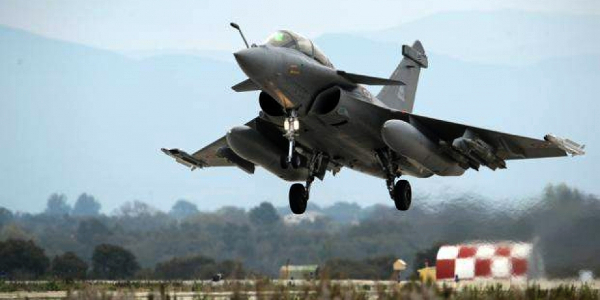
India’s proposed acquisition of 114 Rafale fighter aircraft for the Indian Air Force is progressing towards the next stage, with Defence Secretary Rajesh Kumar Singh stating that the procurement process is expected to reach a conclusion before the end of the year.
The programme is being pursued under a Buy and Make approach, under which a major portion of the aircraft production is expected to take place in India with increased domestic participation. The bids submitted during the Request for Proposal (RFP) stage are currently undergoing evaluation.
Dassault Agrees to Integration of Indian Weapons and Systems
A key focus of the programme is the integration of Indian-developed weapons and systems into the Rafale platform.
The Defence Secretary stated that French aircraft manufacturer Dassault Aviation has agreed to integrate Indian weapons into the Rafale aircraft being considered under the new procurement programme. Similar integration provisions were also included in the agreement for the Indian Navy’s Rafale Marine aircraft.
The move is expected to enhance the compatibility of the aircraft with India’s indigenous defence ecosystem, including locally developed weapons, sensors and mission systems.
Manufacturing in India and Increased Indigenous Content
The proposed Rafale acquisition is planned to include significant manufacturing activity within India.
The programme envisages domestic assembly of the majority of aircraft, along with greater involvement of Indian companies in aircraft components, manufacturing, maintenance and aerospace supply chains.
The approach is aimed at strengthening India’s combat aircraft production capability and expanding the role of Indian private-sector companies and MSMEs in advanced aerospace manufacturing.
Rafale Programme Supports Expansion of India’s Fighter Aircraft Manufacturing Base
The Rafale programme is also expected to contribute to the expansion of India’s fighter aircraft manufacturing infrastructure.
Defence officials have highlighted that the project could support the establishment of an additional combat aircraft production capability alongside existing indigenous programmes such as the Light Combat Aircraft (LCA) Tejas family.
India is simultaneously progressing with indigenous fighter aircraft projects, including the LCA Mk2 and Advanced Medium Combat Aircraft (AMCA), as part of a long-term effort to develop domestic aerospace capabilities.
Indigenous Weapons Integration Strengthens Aerospace Ecosystem
The integration of Indian weapons into advanced fighter platforms represents an important step towards greater operational independence.
The Indian Navy’s Rafale Marine agreement already includes provisions related to technology transfer for integration of indigenous weapons in India, along with support for local aerospace manufacturing and maintenance capabilities.
With increased domestic production, indigenous weapon integration and broader industry participation, the Rafale programme is expected to strengthen India’s aerospace manufacturing ecosystem while enhancing the capabilities of the Indian Air Force.
References
- Ministry of Defence, Government of India — Inter-Governmental Agreement for 26 Rafale Marine aircraft and indigenous weapons integration provisions
- Defence Secretary Rajesh Kumar Singh’s remarks on 114 Rafale procurement, RFP evaluation and Indian weapons integration — reported by ANI
- Dassault Aviation — Rafale Marine programme information and India cooperation details
- Indian Air Force Medium Multi-Role Combat Aircraft (114 Rafale) procurement programme updates
- Indian Express — India’s 114 Rafale procurement process and planned domestic manufacturing
- Times of India — Defence Secretary remarks on Rafale procurement and fighter aircraft production capability expansion
You may also like
-
EON Space Labs and Dhruva Space Advance Indian Space Hardware on Transporter-18 Mission
-
SatLeo Labs’ TAPAS-1 Reaches Orbit, Advancing India’s Private Thermal-Imaging Capability
-
TakeMe2Space’s MOI-1A Reaches Space on Falcon 9 Transporter-18 Mission
-
PRAHAAR: India’s First National Counter-Terrorism Policy and Strategy
-
SCI and India’s Push for a Larger Indigenous Maritime Fleet
