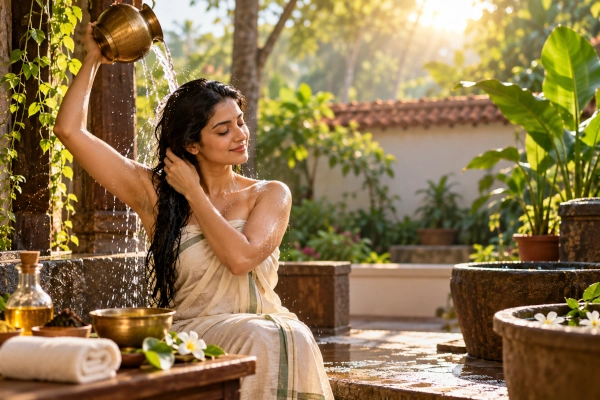
Bathing is one of the most familiar activities of everyday life, yet Ayurveda gives it a significance that extends far beyond removing sweat and dirt. Snana, the Ayurvedic practice of bathing, forms part of Dinacharya, the daily regimen through which the body is prepared for activity, food, work and rest.
Classical Ayurvedic texts describe bathing as cleansing and refreshing and associate it with relief from fatigue, improved comfort and readiness for the day. They also place clear qualifications around the practice. The temperature of the water matters. Pouring very hot water over the head is treated differently from using warm water over the body. Bathing immediately after eating is discouraged, while illness, exhaustion and other circumstances can change what is appropriate.
The Ayurvedic approach to bathing is therefore not simply a prescription to bathe every morning. It is an example of a larger principle found throughout Dinacharya: even an ordinary habit should be adjusted to the condition of the individual, the environment and the activity that has preceded it.
Snana Has a Defined Place in Dinacharya
Classical descriptions of Dinacharya arrange the morning as a sequence. Waking is followed by elimination and personal care, while practices such as Abhyanga, or oil application, and Vyayama, or exercise, prepare the body for bathing.
This order makes practical sense within the traditional regimen. Exercise produces perspiration, while Abhyanga leaves oil on the skin. Bathing afterwards cleans the body and marks the transition from preparatory morning practices into the active part of the day.
The Ashtanga Hridaya describes bathing as beneficial for appetite, vitality and longevity and as capable of removing sweat, dirt, fatigue, itching and thirst. These descriptions belong to the classical Ayurvedic understanding of Snana and should be interpreted within that medical tradition rather than converted automatically into modern physiological claims.
The larger point is nevertheless clear. Ayurveda does not regard bathing merely as cosmetic hygiene. It places Snana within preventive daily care.
Why Ayurveda Generally Places Bathing in the Morning
Morning bathing fits naturally into Dinacharya because it follows the period of sleep and the activities performed after waking. The body can be cleaned after elimination, exercise and oil application before meals and work begin.
This does not mean Ayurveda establishes one compulsory clock time for bathing. Like much of Dinacharya, timing is connected to the person’s routine and circumstances rather than to an exact hour on a modern clock.
Someone who performs Abhyanga or exercises in the morning would normally bathe afterwards. A person engaged in physical labour may require another bath later in the day. Hot climates, travel and seasonal conditions can also influence bathing habits.
The principle is therefore regularity combined with appropriateness rather than rigid adherence to a particular minute.
Warm Water for the Body, Greater Caution for the Head
One of the most distinctive Ayurvedic instructions concerning bathing involves water temperature.
The Ashtanga Hridaya permits comfortably warm water over the body but cautions against using very hot water over the head. Classical Ayurvedic reasoning associates excessively hot water on the head with harm to the hair and eyes, while warm water used below the neck is considered beneficial in appropriate circumstances.
This distinction is easily lost in modern discussions in which people simply ask whether Ayurveda recommends a hot or cold shower. The classical instruction is more nuanced.
Ayurveda does not require the entire body to be exposed to icy water. Nor does it encourage extremely hot bathing. A comfortably warm bath may be suitable for the body, particularly where climate and individual comfort favour warmth, while excessively hot water over the scalp and face is avoided.
There is also a straightforward modern reason not to overuse very hot water. Prolonged exposure to hot water can remove surface lipids from the skin and aggravate dryness or irritation in susceptible people. Lukewarm water is generally gentler for routine cleansing.
Ayurveda Does Not Require Everyone to Take Cold Baths
Cold bathing is sometimes promoted as though it were an essential Ayurvedic discipline. Classical Ayurveda is considerably more individualised.
Water temperature should take into account season, climate, strength and physical condition. A healthy person in a hot environment may find cooler water comfortable, while someone bathing during cold weather may reasonably prefer warmer water.
The Ayurvedic concepts of Vata, Pitta and Kapha also influence traditional decisions about temperature, although these principles belong to the Ayurvedic theoretical system and should not be presented as established modern physiology.
A Pitta-dominant condition, traditionally associated with heat, may lead an Ayurvedic practitioner towards cooler or less warming measures. Vata and Kapha circumstances may favour greater warmth in appropriate situations. These are individual adjustments rather than universal rules.
Extreme temperatures are unnecessary for ordinary bathing. Comfortably cool, neutral or lukewarm water can fulfil the basic purpose without turning bathing into a test of endurance.
Bathing After Abhyanga
Abhyanga and Snana are closely connected within the traditional morning routine.
During Abhyanga, oil is applied and massaged over the body. Classical practice allows the oil to remain for a period before bathing. The subsequent bath removes excess oil, sweat and surface impurities while leaving the skin comfortable rather than heavily coated.
Extremely hot water is unnecessary for removing the oil. Warm water and gentle cleansing are generally sufficient.
This sequence also explains why bathing occupies its particular position within Dinacharya. If oil massage and exercise are performed first, bathing becomes the natural concluding stage of the body’s morning preparation.
Why Ayurveda Discourages Bathing Immediately After Eating
Ayurvedic tradition generally discourages bathing immediately after a substantial meal. The recommendation is connected with the importance placed on Agni, the functional principle governing digestion and metabolism within Ayurvedic theory.
After eating, the body’s immediate task is digestion. Ayurveda therefore prefers a period of relative calm rather than introducing unnecessary exertion or abrupt changes immediately after a meal.
This traditional explanation should not be exaggerated into claims that taking a shower after eating automatically stops digestion or causes disease. Human digestion does not simply shut down because a person bathes.
The practical Ayurvedic principle is more modest: organise the daily routine so that bathing normally occurs before a major meal rather than immediately afterwards. When bathing after eating is necessary, allowing some time after a substantial meal is a reasonable approach.
Bathing After Exercise Has a Natural Place in the Routine
Exercise is another activity that Ayurveda traditionally places before bathing.
Vyayama produces warmth and perspiration. Snana afterwards removes sweat and provides a transition from exertion towards the remainder of the day. Modern hygiene considerations make this sequence equally understandable, particularly after vigorous activity.
The temperature should still be comfortable. Someone who has become extremely overheated through strenuous exercise does not need to move immediately from intense exertion into an extreme hot or ice-cold bath.
Allowing breathing and body temperature to settle before bathing is a gentler approach.
Ayurveda repeatedly values moderation, and bathing after exercise is no exception.
Bathing Is Also About the Skin
The skin forms the body’s principal external barrier. Cleansing removes sweat, environmental material, excess oil and substances accumulated through daily activity, but excessive washing can create its own problems.
Repeated long baths with very hot water and harsh cleansers can leave the skin dry and irritated. Ayurveda’s traditional use of oil massage before bathing offers an interesting contrast to aggressive modern cleansing routines.
This does not mean oil application is suitable for every skin condition. People with acne-prone skin, dermatitis, allergies or other dermatological problems may need different products or medical advice.
For ordinary skin, however, gentle cleansing is usually sufficient. A bath does not need to leave the skin feeling stripped or excessively dry in order to have cleaned it.
Hair and Scalp Need Different Treatment
The classical caution concerning hot water over the head is particularly relevant when considering hair and scalp care.
Very hot water can increase dryness and may irritate a sensitive scalp. Comfortable lukewarm water is generally sufficient for washing hair, while cooler water may simply be preferred by some individuals.
Ayurvedic hair practices sometimes include applying oil to the scalp before bathing. The choice of oil, frequency and duration varies considerably between traditions and individuals.
There is no need to assume that more oil or longer application automatically produces better results. Scalp conditions such as dandruff, seborrhoeic dermatitis or folliculitis can require specific treatment rather than routine oiling.
Traditional practice works best when its general principles are distinguished from treatment for an existing medical condition.
Seasonal Changes Should Change the Bathing Routine
Ritucharya, Ayurveda’s seasonal regimen, provides another reason why one bathing practice is not expected to suit the entire year.
During hot weather, excessively hot baths may be uncomfortable and unnecessary. Cooler or neutral water may provide greater comfort, depending on the individual.
During colder seasons, comfortably warm water can make bathing easier and reduce the discomfort associated with cold exposure. People experiencing dry skin may also need to shorten bathing time and pay greater attention to moisturising or traditional oil application.
Humidity, physical activity and local climate matter as well. Someone living through a humid Kerala summer does not necessarily require the same bathing routine as someone experiencing a cold Himalayan winter.
Ayurveda’s emphasis is on adapting routine to environment rather than imposing an identical practice everywhere.
When Bathing Should Be Modified or Avoided
Classical Ayurvedic literature does not recommend bathing indiscriminately under every condition.
Traditional contraindications include certain states of illness, severe weakness, indigestion and immediately after eating. Some classical lists also identify particular disorders in which ordinary bathing should be modified.
These recommendations require sensible modern interpretation. A person with fever, dizziness, severe weakness or another acute illness may indeed need assistance or a modified bathing routine, particularly because hot bathrooms and slippery surfaces can increase the risk of fainting or falls.
Someone with wounds, surgical dressings, medical devices or particular skin diseases may also have specific instructions from a healthcare professional regarding bathing.
Ayurvedic daily practices are intended for maintaining health; they should not replace appropriate medical management when illness is present.
Snana Is Both Cleansing and Transition
One of the more interesting aspects of Ayurvedic bathing is its position between two parts of the day.
Before Snana come sleep, elimination, bodily care, Abhyanga and exercise. After it come dressing, food, work and social activity. Bathing effectively marks the transition between preparing the body and using it for the day’s responsibilities.
Anyone who has taken a bath after waking, exercise or a long period of physical work recognises this transition intuitively. The person often feels cleaner, more comfortable and more prepared for whatever follows.
Ayurveda incorporated that everyday observation into a systematic daily regimen.
The Ayurvedic Bath Is Ultimately About Appropriateness
Ayurveda does not turn bathing into a complicated ritual requiring a thermometer, stopwatch and rigid list of instructions. Its classical recommendations are better understood as boundaries within which common sense and individual circumstances operate.
Bathe regularly. Prefer bathing as part of the morning routine when practical. Bathe after exercise and Abhyanga rather than before them. Avoid excessively hot water over the head. Do not make extreme temperatures a daily necessity. Avoid rushing into a bath immediately after a substantial meal, and modify the routine when illness or weakness requires it.
Above all, Snana belongs within Dinacharya.
Ayurveda’s interest is not in the bath alone but in the rhythm connecting waking, elimination, movement, cleansing, eating, activity and sleep. Each practice prepares the body for the next.
That is why something as ordinary as bathing receives careful attention in Ayurveda. Health, in the Ayurvedic view, is shaped not only by medicines used when illness appears but by the repeated habits through which an ordinary day is lived.
References
Ashtanga Hridaya — Sutrasthana, Chapter 2, Dinacharya Adhyaya.
Charaka Samhita — Sutrasthana, classical discussions of daily regimen, hygiene, sleep and maintenance of health.
Sushruta Samhita — Classical discussions concerning Snana, personal hygiene and Swasthavritta.
Ministry of Ayush, Government of India — Ayurvedic guidance and educational material concerning Dinacharya and preventive healthcare.
National Institute of Ayurveda, Ministry of Ayush, Government of India — Educational material on Swasthavritta, Dinacharya and Ayurvedic daily regimen.
You may also like
-
Eight Years of Ayushman Bharat: How India Built a Healthcare Safety Net for More Than 60 Crore People
-
Why Ayurveda Places So Much Importance on Waking Before Sunrise
-
FUJIFILM India Dedicates First Serial-Numbered Made-in-India Endoscopy System Through AIIMS New Delhi
-
Ritucharya: How Ayurveda Adapts Lifestyle to the Six Seasons
-
India Backs Ceramat to Commercialise 3D-Printed Patient-Specific Bone Grafts
