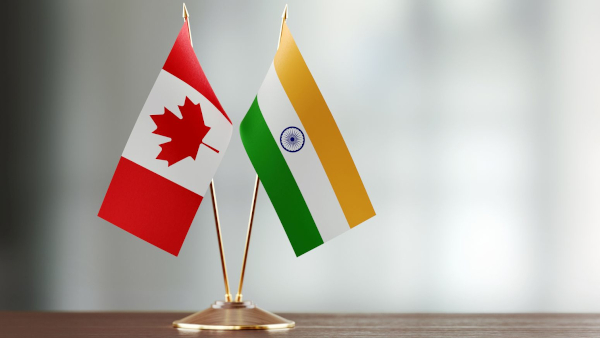
India and Canada have reaffirmed their commitment to accelerate negotiations on a proposed Comprehensive Economic Partnership Agreement, or CEPA, as the two countries seek to expand trade, investment and wider economic cooperation.
Commerce and Industry Minister Piyush Goyal held discussions with Canadian Minister of International Trade Maninder Sidhu following the latest round of negotiations, with both sides stressing the importance of moving the agreement forward. Akashvani reported the renewed commitment on 19 September 2026, a day after the latest negotiating round concluded in New Delhi.
Fourth Round of Negotiations Held in New Delhi
The fourth round of India–Canada CEPA negotiations was held in New Delhi from 14 to 18 September 2026. The five-day discussions formed part of the renewed effort to build a broader bilateral trade framework capable of covering goods, services, investment and emerging areas of economic cooperation.
Negotiations come amid a wider improvement in economic engagement between the two countries. Canada officially lists the CEPA as being under negotiation, following the decision by Prime Ministers Narendra Modi and Mark Carney in November 2025 to formally launch talks.
Both Countries Want an Agreement in 2026
The negotiations have acquired additional momentum because both governments have publicly indicated that they want to conclude the CEPA during 2026.
During the Canada–India Trade and Investment Forum in May, Piyush Goyal and Maninder Sidhu reaffirmed their intention to pursue an ambitious and mutually beneficial agreement and set the objective of concluding negotiations by the end of the year. They identified improved market access, stronger supply chains and greater two-way economic activity among the expected benefits.
What the CEPA Could Cover
The proposed agreement is considerably broader than a conventional tariff-reduction arrangement. Current negotiating objectives encompass trade in goods and services, investment, agriculture and agri-food, digital trade, mobility and sustainable development.
Canada has said that it wants the agreement to reduce barriers, create more predictable trading rules and provide preferential access for Canadian goods and services to the Indian market. India, meanwhile, stands to gain from improved access for its goods and services and from greater opportunities for investment, technology partnerships and professional mobility.
Critical Minerals, Energy and Technology Emerging as Major Areas
The trade negotiations are developing alongside broader cooperation in sectors where the two economies have complementary strengths. Clean energy, critical minerals, advanced manufacturing, agriculture, digital technologies and skills development have all featured prominently in recent ministerial exchanges.
Canada possesses substantial reserves of critical minerals required for batteries, clean-energy systems, electronics and advanced manufacturing. India is simultaneously expanding its semiconductor, electric mobility, renewable-energy and high-technology industries, creating potential for deeper supply-chain partnerships.
The Canadian government has specifically identified critical minerals, digital industries, artificial intelligence, infrastructure, agri-food, education and clean technology among areas offering greater scope for bilateral cooperation.
Skilled Workforce Mobility Also Enters the Conversation
Economic engagement is also expanding beyond conventional trade.
On 19 September, Canadian High Commissioner Christopher Cooter discussed opportunities for cooperation in skilled workforce mobility, mining, energy, education and critical minerals during an interaction in New Delhi. The discussions reflected the widening scope of India–Canada engagement following recent exchanges of official and sectoral delegations.
Mobility could consequently become an important component of the economic relationship, particularly in technology, engineering, research and other skilled sectors where both countries maintain strong institutional and business links.
A Larger Bilateral Trade Ambition
India and Canada are attempting to substantially increase the scale of their commercial relationship over the remainder of the decade. Canadian government material identifies an ambition to more than double bilateral trade to around $70 billion annually by 2030, although individual Indian reports have cited other trade targets depending on the measurement used.
A comprehensive trade agreement could provide the institutional framework required to move towards that ambition by reducing barriers, improving regulatory predictability and encouraging businesses on both sides to establish deeper supply-chain and investment relationships.
Trade Becoming a Pillar of Renewed India–Canada Engagement
The acceleration of CEPA negotiations therefore represents more than another round of technical trade discussions. It reflects the growing effort by New Delhi and Ottawa to rebuild a broader working relationship around areas where their economic interests overlap.
With negotiations now moving through successive rounds and both governments targeting progress during 2026, the coming months will determine whether India and Canada can translate improving diplomatic engagement into a comprehensive trade framework linking two of the world’s major economies.
References
Government of Canada — Canada–India Comprehensive Economic Partnership Agreement negotiations
Government of Canada — Canada–India Trade and Investment Forum, May 2026
Government of Canada — India bilateral relations and economic cooperation
Akashvani News — India–Canada CEPA negotiations and bilateral economic engagement, September 2026
Akashvani News — India and Canada discuss skilled workforce mobility, mining, energy and critical minerals, 19 September 2026
You may also like
-
India and Nepal Move to Expand Market Access as Trade, Customs and Cross-Border Connectivity Talks Advance
-
India and Thailand Push to Remove Trade Barriers as Bilateral Commerce Reaches Record High
-
India, Trinidad and Tobago Deepen Parliamentary Ties
-
India and Nepal Expand Economic Partnership as New Delhi Backs Post-Flood Reconstruction and Power Supply
-
India and Bhutan Complete Two-Way UPI Connectivity, Enabling Digital Payments for Travellers in Both Countries
