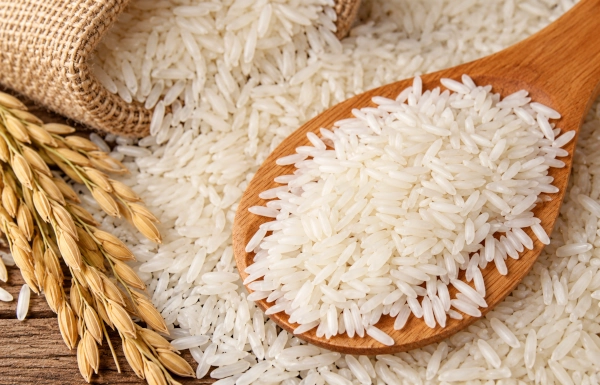
Among Bihar’s traditional aromatic rice varieties, Katarni Rice holds a particularly prestigious place. Known for its powerful fragrance, delicate flavour and distinctive cooking quality, Katarni is a non-Basmati aromatic rice landrace that has been cultivated for generations in a relatively small belt of eastern Bihar. It is valued not merely as ordinary table rice but as a ceremonial and speciality grain, traditionally used for festive meals, kheer, khichdi and especially the production of exceptionally fragrant chura, or beaten rice.
The grain’s reputation is closely connected with its place of cultivation. Farmers and researchers have observed that Katarni develops its finest aroma only in particular areas of Bhagalpur, Banka and Munger, where soil, climate and local growing conditions interact with the traditional variety. This close connection between grain and geography led to the registration of Katarni Rice as a Geographical Indication of Bihar. The GI was subsequently renewed, and the Intellectual Property India registry currently records its protection as valid until 19 June 2036.
Geography — A Rice of Bihar’s South Alluvial Gangetic Plain
Katarni belongs to the agricultural landscape of Agro-climatic Zone IIIA of Bihar, a region forming part of the South Alluvial Gangetic Plain. Its recognised production belt is concentrated principally in South Bhagalpur, Banka and Munger districts, where specific pockets have traditionally produced grain with the aroma for which genuine Katarni is famous. Government quality specifications for GI Katarni identify the relevant zone with this south Gangetic alluvial landscape.
Within Bhagalpur, important Katarni-growing areas include Jagdishpur, Sanhaula, Shahkund and Sultanganj. In Banka district, the tradition is associated with areas including Amarpur, Shambhuganj, Rajaun, Barahat, Chanan and Katoria, while Tarapur and Asharganj are among the important locations in Munger. Research conducted during the GI-characterisation process found that the celebrated aroma was strongly associated with grain produced inside these traditional pockets.
The agricultural environment is dominated by alluvial soils deposited over generations by the Ganga and its tributary systems. In parts of Banka and Bhagalpur, Katarni cultivation has historically developed in catchment areas around local rivers and streams, where farmers learned that seemingly small differences in soil and field location could influence the quality of the harvested grain.
This geographical sensitivity is one of Katarni’s most important characteristics. Seed taken outside its traditional production belt may still grow into Katarni plants, but farmers and researchers have long reported that the same intensity of fragrance is not always reproduced. The GI therefore protects not simply a botanical variety but the recognised relationship between Katarni genetics and the environment of its traditional Bihar growing zone.
History — Bihar’s Celebrated Ceremonial Rice
Bihar possesses a long tradition of cultivating scented rice varieties, including Katarni, Tulsi Manjari and Badshahbhog. Among them, Katarni became one of the most celebrated because of its combination of aroma, taste and suitability for both cooked rice and beaten-rice preparations. Government agricultural literature has described Katarni as a “ceremonial rice,” reflecting its traditional association with meals and occasions where superior grain quality was preferred over high yield.
For generations, farming families in the Bhagalpur-Banka region preserved Katarni seed through their own selection. The grain was never primarily designed for large-scale commodity production. Instead, farmers maintained it because households and local markets placed a premium on its fragrance and distinctive eating quality.
The name Katarni is also associated with one of the plant’s recognisable physical features. Official e-NAM quality specifications describe the apex of Katarni paddy as slightly curved, resembling the tip of an awl. This hooked or pointed appearance is frequently connected with popular explanations of the name “Katarni.”
Over time, however, the traditional variety came under pressure. Higher-yielding rice cultivars offered farmers greater production per hectare, while impurity in seed stocks reduced the consistency of Katarni’s aroma. Studies from Bihar recorded a decline in the area devoted to the rice and warned that adulteration and varietal degeneration threatened its traditional reputation.
Bihar Agricultural University at Sabour subsequently became closely involved in the purification, characterisation and conservation of the landrace. Its scientific documentation of Katarni’s morphological, biochemical and genetic traits contributed directly to establishing the case for GI recognition.
What Makes Katarni Rice Special
The most celebrated characteristic of Katarni is its strong natural fragrance. Unlike many ordinary non-aromatic rice varieties, the scent is noticeable in both the uncooked grain and during cooking. Researchers evaluating Katarni within its recognised GI territory have classified it as strongly scented, while e-NAM specifications describe its characteristic flavour as aromatic with a popcorn-like note.
Katarni is a medium-slender white rice, rather than the exceptionally long-grained type associated with Basmati. Scientific characterisation recorded an average kernel length of about 4.67 mm, a length-to-breadth ratio of around 2.68, and an amylose content of approximately 23 per cent. These characteristics contribute to its distinctive texture and cooking behaviour.
When properly cooked, Katarni is valued for its pleasant mouthfeel, fragrance and ability to retain an appealing grain character. Its reputation rests on the combination of aroma and palatability rather than dramatic elongation after cooking. This is why comparisons with Basmati can be misleading: Katarni belongs to a separate eastern Indian tradition of aromatic rice whose quality is expressed through flavour, scent and culinary suitability rather than extreme grain length.
Its qualities are especially apparent when Katarni is processed into chura. The beaten rice produced from genuine Katarni is traditionally prized for being soft, aromatic and flavourful. Agricultural researchers studying the variety repeatedly identify its chura-making quality as one of the attributes that distinguish it from other scented rice.
Katarni is therefore a good example of why traditional rice varieties cannot be judged solely by yield. Its value lies in qualities that conventional high-yielding rice was never bred to reproduce.
Traditional Cultivation
Katarni is generally cultivated during Bihar’s Kharif rice season, making use of the southwest monsoon. It is a traditional, relatively tall and late-maturing rice whose natural growth habit differs considerably from modern semi-dwarf cultivars.
Research on traditional Katarni describes plants as approximately 140–160 centimetres tall and requiring roughly 155–160 days to mature. The plants have comparatively weak straw and can be susceptible to lodging, particularly when heavy rain or wind occurs as the crop approaches maturity. Katarni is also photosensitive, with traditional plants maturing comparatively late, often towards the end of November.
These characteristics create challenges for farmers. Tall plants are harder to manage than modern semi-dwarf varieties, while late maturity can reduce the time available to establish the following winter crop. Traditional Katarni also produces considerably less grain than many modern high-yielding varieties, with research generally placing its yield potential around 2.5–3 tonnes per hectare under suitable conditions.
Yet replacing Katarni with a modern rice simply because it yields more would sacrifice the qualities that make the landrace valuable. Bihar Agricultural University has therefore pursued breeding work intended to create shorter, earlier-maturing Katarni-derived lines while retaining the fragrance and grain qualities of the original variety. This approach seeks to make cultivation more attractive to farmers without losing the characteristics responsible for the rice’s cultural and commercial identity.
Research has also examined organic nutrient management and improved agronomic practices for Katarni. Bihar Agricultural University has conducted field trials aimed at identifying sustainable cultivation methods that can improve crop performance while maintaining soil health and grain quality.
The Importance of Place to Katarni’s Aroma
Few characteristics explain the GI status of Katarni better than the relationship between aroma and geography. During scientific characterisation, Katarni samples were collected from both recognised and non-recognised production areas. Researchers found that the characteristic strong fragrance was associated most consistently with grain cultivated within the traditional GI belt.
The reason is unlikely to depend on a single factor. Soil chemistry, temperature, moisture, water availability, crop duration and the interaction between the plant and its growing environment can all influence the expression of aroma compounds in scented rice.
This also explains an experience familiar to traditional farmers: simply carrying Katarni seed to another region does not necessarily reproduce grain of identical quality. The plant’s genetics provide the potential for fragrance, but local environmental conditions influence how strongly that characteristic is expressed.
The GI designation consequently serves an important purpose. It allows consumers to associate the name Katarni with rice produced in its recognised geographical environment rather than with visually similar grains grown elsewhere and marketed under the same prestigious name.
Season, Cuisine and Market
Katarni occupies a special place in Bihar’s culinary tradition. Its strong fragrance makes it suitable for dishes in which the quality of the rice itself should remain prominent. It is traditionally used for kheer, pulao, khichdi and other special rice preparations, particularly when households want a finer and more aromatic grain than ordinary everyday rice.
Its most distinctive processed form is Katarni chura. Paddy intended for beaten rice is processed so that the grain can be flattened into aromatic flakes. The resulting chura is valued for its softness, scent and naturally pleasant flavour and has historically commanded a strong reputation in and around Bhagalpur.
Because Katarni is grown on a relatively limited area and yields less than mainstream varieties, it naturally belongs to the premium speciality-rice market rather than the bulk-rice trade. This creates both a challenge and an opportunity. Farmers cannot easily compete with high-yielding rice on volume, but authentic Katarni can obtain a premium when consumers understand its geographical origin and distinctive quality.
Bihar Agricultural University has consequently worked on seed purity, farmer organisation, packaging, branding and market linkages. At a university stakeholders’ meeting, growers from Banka, Bhagalpur and Munger discussed increasing production and strengthening access to domestic and export markets, while APEDA representatives highlighted potential export opportunities for the GI rice.
The GI system is particularly valuable in this context because one of Katarni’s historical problems has been the sale of inferior or mixed rice under its name. A stronger system of authorised producers, traceability and geographical branding can help ensure that consumers paying for Katarni actually receive grain carrying the qualities for which the variety became famous.
Conservation and the Future of Katarni
Katarni illustrates a wider problem confronting India’s traditional crop diversity. Landraces maintained because of flavour, aroma or cultural importance frequently produce less than modern varieties. If farmers receive no premium for these qualities, economic pressure gradually pushes them towards more productive alternatives.
Seed purity is equally important. Bihar Agricultural University has documented how degeneration and mixing of Katarni seed reduced both yield and aroma in farmers’ fields. Restoration programmes have therefore included the distribution of purified seed and efforts to improve the production system. A BAU account from Bhagalpur noted that Jagdishpur remained an important centre of Katarni cultivation and described work aimed at restoring the quality of the traditional grain.
The future of Katarni will consequently depend on connecting conservation with farmer income. GI branding, better seed systems, improved cultivation practices, premium packaging and access to national and international speciality-food markets can make the variety economically worthwhile to preserve.
Research is also continuing. In 2026, Government of India information listed a Bihar Agricultural University project investigating the biochemical and molecular characterisation of fragrance and aroma in Katarni and Marcha rice under drought and salinity stress. Such work could improve understanding of how environmental stress affects the very aromatic quality on which Katarni’s reputation depends.
GI Information
- GI Name: Katarni Rice
- State: Bihar
- Category: Agricultural
- Class: 30
- GI Application Number: 553
- Date of Filing: 20 June 2016
- Applicant: Bhagalpuri Katarni Dhan Utpadak Sangh
- Facilitated By: Bihar Agricultural University, Sabour, Bhagalpur
- Geographical Area: Bihar
- GI Journal Number: 101
- Certificate Number: 312
- Certificate Date: 28 March 2018
- Status: Registered
- Registration Renewed: 2026
- Current Registration Valid Until: 19 June 2036
- Country: India
Katarni Rice represents one of Bihar’s finest surviving agricultural traditions. Its medium-slender grain may be modest in appearance compared with long Basmati, but its intense fragrance, delicate flavour and exceptional chura-making quality have given it a reputation that extends far beyond the fields where it originated.
More importantly, Katarni demonstrates the principle at the heart of geographical indications. The seed alone does not tell the whole story. Its celebrated character emerges from a combination of inherited plant genetics, Bihar’s South Gangetic alluvial environment and the knowledge of farmers who have selected and cultivated the crop across generations.
For the farmers of Bhagalpur, Banka and Munger, preserving Katarni means protecting more than an old rice variety. It preserves a distinctive flavour of Bihar itself — a ceremonial grain whose fragrance remains intimately tied to the land in which it is grown.
You may also like
-
JISA Softech Unveils Indigenous QuLens-CryptoBind Quantum-Safe Cybersecurity Platform at Pragati Q-Foundry 2026
-
Sensorise Launches Made-in-India Wega M1 4G Module for EVs, Smart Meters and Industrial IoT
-
Nayan Technologies Selected by JSW MG Motor to Advance AI-Based Road Monitoring and Smart Mobility
-
From ‘We Will Coup Whoever We Want’ to Starlink in India: Elon Musk, Corporate Pressure and National Sovereignty
-
Starlink-Ukraine, Myanmar and Drug Smuggling: Why India Must Regulate Satellite Internet for National Security
