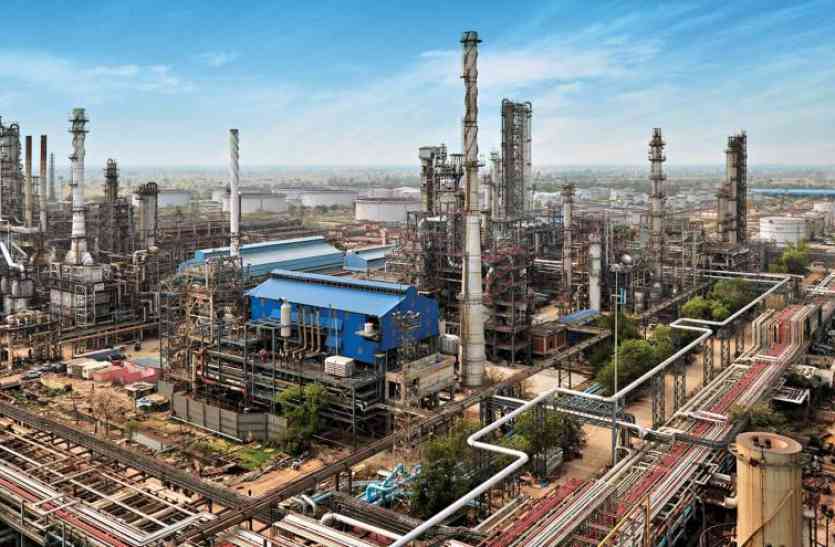
India presents one of the most unusual contradictions in the global petroleum industry. The country depends on imports for nearly nine-tenths of the crude oil it consumes, yet it has simultaneously developed such a large and technologically sophisticated refining industry that it now exports more refined petroleum products than several major oil-producing countries in the Middle East. This transformation has turned India into a significant global fuel supplier despite its relatively limited domestic crude-oil production.
The scale of this achievement is visible in the latest international petroleum statistics. According to OPEC’s Annual Statistical Bulletin 2026, India exported approximately 1.386 million barrels per day of petroleum products during calendar year 2025. That volume placed India ahead of major Middle Eastern petroleum producers including Kuwait, the United Arab Emirates, Qatar, Iran, Iraq and Bahrain in refined-product exports.
India’s position is particularly striking because the country is not a meaningful crude-oil exporter. Instead, it imports crude from producers around the world, processes it through some of the world’s largest and most sophisticated refineries, supplies its enormous domestic market and then exports substantial volumes of diesel, petrol, aviation turbine fuel, naphtha and other petroleum products. India has therefore created a petroleum-export model based primarily on industrial capability rather than abundant geological resources.
India Exports More Refined Products Than Several Oil-Rich Countries
OPEC’s 2025 statistics illustrate India’s position clearly. India exported around 1.386 million barrels per day of petroleum products, while Kuwait exported approximately 1.080 million barrels per day and the United Arab Emirates about 1.023 million barrels per day. Qatar exported roughly 461,000 barrels per day, Iran around 417,000 barrels per day, Bahrain approximately 273,000 barrels per day and Iraq around 221,000 barrels per day.
Saudi Arabia remained slightly ahead of India in 2025, exporting approximately 1.483 million barrels per day of petroleum products. However, India’s position immediately behind Saudi Arabia and ahead of several major oil-producing economies demonstrates how significantly the geography of global refining has changed.
| Country | Petroleum-product exports in 2025 |
|---|---|
| Saudi Arabia | 1.483 million barrels/day |
| India | 1.386 million barrels/day |
| Kuwait | 1.080 million barrels/day |
| United Arab Emirates | 1.023 million barrels/day |
| Qatar | 0.461 million barrels/day |
| Iran | 0.417 million barrels/day |
| Bahrain | 0.273 million barrels/day |
| Iraq | 0.221 million barrels/day |
The comparison should not be confused with total petroleum exports. Saudi Arabia, Iraq, Kuwait and the UAE remain enormous crude-oil exporters, while India’s crude exports are negligible. Once crude oil is included, the major Gulf producers remain far ahead of India because they export millions of barrels of unprocessed crude every day in addition to refined fuels.
Measured specifically by refined petroleum-product exports, however, India has established itself alongside some of the world’s traditional petroleum powers. The comparison is therefore less about the size of underground oil reserves and more about the scale, sophistication and competitiveness of India’s downstream petroleum industry.
India’s achievement was even more striking during 2024, when it briefly surpassed Saudi Arabia in refined-product exports. OPEC data indicate that India exported approximately 1.342 million barrels per day of petroleum products that year, compared with around 1.292 million barrels per day from Saudi Arabia. Saudi refined-product exports increased strongly in 2025 and moved back ahead, but India’s temporary lead demonstrated just how competitive its refining sector had become.
The Paradox: India Imports Nearly 90% of Its Crude
India’s refining strength becomes even more remarkable when viewed against its dependence on imported crude. Domestic production is relatively small compared with the requirements of the world’s most populous country and one of its largest and fastest-growing economies. India’s crude import dependence reached approximately 88.7% in FY 2025-26, while domestic crude production remained around 28 million tonnes.
India consequently imports crude from a diverse group of suppliers, including Russia, Iraq, Saudi Arabia, the UAE, the United States, Brazil and producers across Africa and Latin America. Tankers unload this crude at Indian ports, after which refineries separate, convert, crack, treat and blend the feedstock into commercially usable fuels and petroleum products.
The resulting output includes petrol, diesel, aviation turbine fuel, naphtha, liquefied petroleum gas feedstocks, fuel oil, lubricants and petrochemical intermediates. A significant portion is absorbed by India’s domestic economy, but the country’s refining capacity is large enough to leave a substantial exportable surplus.
This creates an important distinction between crude dependence and fuel dependence. India remains highly reliant on foreign crude oil, but it does not rely to the same extent on imported petrol and diesel. Its refineries manufacture large quantities of finished transportation fuels domestically while still supporting a sizeable export business.
Petroleum-Product Exports Reach More Than 60 Million Tonnes
Indian government data provide another perspective on the scale of the downstream petroleum industry. India exported approximately 61.5 million tonnes of petroleum products during FY 2025-26, while domestic petroleum-product consumption reached around 243.2 million tonnes.
The figures confirm that India’s refining network is considerably larger than would be required merely to satisfy a protected domestic market. It operates at a scale capable of simultaneously serving hundreds of millions of domestic consumers and supplying major international energy markets.
The difference between India’s financial-year figures and OPEC’s barrels-per-day data largely reflects different reporting periods and measurement systems. OPEC’s international comparison is based on calendar-year 2025, whereas Indian government statistics generally follow the April-to-March financial year. Both datasets nevertheless point to the same conclusion: India has developed substantial surplus refining capacity capable of supporting large-scale petroleum exports.
Diesel Remains the Backbone of India’s Fuel Exports
India’s export basket also demonstrates the technological sophistication of its refining system. OPEC estimated that India’s petroleum-product exports during 2025 included approximately 577,000 barrels per day of distillates, a broad category dominated by diesel and related middle-distillate fuels.
Gasoline exports amounted to about 408,000 barrels per day, while kerosene-category exports, which include aviation-related fuels, reached approximately 158,000 barrels per day. Another 207,000 barrels per day came from other petroleum-product categories.
These figures are important because India is not simply exporting low-value residual material left after domestic demand has been met. A significant proportion of its overseas petroleum trade consists of high-value transportation fuels manufactured to meet demanding international quality and environmental standards.
Producing such fuels requires sophisticated refining infrastructure. Modern refineries must be capable of controlling sulphur levels, octane ratings, cetane values and numerous other product characteristics according to the requirements of different destination markets.
India Has Built One of the World’s Largest Refining Systems
India’s installed refining capacity has expanded dramatically over the past two decades. Petroleum Planning and Analysis Cell data indicate that national refining capacity reached approximately 267.1 million tonnes per annum by 1 April 2026, placing India among the largest refining countries in the world.
The system includes refineries operated by Indian Oil Corporation, Bharat Petroleum, Hindustan Petroleum, Chennai Petroleum, Numaligarh Refinery, Mangalore Refinery and Petrochemicals and other state-linked companies. Major private-sector refining complexes operated by Reliance Industries and Nayara Energy add another substantial layer of capacity.
The Ministry of Petroleum and Natural Gas has described India as one of the world’s leading refiners and petroleum-product exporters. This downstream infrastructure has become one of India’s most significant industrial capabilities, combining refining technology, petrochemicals, storage, pipelines, port terminals and international trading operations.
Unlike countries whose petroleum strength derives predominantly from abundant oilfields, India’s competitive advantage has been built through investment in processing capability. The country has effectively created an export-oriented petroleum manufacturing sector around imported raw material.
Jamnagar Changed India’s Position in the Oil Industry
At the centre of India’s refining story stands Jamnagar in Gujarat, where Reliance Industries operates the world’s largest single-site refining complex. The facility has crude-processing capacity of approximately 1.4 million barrels per day and combines enormous scale with exceptionally high refinery complexity.
Reliance has stated that the Jamnagar complex has processed more than 200 different grades of crude oil. This flexibility allows the refinery to handle everything from relatively light crude to heavier and more sulphurous grades, while still producing fuels capable of meeting demanding international specifications.
That capability provides an important commercial advantage. Simpler refineries are often restricted to particular crude grades and relatively fixed product slates, whereas highly complex facilities can buy a wider variety of crude and use sophisticated conversion technologies to maximise the production of higher-value fuels.
Refinery profitability therefore depends not only on processing large volumes of oil but also on choosing the right crude grades, optimising the final product mix and taking advantage of differences between crude prices and global fuel prices. Jamnagar’s scale and flexibility have made India a major participant in this international refining trade.
India’s West Coast Provides a Strategic Advantage
Geography has also worked strongly in India’s favour. Major refining centres such as Jamnagar, Vadinar and Mangalore sit directly on India’s western coastline, close to some of the world’s busiest crude-oil shipping routes.
Tankers carrying crude from the Persian Gulf can reach western Indian ports relatively quickly, while India is also positioned along maritime routes connecting the Middle East with Europe, Africa and East Asia. This gives Indian refiners access to multiple crude sources while simultaneously providing efficient export routes for finished fuels.
Nayara Energy’s Vadinar refinery in Gujarat illustrates this advantage. Its coastal location allows crude to be imported directly by sea, processed close to deep-water infrastructure and then exported again as finished petroleum products without the need for extensive inland transportation.
Jamnagar takes the model further by integrating refining, petrochemicals, storage facilities, marine terminals and export infrastructure within a single industrial ecosystem. Such integration lowers logistics costs and gives Indian refiners greater flexibility in responding to changes in global energy markets.
India Imports Raw Energy and Exports Value-Added Energy
India’s refining industry can essentially be understood as a giant value-addition system. The country imports crude oil, which is a raw hydrocarbon feedstock, and uses advanced industrial processes to transform it into commercially valuable products.
Modern refineries use distillation, catalytic cracking, hydrocracking, reforming, desulphurisation, coking and numerous other processes to create products with specific applications. Crude oil itself cannot be directly used in passenger vehicles, aircraft or most industrial machinery; it must first be converted into fuels possessing precise chemical and performance characteristics.
India’s refining industry therefore adds value by transforming imported raw material into higher-value products that can be sold domestically or internationally. The model resembles several other areas of Indian manufacturing in which imported raw materials are processed at industrial scale before being sold as more valuable finished goods.
This distinction helps explain why a country with relatively limited domestic oil reserves can nevertheless become one of the world’s leading petroleum-product exporters. India’s competitive advantage lies primarily in processing capability rather than crude extraction.
How India Compares With the Middle East
The comparison with Middle Eastern producers needs to be understood carefully. Saudi Arabia and several Gulf countries possess a major upstream advantage because they produce enormous quantities of crude oil from some of the world’s largest and lowest-cost petroleum reserves.
India cannot reproduce that geological advantage through industrial investment. Saudi Arabia exported approximately 6.43 million barrels per day of crude oil in 2025, in addition to around 1.48 million barrels per day of refined petroleum products. India’s crude-oil exports, by comparison, are negligible.
The Middle East as a whole also remains far larger than India as a petroleum-exporting region. Regional petroleum-product exports amounted to roughly 5.21 million barrels per day in 2025, substantially above India’s 1.386 million barrels per day.
India has therefore not overtaken the Middle East as a petroleum-exporting region. What it has achieved is more specific: a country without enormous domestic crude reserves has built enough downstream capacity to export more refined petroleum products than several individual nations possessing some of the world’s largest oil reserves.
Kuwait and the UAE Illustrate the Scale of India’s Achievement
Kuwait provides a particularly useful comparison. The country possesses some of the world’s largest proven oil reserves and has invested heavily in modern refining infrastructure, yet its petroleum-product exports during 2025 amounted to approximately 1.08 million barrels per day, below India’s 1.386 million barrels per day.
The UAE presents a similar contrast. It is one of the world’s major crude producers and has invested substantially in downstream refining and petrochemicals, but its refined-product exports in 2025 were around 1.023 million barrels per day, again below India’s level.
This does not mean that India’s petroleum industry is larger or economically more powerful overall. Kuwait and the UAE generate enormous revenue from crude exports before their refining industries are even considered. The comparison instead demonstrates how exceptionally large India’s downstream refining sector has become.
Refining Strengthens India’s Energy Security
The refining industry also performs an important strategic function beyond generating exports. India remains vulnerable to international crude prices because it imports such a large share of its requirements, and refinery capacity cannot eliminate that exposure.
Large domestic refining capacity nevertheless reduces another potential vulnerability: dependence on foreign suppliers for finished fuels such as petrol and diesel. India possesses sufficient refining infrastructure to meet normal domestic demand for major transportation fuels while maintaining significant export volumes.
This distinction becomes particularly important during periods of geopolitical disruption. Even when crude-oil prices rise or supply routes become uncertain, India’s domestic refining network provides greater control over the conversion of available crude into the specific fuels required by households, transportation networks, industry and the Armed Forces.
India therefore remains exposed to the price and availability of crude oil, but its downstream capability reduces dependence on overseas suppliers for many essential finished petroleum products. That represents an important component of national energy security.
Refining Capacity Is Still Expanding
India’s current refining capacity is unlikely to represent the final stage of its expansion. Government projections have indicated plans to increase national refining capacity towards approximately 309.5 million tonnes per annum around 2030, supported by refinery expansions and new projects.
Capacity additions at public-sector refineries, along with private-sector investments and the development of new integrated refining and petrochemical complexes, could strengthen India’s position further. At the same time, domestic fuel demand is also expected to continue increasing as vehicle ownership, freight movement, aviation activity and industrial production expand.
Future export growth will therefore depend on whether refining capacity continues to increase faster than domestic consumption. Refiners will also have to determine how much capacity should remain focused on traditional fuels and how much should shift towards petrochemicals, aviation fuels and emerging low-carbon products.
A Business Model That Will Have to Evolve
India’s refining advantage is substantial, but the global energy system is gradually changing. Electric vehicles, stricter fuel-efficiency standards, renewable energy, sustainable aviation fuels and tightening climate policies could eventually reduce demand growth for conventional petrol and diesel in several major markets.
Indian refiners are consequently increasing their integration with petrochemical production. Instead of converting crude almost entirely into fuels that are burned for energy, integrated facilities can transform a larger share of hydrocarbons into chemicals and materials used in plastics, textiles, pharmaceuticals, construction, electronics and manufacturing.
This shift could help preserve the commercial value of India’s refining infrastructure even as the global transportation sector becomes progressively less dependent on conventional petroleum fuels. Reliance’s Jamnagar complex already demonstrates this model through deep integration between refining and petrochemical operations, while several public-sector refiners are also increasing their petrochemical intensity.
The future of India’s downstream sector may therefore evolve from a predominantly crude-to-fuel model towards a broader crude-to-fuels-and-chemicals industrial system. Such diversification could become increasingly important as the global energy transition accelerates.
From Crude Importer to Global Fuel Supplier
India’s petroleum story contains an apparent contradiction that disappears once crude production and petroleum refining are considered separately. India remains one of the world’s largest crude-oil importers because its domestic oilfields cannot supply the requirements of its enormous economy, yet decades of investment in refining have transformed the country into one of the world’s major exporters of finished petroleum products.
During 2025, India exported roughly 1.386 million barrels per day of refined petroleum products, exceeding the volumes exported by Kuwait, the UAE, Qatar, Iran, Iraq and Bahrain. During 2024, India’s refined-product exports had even briefly exceeded those of Saudi Arabia before Saudi exports increased again the following year.
At the same time, India’s installed refining capacity has climbed to approximately 267 million tonnes annually, supported by some of the largest and most technologically sophisticated refining complexes anywhere in the world. The combination of large-scale processing, coastal infrastructure, international crude sourcing, advanced refinery technology and access to global shipping routes has created an industrial capability far greater than India’s domestic petroleum resources alone would suggest.
India does not possess the giant oilfields of Saudi Arabia, Kuwait or the UAE, and its heavy dependence on imported crude remains a significant strategic vulnerability. What India has achieved instead is the creation of a powerful downstream petroleum industry capable of turning imported crude into higher-value fuels for both domestic consumption and global markets. By importing raw hydrocarbons, adding technology and industrial value, and exporting finished petroleum products, India has emerged as a refining powerhouse whose influence in the global fuel trade is considerably greater than its domestic oil reserves would suggest.
You may also like
-
Mahindra Advances ₹15,000-Crore Manufacturing Expansion as Nagpur Mega Plant Moves to Execution Stage
-
India Implements Over 40,000 Reforms in a Decade to Strengthen Ease of Doing Business
-
India Builds Multi-Architecture Quantum Computing Ecosystem at IISc
-
Transformers & Rectifiers Enters India’s Nuclear Supply Chain with Kaiga 5 and 6 Transformer Order
-
Coal India Targets One Billion Tonnes of Coal and 9.5 GW Renewable Capacity by 2030
