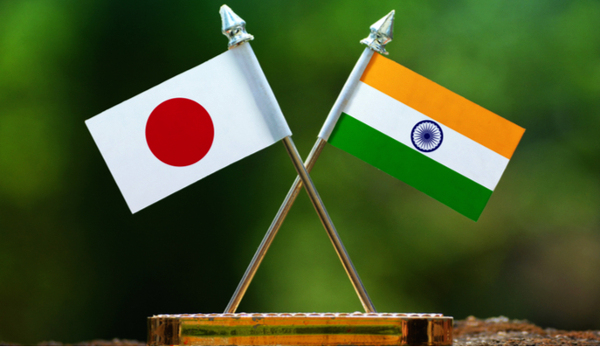
India and Japan are moving to deepen their economic partnership around semiconductors, advanced manufacturing, artificial intelligence, clean energy and resilient supply chains as New Delhi seeks to attract JPY 10 trillion in Japanese private investment over the coming decade.
Commerce and Industry Minister Piyush Goyal, concluding an official visit to Japan on 27 August 2026, held discussions with Japanese government leaders, financial institutions and executives from more than 30 major companies. The engagements in Tokyo, Nagoya and Osaka focused on translating the long-standing India-Japan strategic partnership into greater industrial investment, technology collaboration and integration between the two countries’ manufacturing ecosystems.
A major theme of the visit was India’s effort to position itself as a long-term production and technology partner for Japanese industry rather than simply a large consumer market. Discussions covered semiconductors, artificial intelligence, automotive manufacturing, capital goods, aerospace, machine tools, electronics, financial services, infrastructure and clean energy.
India Places Semiconductors at Centre of Japan Partnership
Semiconductors emerged as one of the most important areas of discussion. Goyal highlighted India’s ambition to create a globally competitive semiconductor ecosystem at a time when domestic semiconductor demand is projected to reach $150 billion by 2032.
He outlined a six-pillar strategy covering chip design, semiconductor machinery and materials, fabrication, Assembly, Testing, Marking and Packaging and Outsourced Semiconductor Assembly and Test, research and development, and talent creation.
The approach reflects India’s attempt to build a complete semiconductor value chain rather than concentrating solely on fabrication plants. Manufacturing sophisticated chips requires an extensive supporting ecosystem of chemicals, gases, equipment, substrates, packaging, testing, design software, specialised engineering and highly reliable infrastructure.
Japan possesses world-class capabilities in many of precisely these areas, particularly semiconductor materials, precision equipment, power electronics and advanced manufacturing machinery. India, meanwhile, offers a large electronics market, expanding manufacturing capacity and a substantial engineering workforce.
The combination creates an opportunity for the two countries to develop a semiconductor relationship that extends well beyond individual fabrication projects.
Japanese Companies Explore Expansion in India
Japanese companies participating in the semiconductor and AI discussions expressed interest in increasing their presence across semiconductor equipment and materials, power semiconductors, electronics, artificial intelligence, logistics and associated advanced technologies.
The discussions also addressed the physical infrastructure required to make new semiconductor clusters internationally competitive. Semiconductor manufacturing requires uninterrupted electricity, large quantities of ultra-pure water, sophisticated logistics, highly trained workers and supporting social infrastructure capable of attracting specialised personnel.
Emerging Indian semiconductor centres such as Dholera and Sanand in Gujarat consequently featured in the discussions as India seeks to build complete industrial clusters around new semiconductor investments.
Goyal highlighted India’s rapidly expanding renewable-energy capacity and integrated national electricity grid as important advantages for energy-intensive industries including semiconductor fabrication, data centres and artificial intelligence infrastructure.
India Seeks JPY 10 Trillion in Japanese Private Investment
The visit also advanced the target of attracting JPY 10 trillion in Japanese private investment into India over the next decade, an objective agreed during Prime Minister Narendra Modi’s visit to Japan in 2025.
Achieving that target would significantly deepen Japan’s already substantial economic presence in India and shift a larger portion of the relationship towards next-generation industries.
Goyal called upon Japanese companies and institutional investors to participate in India’s infrastructure, manufacturing, financial services, semiconductors, AI and clean-energy expansion.
Japan’s large pools of long-term institutional capital are particularly attractive for India because major infrastructure and manufacturing projects often require stable financing over periods much longer than conventional commercial investment cycles.
Major Japanese Financial Institutions Join Discussions
Goyal consequently held discussions with some of Japan’s largest financial institutions, including MUFG, Mizuho, Nomura, Nippon Life, the Development Bank of Japan and Morgan Stanley MUFG Securities.
The discussions explored mechanisms for increasing Japanese capital flows into India’s infrastructure, industrial, financial and technology sectors.
Greater participation by Japanese pension, insurance and institutional investors could complement direct investments by Japanese manufacturers, creating a broader financial architecture supporting India-Japan economic cooperation.
India is also seeking to establish itself as an attractive destination for global institutional capital through financial reforms, infrastructure expansion and the development of centres such as GIFT City.
Manufacturing Partnership Moves Beyond Large Companies
Another significant element of the visit was its emphasis on connecting Japanese businesses with Indian Tier-II and Tier-III suppliers and MSMEs.
India’s ability to become a major manufacturing hub depends not only on attracting multinational factories but also on developing domestic supplier networks capable of producing precision components, electronics, machinery and specialised materials to international standards.
Japanese manufacturers have historically built deep supplier ecosystems around their operations. Greater integration between Japanese companies and Indian MSMEs could therefore help transfer manufacturing practices, quality-control processes and specialised production capabilities deeper into India’s industrial base.
Sector-specific roundtables on capital goods, machinery, automotive manufacturing, semiconductors, AI, startups and institutional investment were intended to identify such partnerships rather than limiting the visit to broad investment commitments.
Nagoya Opens Door to Japan’s Industrial Heartland
The India-Japan Next Generation Economic Partnership roadshow in Nagoya provided a particularly important manufacturing dimension to the visit.
More than 80 Japanese companies from the Chubu region participated in discussions covering automobiles, aerospace, machine tools, semiconductors, electronics, auto components and smaller manufacturing enterprises.
The Chubu region is one of Japan’s most important industrial centres and possesses extensive expertise in precision manufacturing, automotive engineering, machinery and aerospace.
Goyal argued that India’s young engineering workforce and expanding market could complement the region’s technological and manufacturing strengths, creating opportunities for Japanese companies to establish production and supply-chain operations in India.
Such cooperation could also support India’s effort to move progressively from assembly towards higher-value manufacturing, component production, engineering and research.
AI and Data Infrastructure Emerge Alongside Chips
The semiconductor discussions were closely linked with artificial intelligence because the rapid expansion of AI is creating enormous demand for advanced processors, data centres and electricity.
India is seeking to build both domestic AI capabilities and the physical infrastructure required to support large-scale computing. Japanese investment could therefore extend from semiconductor manufacturing into data-centre infrastructure, power electronics, advanced cooling, industrial AI and automation.
The development of these sectors increasingly overlaps. Semiconductor factories require advanced automation and AI-supported manufacturing, while AI data centres depend on sophisticated chips, electrical equipment and reliable energy networks.
India’s strategy is consequently evolving towards creating integrated technology ecosystems rather than treating semiconductors, AI, energy and electronics as isolated industries.
Resilient Supply Chains Become Strategic Priority
Goyal’s discussions with Japan’s Minister of Economy, Trade and Industry Akazawa Ryosei, along with representatives of JETRO, JBIC and JICA, also focused on resilient supply chains and economic security.
Recent global disruptions have encouraged major economies to diversify manufacturing and reduce excessive dependence on individual production centres for strategically important goods.
India and Japan have complementary interests in creating alternative supply chains for electronics, critical technologies, industrial equipment and clean-energy systems.
For Japanese manufacturers, India offers both a growing domestic market and a potential export-production base. For India, Japanese participation can provide technology, capital and manufacturing expertise needed to increase domestic value addition.
Keidanren Engagement Broadens Economic Partnership
Goyal also interacted with Keidanren, the Japan Business Federation, whose membership represents more than 1,500 major Japanese companies.
The discussions reflected how the bilateral economic relationship is expanding beyond traditional trade into areas such as economic security, advanced technologies, resilient supply chains, clean energy and defence-related manufacturing.
Japanese business leaders expressed confidence in India’s longer-term growth prospects and indicated interest in diversifying investments across the country.
Such diversification will be important if India wants Japanese investment to spread beyond established automotive and industrial clusters into semiconductors, electronics, aerospace, digital technology and emerging manufacturing centres.
India Presents Scale as Its Competitive Advantage
India’s economic scale formed another central part of Goyal’s investment pitch. He highlighted economic growth of 7.7 per cent despite global headwinds and reiterated India’s longer-term ambition of becoming a $30 trillion economy by 2047.
The country’s large domestic market, expanding middle class, digital infrastructure, growing renewable-energy capacity and strengthening financial system collectively provide Japanese companies with an opportunity different from traditional export-oriented manufacturing locations.
Companies investing in India can potentially combine domestic demand with exports, allowing factories to operate at the scale required for globally competitive production.
That becomes especially relevant in sectors such as electronics, automobiles, semiconductors and industrial machinery, where manufacturing economics improve considerably as volumes increase.
From Investment Relationship to Technology Partnership
The larger significance of Goyal’s Japan visit lies in the changing character of the bilateral economic relationship.
Japanese investment played an important role in India’s automobile, infrastructure and industrial development over several decades. The next phase is increasingly centred on semiconductors, AI, advanced manufacturing, clean energy, aerospace, financial services and strategic supply chains.
India is seeking Japanese capital, but equally importantly it is seeking access to technology, manufacturing processes and long-term industrial partnerships capable of strengthening domestic capabilities.
Japan, meanwhile, is looking for reliable growth markets, resilient production networks and strategic economic partners at a time when global supply chains are being reorganised.
The proposed JPY 10 trillion investment pipeline therefore represents more than a financial target. If translated into semiconductor plants, advanced manufacturing facilities, supplier networks, research partnerships and technology centres, it could substantially change the industrial depth of the India-Japan relationship.
The emerging partnership is consequently moving towards a model in which Japanese technology and long-term capital combine with India’s engineering talent, manufacturing scale and expanding market, potentially creating one of the most consequential industrial collaborations within the wider Indo-Pacific economy.
You may also like
-
India to Track Challenges Faced by Women Entrepreneurs in New National Business Survey
-
India Updates Vehicle Rules to Strengthen E85 and E100 Flex-Fuel Technology
-
Adani Green Energy Expands Battery Storage to 6.63 GWh at Khavda, Strengthening India’s Renewable Power Infrastructure
-
India Hosts 12th BRICS Parliamentary Forum in New Delhi
-
Manastu Space Secures ₹116 Crore Government Support to Develop Indigenous Green Propulsion Systems
