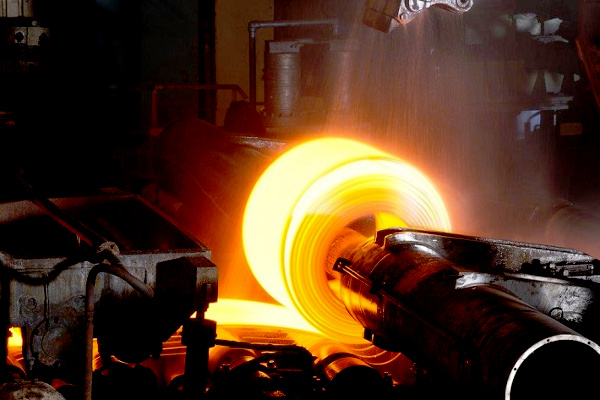
India’s steel industry maintained its growth momentum during the first four months of FY2026-27, supported by expanding domestic demand from infrastructure, construction and manufacturing. Finished-steel production reached 54.3 million tonnes during April–July 2026, compared with 52.2 million tonnes in the corresponding period a year earlier, registering growth of 4%.
Domestic consumption expanded considerably faster. India consumed 55.9 million tonnes of finished steel during April–July, up from 51.9 million tonnes during the same period of 2025, representing year-on-year growth of 7.8%. The increase highlights the continuing strength of India’s internal steel market as infrastructure development, urban construction, railways, automobiles, engineering and manufacturing generate additional demand.
Crude-steel production also continued to rise. Output reached 56.3 million tonnes during April–July 2026, an increase of 2.6% from 54.9 million tonnes a year earlier. Hot-metal production stood at 31.6 million tonnes, compared with 31.1 million tonnes during the corresponding period, reflecting continued expansion across the industry’s primary production base.
July maintained the positive trend. Finished-steel production during the month reached 13.7 million tonnes, up 1.4% year-on-year, while consumption climbed 6.5% to 14.4 million tonnes. Crude-steel production during July stood at 14.3 million tonnes compared with 14.1 million tonnes a year earlier.
The figures also demonstrate the increasingly broad structure of India’s steel industry. The country’s seven major producers accounted for about 29.1 million tonnes of finished-steel output during April–July, while the remaining producers contributed another 25.2 million tonnes. India’s annual crude-steel capacity has now reached approximately 222 million tonnes, creating a substantial industrial base from which production can expand as domestic requirements increase.
However, the faster rise in consumption compared with domestic finished-steel production has also increased the importance of managing imports. India imported approximately 2.77 million tonnes of finished steel during April–July 2026, 36.6% more than during the corresponding period last year. Exports simultaneously increased 35% to about 2.29 million tonnes, leaving India a net importer of finished steel by volume during the four-month period.
The simultaneous growth in exports is nevertheless significant for Indian producers seeking larger overseas markets. Finished-steel exports during July alone climbed more than 44% year-on-year to approximately 699,000 tonnes, indicating that Indian mills are continuing to compete internationally even while domestic consumption absorbs increasing volumes of production.
Domestic steel prices showed mixed trends during July. The average price of 10-mm TMT bars across major metropolitan markets declined 5.6% from June to around ₹56,698 per tonne, while hot-rolled coil prices eased marginally to ₹69,828 per tonne. Cold-rolled coil and galvanised-sheet prices also recorded small month-on-month declines. Lower prices for several raw materials, including iron ore, manganese ore and scrap, provided some relief on the input-cost side.
The combination of rising production and even stronger consumption reflects the structural expansion underway in India’s steel market. Large public infrastructure programmes, railway modernisation, housing, renewable-energy projects, automobiles, capital goods and the expansion of domestic manufacturing are creating a wider demand base for steel than in previous decades.
India is already the world’s second-largest crude-steel producer, but the country’s longer-term ambitions extend well beyond present output levels. The government has been encouraging capacity expansion, greater use of domestically produced speciality steel, technological modernisation, improved resource efficiency and lower-carbon production as part of the wider effort to strengthen the country’s manufacturing ecosystem.
The latest figures also underline an important challenge. With finished-steel consumption growing at nearly twice the rate of production during April–July, expanding competitive domestic capacity will be crucial if India is to meet rising demand without becoming increasingly dependent on imports. At the same time, strengthening exports and producing more high-value and speciality grades domestically can improve the industry’s position in global markets.
The April–July performance therefore points to a steel sector being driven increasingly by India’s own economic expansion. With consumption approaching 56 million tonnes in just four months, continued investment in capacity, technology and specialised steel production could make the industry an increasingly important foundation for India’s infrastructure build-out and manufacturing ambitions.
You may also like
-
InCore Semiconductors: Building India’s Configurable RISC-V Processor Platform
-
India Joins IAEA Maritime Nuclear Initiative to Explore Nuclear-Powered Commercial Ships and Floating Power Plants
-
India Turns Traditional Foods Into Market-Ready Brands as PMFME Strengthens Grassroots Food Entrepreneurship
-
C-DOT Sharpens 6G, Quantum and Cybersecurity Push as India Targets Leadership in Trusted Telecom
-
India Readies Final BrahMos Systems for Philippines as Three-Battery Deal Nears Completion
