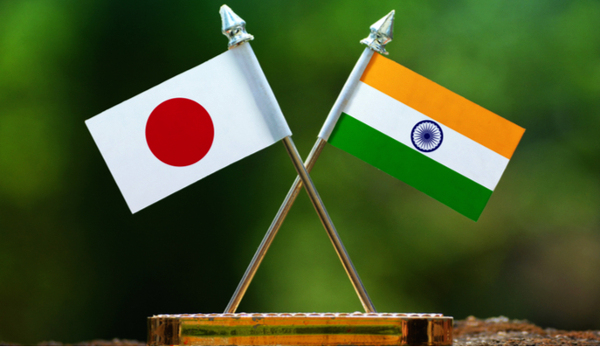
India and Japan are moving to deepen their economic partnership across investment, advanced technology, manufacturing and skilled talent, with Commerce and Industry Minister Piyush Goyal using his visit to Tokyo to engage both leading Japanese financial institutions and the Indian community. The discussions highlighted growing Japanese interest in India’s long-term economic expansion while also bringing into focus the need for easier capital flows, stronger business linkages and greater movement of skilled professionals between the two countries.
During meetings with senior representatives of MUFG, Development Bank of Japan, Mizuho, Morgan Stanley, Nomura and Nippon Life, Goyal invited greater Japanese institutional investment into India. He presented India’s growth trajectory, improving financial-sector fundamentals and expanding consumer base as important reasons for Japanese investors to take a longer-term view of the Indian market.
India is seeking to position sectors such as semiconductors, artificial intelligence, data centres, renewable energy, green hydrogen, advanced manufacturing and digital infrastructure at the centre of the next phase of India-Japan economic cooperation. These areas combine Japan’s strengths in technology, finance and industrial expertise with India’s large market, engineering talent and expanding manufacturing base.
Goyal highlighted India’s recent economic growth, stronger banking system, rising disposable incomes and expanding middle class while reiterating the country’s ambition to become a $30-trillion economy by 2047. He also pointed to India’s expanding renewable-energy capacity and national power infrastructure as important foundations for the growth of power-intensive industries such as semiconductor fabrication, data centres and artificial intelligence.
Japanese institutions, in turn, indicated that their exposure to India is already expanding. MUFG highlighted its roughly $4-billion investment in Shriram Finance and growing interest in sectors including renewable energy and hydrogen. The Development Bank of Japan outlined opportunities in real estate, venture capital and other long-term investments, while Mizuho pointed to improving profitability among Japanese companies operating in India and the expansion of its Global Capability Centre in Pune.
Morgan Stanley described India as one of its most significant global operating locations, with more than 19,000 employees, while noting that its activities in the country are increasingly moving toward higher-value financial services and capital-market functions. Nomura highlighted its role in linking Japanese and international companies with opportunities in India, including emerging areas such as artificial intelligence and cybersecurity. Nippon Life, meanwhile, stressed the value of patient, long-duration capital and the returns generated by its Indian businesses.
The discussions also identified areas where further policy improvement could help accelerate Japanese investment. Financial institutions raised issues related to profit repatriation, access to Indian capital markets, currency movements and regulatory predictability. Goyal indicated that the government would continue working to simplify investment processes and strengthen the overall ease of doing business.
The potential of GIFT City also featured prominently in the talks as India seeks to develop it into a major international financial gateway capable of supporting greater cross-border capital flows between India and Japan. The broader objective is not simply to attract financial investment, but to encourage partnerships that bring technology, manufacturing capability, employment, innovation and deeper integration into global value chains.
This investment push comes against the backdrop of the bilateral objective of mobilising 10 trillion yen in Japanese private investment into India over the next decade. The scale of the target reflects the increasingly strategic character of the economic relationship, which is expanding beyond traditional infrastructure and automobile investments into high-technology and digital sectors.
Alongside institutional investors, the Indian diaspora has emerged as another important pillar of this relationship. Addressing the Indian community in Tokyo, Goyal described the nearly 60,000 Indians living in Japan as important representatives of India whose professional contribution and engagement with Japanese society help strengthen bilateral goodwill.
The scale of business engagement during the visit was also significant, with more than 200 representatives of Indian industry and business accompanying the minister. The delegation reflected growing interest among Indian companies in building commercial partnerships with Japan and accessing Japanese capital, technology, supply chains and markets.
Goyal also emphasised that India-Japan cooperation will increasingly depend on the movement of people and skills. Japan’s ageing population and labour shortages are creating opportunities for Indian professionals and trained workers in sectors ranging from healthcare and engineering to construction, transport and technology.
Among the areas identified were opportunities for caregivers, nurses, welders, carpenters, electricians, plumbers, drivers, engineers, seafarers, chartered accountants and artificial-intelligence professionals. Indian workers seeking opportunities in Japan, however, will increasingly need Japanese-language capability, professional certification and familiarity with local culture and workplace practices.
This human-capital dimension could become an important complement to the investment relationship. While Japanese capital and technology can support India’s manufacturing and infrastructure expansion, India’s young workforce can help Japan address labour and skills shortages in selected sectors. India’s relatively young demographic profile, with an average age of around 29 years, gives the partnership an additional long-term strategic dimension.
The Indian community in Japan is also being encouraged to play a wider role by connecting Japanese companies with opportunities in India, supporting knowledge exchange and contributing to development initiatives in their hometowns through education, digital training and professional networks.
Taken together, the Tokyo engagements point toward a broader transformation of the India-Japan economic relationship. Traditional cooperation in infrastructure and manufacturing is increasingly being supplemented by semiconductors, AI, clean energy, digital infrastructure, financial services, skilled mobility and innovation-led investment.
For India, Japan represents a source of patient capital, advanced technology and globally competitive manufacturing expertise. For Japan, India offers a large and expanding market, a growing talent base and opportunities to diversify supply chains and investment exposure. The emerging partnership therefore extends well beyond conventional trade, with both countries increasingly seeking to connect capital, technology, industry and people as part of a long-term strategic economic relationship.
You may also like
-
India-Russia Strategic Partnership Deepens as Jaishankar Pushes Trade, Energy and Economic Cooperation in Moscow
-
India-China Hold 25th Boundary Talks as Ajit Doval and Wang Yi Push Border Stability and Wider Bilateral Engagement
-
India-GCC FTA Talks Gain Momentum as $178 Billion Trade Partnership Moves Toward Deeper Integration
-
India and Mauritius Move to Deepen Cooperation in Civil Service Training, Digital Governance and Capacity Building
-
India and Russia Push for $100-Billion Trade as Economic Partnership Expands Into Technology, Energy and Industry
