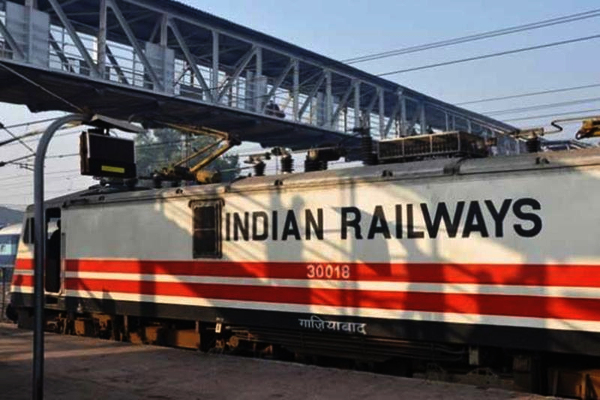
Indian Railways will manufacture 238 new air-conditioned Electric Multiple Unit rakes for the Mumbai suburban railway network, with production distributed among three major railway manufacturing units. Deliveries are scheduled to begin in 2027 and the entire programme is expected to be completed by 2030.
Union Railway Minister Ashwini Vaishnaw said the Ministry of Railways has prioritised the production programme to ensure that new rolling stock becomes available alongside infrastructure being commissioned under the Mumbai Urban Transport Project (MUTP).
The decision is intended to prevent a situation in which newly created suburban railway capacity remains underutilised because sufficient trains are not available.
Three Production Units to Share Manufacturing
Under the indicative manufacturing plan, the 238 AC EMU rakes will be divided among three Indian Railways production units.
The Integral Coach Factory in Chennai will manufacture 120 rakes, making it the largest contributor to the programme.
The Rail Coach Factory at Kapurthala will produce 71 rakes, while the Modern Coach Factory at Raebareli will manufacture another 47.
Together, the three facilities will deliver the complete requirement of 238 AC suburban train rakes.
Indian Railways said these production units already possess experience in manufacturing modern rolling stock, including air-conditioned EMUs, Vande Bharat trainsets and Vande Metro trainsets.
Existing Proven Specifications to Speed Up Production
The Railway Board has approved procurement of the new AC EMUs using existing and proven RDSO/ICF specifications.
Using an established design is expected to shorten the time required for development, testing and certification before mass production begins.
Instead of introducing an entirely new platform, the programme can rely on technologies and manufacturing processes that have already been validated within the railway system.
This approach is intended to support faster production while reducing technical and schedule risks.
First Rakes Expected in 2027
Manufacturing and deliveries are scheduled to begin in 2027.
Indian Railways plans to complete the entire sanctioned quantity by 2030, creating a steady flow of new air-conditioned trains into the Mumbai suburban system over the following three years.
The timeline has been aligned with infrastructure development under MUTP so that train capacity and network capacity expand together.
According to the Ministry, the availability of the first trainsets from 2027 will help bridge the gap between commissioning new railway infrastructure and deploying sufficient rolling stock to make full use of it.
Major Expansion of Mumbai’s AC Suburban Fleet
Mumbai operates one of the world’s busiest suburban railway systems, carrying millions of commuters every day across the Central and Western Railway networks.
The addition of 238 AC EMU rakes would represent a substantial expansion of climate-controlled suburban services and could significantly increase the number of air-conditioned trains available during peak and non-peak hours.
Air-conditioned EMUs provide improved passenger comfort while retaining the high-capacity operating characteristics required for Mumbai’s dense suburban network.
As additional infrastructure becomes available under MUTP, the larger fleet will also give railway operators greater flexibility to introduce more services and improve utilisation of upgraded corridors.
Linking Rolling Stock With MUTP Expansion
The Mumbai Urban Transport Project includes a series of investments intended to improve suburban rail capacity, connectivity and operational efficiency across the Mumbai Metropolitan Region.
New tracks, corridor upgrades and other infrastructure improvements can only translate into higher passenger capacity if additional trains are available when those projects become operational.
The decision to begin producing the 238 AC EMUs before the full completion of MUTP infrastructure is therefore aimed at synchronising the two programmes.
Indian Railways wants the new rakes to enter service progressively as additional network capacity becomes available rather than beginning procurement only after infrastructure work is completed.
Indian Railway Factories Take Centre Stage
The programme will also place a major production responsibility on Indian Railways’ domestic manufacturing facilities.
ICF, RCF and MCF have undergone significant technological expansion in recent years as the railway system moved towards modern trainsets, improved passenger coaches and higher levels of domestic production.
ICF has emerged as a major centre for trainset manufacturing through the Vande Bharat programme, while RCF and MCF have also expanded their capabilities in modern passenger rolling stock.
The distribution of the Mumbai AC EMU order across all three facilities should allow production to proceed simultaneously and reduce pressure on any single manufacturing unit.
A Four-Year Fleet Modernisation Push
With deliveries beginning in 2027 and completion scheduled for 2030, Indian Railways is preparing for a large four-year expansion of Mumbai’s suburban AC fleet.
The programme combines three objectives: increasing passenger comfort, ensuring adequate rolling stock for new MUTP infrastructure and maximising the use of existing domestic railway manufacturing capacity.
Once all 238 rakes are delivered, Mumbai’s suburban network will have a significantly larger pool of modern air-conditioned trains available for deployment.
For a railway system where capacity additions must keep pace with one of India’s largest urban populations, synchronising infrastructure expansion with rolling-stock production will be crucial.
The new manufacturing programme is therefore not simply a train procurement exercise. It is part of a broader effort to ensure that Mumbai’s suburban railway modernisation translates into additional services and usable capacity as soon as new infrastructure becomes operational.
Source: Ministry of Railways, Government of India, Press Information Bureau, August 20, 2026.
You may also like
-
ICAR Scientists Develop Indigenous Protective Gloves for Cotton Farmers, Sign Commercial Manufacturing Agreement
-
BHEL–Coal India Joint Venture Begins Construction of ₹25,016 Crore Indigenous Coal Gasification Project in Odisha
-
PM Modi to Inaugurate RBI’s Tier IV Data Centre and Cybersecurity Training Institute in Bhubaneswar
-
India Creates 11 Crore Digital Farmer IDs Five Months Ahead of Target, Strengthening AgriStack Infrastructure
-
Chak-Hao Black Rice of Manipur and Nagaland: The Aromatic Purple Heritage Grain with GI Recognition
