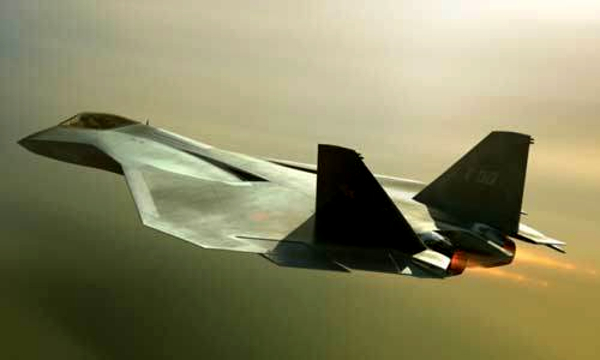
India has begun building a dedicated integration and flight-testing hub for the Advanced Medium Combat Aircraft at Puttaparthi in Andhra Pradesh, creating specialised infrastructure for the country’s first indigenous fifth-generation fighter. The wider AMCA facility is planned across nearly 650 acres, while DRDO has indicated that the first prototype is targeted for rollout by the end of 2028, followed by its maiden flight in early 2029.
Defence Minister Rajnath Singh and Andhra Pradesh Chief Minister N. Chandrababu Naidu laid the foundation stone for the AMCA Core Integration & Flight Testing Centre at Puttaparthi in Sri Sathya Sai district on May 15, 2026.
The Ministry of Defence described the centre as a crucial element of the AMCA programme and said it would support the integration, testing, validation and certification of the fifth-generation fighter as well as other future indigenous aircraft platforms.
The project represents a major shift for AMCA. After years dominated by aerodynamic studies, stealth design, subsystem development and programme planning, India is now putting in place the physical infrastructure needed to assemble prototypes and conduct their flight-test campaign.
Nearly 650 Acres Dedicated to the AMCA Ecosystem
Government broadcaster News On Air reported that the wider AMCA programme facility at Puttaparthi will cover nearly 650 acres and serve as an integration, development and flight-testing hub for the aircraft.
The Ministry of Defence places the overall AMCA programme outlay at around ₹15,000 crore, while the Core Integration & Flight Testing Centre itself is being established at an estimated cost of about ₹2,000 crore.
This distinction is important. The 650-acre development represents the broader infrastructure being created around the fighter programme, while the dedicated ADA flight-test and integration centre is one of its central components.
The location at Puttaparthi gives ADA access to an existing airfield while allowing specialised facilities to be established specifically for prototype aircraft operations.
That should provide far greater flexibility than conducting the entire developmental campaign from an airport shared heavily with commercial or routine military traffic.
First Prototype Rollout Targeted for End-2028
The latest clear programme timeline was outlined by DRDO Chairman Dr Samir V. Kamat in January 2026.
Kamat said AMCA was expected to be rolled out by the end of 2028, with the first flight planned for early 2029.
He stated that the programme remained aligned with the commitments made to the Indian Air Force under the approved development schedule.
The period between rollout and first flight will be used for ground runs, system checks, taxi trials and other verification work required before a new combat aircraft is cleared to leave the ground.
Five AMCA Prototypes Planned
The Ministry of Defence has already confirmed that the AMCA development programme will involve five prototypes, followed by series production.
Rajnath Singh publicly outlined the plan in May 2025 while describing the AMCA execution model as a major milestone for India’s aerospace industry.
A five-aircraft prototype fleet will allow ADA to distribute the enormous flight-test workload across several aircraft instead of relying on a single development machine.
Different prototypes can progressively undertake aerodynamic testing, flight-envelope expansion, weapons integration, radar and electronic-warfare evaluation, propulsion testing and operational configuration work.
For a fifth-generation aircraft, the programme will also have to validate features that were not central to earlier Indian fighter-development efforts, particularly internal weapons bays and low-observable design.
Why AMCA Needs Its Own Flight-Test Centre
Developing a stealth fighter requires far more than building an aircraft that can take off and land.
The prototypes will have to accumulate hundreds of flights across different configurations and operating conditions.
Engine behaviour must be tested across altitude and speed ranges. Flight-control laws must be expanded gradually. Sensors have to be integrated with mission computers. Weapons must be separated safely from internal bays, and avionics must function correctly under realistic electromagnetic conditions.
The aircraft will also have to demonstrate stability and control while carrying different fuel and weapon loads.
Flight testing can therefore continue for years after the first prototype leaves the ground.
A dedicated centre gives engineers and test pilots access to hangars, telemetry systems, instrumentation, laboratories, maintenance infrastructure and mission-planning facilities designed specifically around experimental aircraft.
Puttaparthi is intended to provide that environment.
From Aircraft Assembly to Certification
The Ministry of Defence has explicitly stated that the facility will support integration, testing, validation and certification.
Those functions cover almost the entire journey between manufacturing the prototype and clearing the fighter for operational use.
Integration involves bringing together the aircraft’s structures, engine, radar, avionics, sensors, electronic warfare systems, flight controls and weapons.
Validation determines whether those systems perform as intended.
Certification establishes that the aircraft meets the required safety and military airworthiness standards.
Conducting these activities from a purpose-built centre should reduce the logistical complexity of moving prototype aircraft and specialist teams between multiple locations.
AMCA Development Now Open to Indian Industry
The Puttaparthi facility is also taking shape as India implements a new industrial model for the fighter.
In May 2025, the Defence Ministry approved an industry-partnership execution model under which ADA will manage development while Indian private and public-sector companies compete for participation.
Companies can bid independently, form joint ventures or create consortia.
The objective is to build AMCA through a wider national aerospace ecosystem rather than depending solely on a single traditional manufacturer.
This approach could allow companies specialising in composites, aerostructures, precision manufacturing, avionics and systems integration to participate directly in one of India’s most technologically ambitious defence programmes.
It could also create the industrial capacity needed when the fighter eventually transitions from five prototypes to serial production.
India’s First Indigenous Fifth-Generation Fighter
AMCA is being developed as India’s first indigenous fifth-generation combat aircraft.
The twin-engine fighter is intended to combine low observable characteristics with advanced avionics, internal weapons carriage, network-centric warfare capability and sophisticated electronic warfare systems.
Stealth will influence almost every aspect of its design.
Weapons carried externally increase radar signature, so AMCA is being designed with internal weapons bays for missions requiring maximum low observability.
Its external geometry, air intakes, panel alignment and surface treatment must also be carefully controlled to reduce radar reflections.
The aircraft will therefore require substantially tighter manufacturing and integration tolerances than earlier Indian fighter programmes.
That makes specialised prototype tooling and testing infrastructure especially important.
A New Aerospace Cluster Around Puttaparthi
The AMCA project is also expected to have an industrial impact beyond the flight-test centre itself.
News On Air reported that the programme facility could generate approximately 7,500 direct jobs, while associated aerospace and defence investment may create a wider industrial ecosystem in the region.
The Puttaparthi groundbreaking formed part of a much broader defence-industrial push in Andhra Pradesh.
On the same occasion, projects covering naval systems, ammunition, energetic materials and drones were also launched or advanced.
The Ministry of Defence has increasingly described such clusters as a way to combine large strategic programmes with local manufacturing, private investment and supplier development.
AMCA could become the anchor aerospace project within this emerging network.
The Real Significance of the 2028 Target
The end-2028 rollout target will be one of the most important milestones in the programme.
A rollout does not mean the fighter is ready for combat.
It means years of design work have finally produced a complete aircraft capable of beginning the final phase before flight.
That transition is particularly significant for AMCA because many of its technologies must mature simultaneously.
Structures, composite manufacturing, flight-control software, avionics, sensors, propulsion integration, stealth features and weapons-bay systems all have to reach sufficient maturity for the prototype to emerge from assembly.
The first flight expected in early 2029 will then mark the beginning of an equally demanding test programme.
Puttaparthi Becomes Central to India’s Combat-Aircraft Future
India’s earlier combat-aircraft programmes created expertise spread across Bengaluru and several other aerospace centres.
AMCA is now adding a new node to that network.
The Puttaparthi centre is being developed specifically around the needs of advanced indigenous aircraft, providing ADA with a location where prototype integration and developmental flight testing can be conducted at scale.
Its importance could ultimately extend beyond AMCA.
The Ministry of Defence has already stated that the centre will support other future indigenous platforms, giving the facility relevance to aircraft programmes that may emerge after AMCA.
That makes the investment part of a broader effort to create permanent national infrastructure for advanced combat-aircraft development rather than a temporary facility for a single project.
With the foundation stone now laid, five prototypes planned and the first aircraft targeted for rollout by the end of 2028, the AMCA programme is moving into a phase where progress will increasingly be visible in metal, composites and completed aircraft rather than only in design presentations.
The new Puttaparthi hub will sit at the centre of that transition.
The project will become the location from which India’s first indigenous fifth-generation fighter begins its flight-test journey in early 2029, marking one of the most important milestones in the country’s combat-aviation programme.
Sources
Ministry of Defence / PIB, May 15, 2026: Foundation stone for the AMCA Core Integration & Flight Testing Centre at Puttaparthi and confirmation of its role in integration, testing, validation and certification.
Ministry of Defence / PIB, May 27, 2025: Approval of the AMCA Programme Execution Model through competitive participation of Indian public and private industry.
Ministry of Defence / PIB, May 29, 2025: Confirmation that five AMCA prototypes are planned before series production.
News On Air, May 15, 2026: Government broadcaster reporting that the wider Puttaparthi AMCA programme facility will cover nearly 650 acres.
DRDO Chairman Samir V. Kamat, January 2026: Programme timeline placing AMCA prototype rollout at the end of 2028 and maiden flight in early 2029.
You may also like
-
ICAR Scientists Develop Indigenous Protective Gloves for Cotton Farmers, Sign Commercial Manufacturing Agreement
-
India Moves Towards Five-Year Assured Orders for Defence Startups Under New Procurement Reforms
-
BHEL–Coal India Joint Venture Begins Construction of ₹25,016 Crore Indigenous Coal Gasification Project in Odisha
-
Zen Technologies Introduces Indigenous Hyper-Strike Falcon AI-Guided Counter-Drone Interceptor
-
L&T and Germany’s SCHOTTEL Expand Partnership for Controllable Pitch Propeller Systems in Indian Shipbuilding
