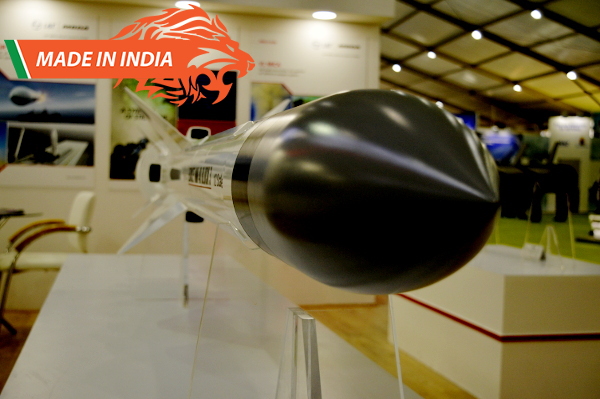
India and Armenia appear to be moving closer to a potentially significant agreement involving the indigenous Pralay tactical surface-to-surface missile, with fresh reports suggesting that Yerevan could eventually acquire more than 50 missiles as part of its expanding defence partnership with New Delhi.
The latest reports also indicate that an Armenian technical team could visit India for familiarisation with the missile system and related training activities. Such a visit could include interaction with the system’s developers and manufacturers and potentially exposure to its operational procedures.
In April 2026, major outlets reported that Armenia and India were engaged in advanced cost negotiations for the Pralay system, citing sources familiar with the discussions. The talks formed part of a wider dialogue covering military hardware development, force modernisation and deeper defence-industrial cooperation.
India-Armenia Defence Engagement Intensifies
The latest Pralay reports come at a time when defence contacts between India and Armenia are accelerating.
Indian Defence Secretary Rajesh Kumar Singh visited Armenia in August 2026, where he held discussions with Armenian Defence Minister Suren Papikyan and senior military officials. Armenia’s Defence Ministry officially stated that the talks covered bilateral defence cooperation, including military-technical cooperation.
Singh also met Armenia’s First Deputy Defence Minister and Chief of the General Staff, Lieutenant General Edvard Asryan. The two sides exchanged a document establishing a new format of cooperation between the General Staffs of the Armenian and Indian armed forces.
The two countries have also concluded an MoU covering research, development, innovation and shared production in the defence industry. Indian defence officials described the agreement as another step towards expanding bilateral defence-industrial cooperation.
These developments give important context to reports of progress on Pralay. They show that the relationship is increasingly moving beyond straightforward arms purchases towards training, technical cooperation, defence research and potentially joint industrial activity.
Pralay Would Give Armenia a New Precision-Strike Capability
Developed by the Defence Research and Development Organisation, Pralay is an indigenous solid-propellant, surface-to-surface quasi-ballistic missile designed for precision conventional strikes.
Unlike a conventional ballistic missile that largely follows a predictable ballistic trajectory after boost, Pralay follows a quasi-ballistic flight profile and incorporates sophisticated guidance and navigation. Its flight characteristics make the missile more difficult for an adversary to track and intercept.
DRDO documentation has placed the missile’s overall range in the 150-500 km class, although the configuration offered for export could have different range and payload parameters depending on India’s export-control commitments.
The missile is intended to attack important battlefield and operational targets such as command centres, communication facilities, airfields, logistics nodes and other hardened or high-value military infrastructure.
For Armenia, such a weapon would represent a considerable expansion of its existing long-range conventional strike options.
Pralay Has Completed Major User Trials
Pralay has also reached an advanced stage of development in India.
DRDO carried out two consecutive flight tests on July 28 and 29, 2025, as part of User Evaluation Trials designed to demonstrate the system’s minimum and maximum range capabilities. According to the Ministry of Defence, both missiles followed their planned trajectories and struck their designated targets with high accuracy.
Another important milestone came on December 31, 2025, when DRDO launched two Pralay missiles in quick succession from the same launcher.
The Defence Ministry said both missiles met their flight objectives. DRDO Chairman Dr Samir V. Kamat stated after the test that the achievement indicated the missile system’s imminent readiness for induction.
Bharat Dynamics Limited and Bharat Electronics Limited serve as development-cum-production partners for Pralay, supported by several DRDO laboratories and other Indian industries.
A major export contract would therefore also benefit India’s domestic missile-production ecosystem.
Armenia Could Become Pralay’s First Foreign Customer
Armenian interest in Pralay is not a new development.
Reports concerning Yerevan’s interest in the missile have circulated since 2024. By April 2026, reporting had advanced from expressions of interest to discussions involving costs and acquisition parameters.
If the reported acquisition is eventually concluded, Armenia could become the first foreign operator of Pralay.
That would be significant for India’s defence-export programme because Pralay belongs to a more advanced category of indigenous precision-strike weapons than many of the platforms India traditionally exported.
It would follow India’s growing success in supplying complete weapon systems rather than only components, ammunition and supporting equipment.
Armenia has already become an important customer for Indian defence manufacturers. One of the clearest official examples came in January 2026, when Defence Minister Rajnath Singh flagged off the first tranche of Guided Pinaka rockets for Armenia from Solar Defence and Aerospace Limited’s facility in Nagpur.
India and Armenia have also developed cooperation involving air defence, artillery, radar systems, training and military technology.
Technical Familiarisation Would Signal Further Progress
The reported plan for an Armenian technical delegation to travel to India would be particularly important if confirmed.
Large missile-system acquisitions usually involve far more than the delivery of missiles themselves. Operators require launchers, command-and-control equipment, communications systems, maintenance infrastructure, technical documentation, training and logistical support.
Familiarisation activities therefore allow prospective operators to understand how the complete weapon system functions before induction.
Reports suggest that the proposed Armenian visit could involve familiarisation and possible training connected with the Pralay system. However, neither government has publicly disclosed a timetable for such a visit or linked it officially to a signed missile contract.
A Potential Landmark for India’s Missile Exports
A confirmed Pralay export to Armenia would represent another important step in India’s transition from a defence importer into a supplier of sophisticated indigenous weapon systems.
BrahMos established India’s ability to export a high-end supersonic cruise missile system, while Akash and Pinaka have expanded India’s presence in the international air-defence and rocket-artillery markets.
Pralay could open another segment like road-mobile, conventionally armed tactical quasi-ballistic missiles designed for precision strikes at operational depths.
New Delhi and Yerevan may eventually sign the contract and Armenia would gain a new indigenous Indian precision-strike capability while India would secure one of the most technologically significant defence export orders in the history of its domestic missile programme.
You may also like
-
ICAR Scientists Develop Indigenous Protective Gloves for Cotton Farmers, Sign Commercial Manufacturing Agreement
-
India Moves Towards Five-Year Assured Orders for Defence Startups Under New Procurement Reforms
-
BHEL–Coal India Joint Venture Begins Construction of ₹25,016 Crore Indigenous Coal Gasification Project in Odisha
-
Zen Technologies Introduces Indigenous Hyper-Strike Falcon AI-Guided Counter-Drone Interceptor
-
L&T and Germany’s SCHOTTEL Expand Partnership for Controllable Pitch Propeller Systems in Indian Shipbuilding
