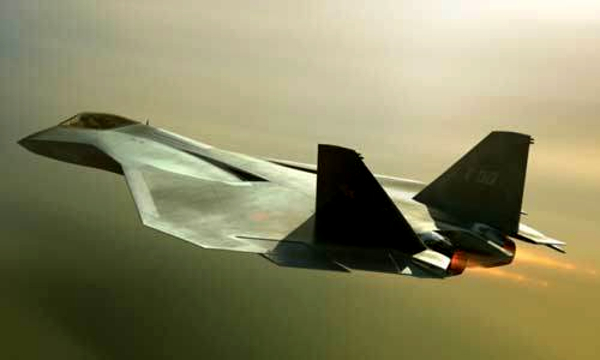
The Aeronautical Development Agency (ADA), the DRDO organisation responsible for the AMCA programme, has stepped up procurement activity covering specialised aerospace materials, tooling and industrial support during 2026.
The most significant development remains ADA’s formal “Development of Advanced Medium Combat Aircraft” tender, published through the Ministry of Defence’s e-procurement system on May 27, 2026.
The procurement represents the industrial implementation of the AMCA Programme Execution Model approved by Defence Minister Rajnath Singh in 2025.
ADA Seeks AerMet 100 Aerospace Steel
Among ADA’s recent procurement requirements is AerMet 100 steel conforming to AMS 6532L, an ultra-high-strength alloy used for some of the most highly stressed structures in aerospace and defence applications.
The tender sought 12 AerMet 100 bars measuring approximately 200 mm in diameter and 1,200 mm in length. The procurement was issued through the Department of Defence Research and Development procurement ecosystem.
AerMet 100 is not ordinary structural steel.
Manufacturer Carpenter Technology describes the alloy as combining very high strength and hardness with exceptional fracture toughness, ductility and resistance to fatigue and stress-corrosion cracking. Aerospace applications include landing gear, structural members, actuators, jet-engine shafts and other heavily loaded components.
The material has previously been used for demanding military-aircraft applications, including landing-gear components on the US Navy’s F/A-18E/F Super Hornet.
ADA’s procurement of material to the AMS 6532L aerospace specification is therefore notable as the AMCA programme advances towards physical prototype manufacture.
Composite Tooling Activity Also Accelerates
ADA has simultaneously issued procurement requirements related to advanced composite manufacturing.
A July 2026 GeM tender sought the manufacture of a lay-up tool according to ADA technical specifications and Statement of Work. Such tooling is fundamental to the production of precision composite structures, where carbon-fibre material must be laid over accurately manufactured moulds before curing.
The main AMCA development tender also contains dedicated commercial documentation for composite man-hour rates, reinforcing the importance of composite structural manufacturing within the industrial work package.
Modern stealth aircraft rely extensively on composites because they can reduce weight, allow large structures to be manufactured with fewer joints and support complex aerodynamic shapes.
For a low-observable aircraft such as AMCA, manufacturing accuracy is especially important. Even small deviations in external geometry, panel alignment or surface finish can affect aerodynamic performance and radar-signature management.
Specialised lay-up tools, jigs, fixtures and inspection systems will consequently be as important to AMCA production as the raw composite material itself.
AMCA Industrial Competition Now Underway
The larger significance of these procurements becomes clearer when viewed alongside the government’s new execution model for AMCA.
On May 27, 2025, the Ministry of Defence formally announced that ADA would execute the programme through an industry partnership model, with Indian public and private companies allowed to compete on equal terms.
Companies can bid independently, create joint ventures or form consortia, provided the participating entity complies with Indian laws and regulations.
Defence Minister Rajnath Singh subsequently confirmed that the programme plans to develop five AMCA prototypes before moving into series production.
The official 2026 AMCA tender is now translating that policy decision into an industrial programme.
Its scale is evident from the ₹25-crore earnest-money requirement and the planned work period of roughly seven years, although ADA has not publicly disclosed the tender value.
Moving From CAD Models to Manufacturing Hardware
The latest procurement trail is important because fighter-aircraft programmes pass through a critical transition between detailed design and prototype construction.
Computer-aided engineering can establish the aircraft’s aerodynamic configuration, structural loads, systems architecture and internal layout. Eventually, however, those designs must become production-standard hardware.
That requires aerospace-grade metals, composite moulds, assembly jigs, precision-machining capability, fixtures, quality-control systems and a supply chain capable of repeatedly manufacturing components within extremely tight tolerances.
ADA’s current activity suggests that this industrial foundation is increasingly being put in place for AMCA.
AerMet 100 represents the type of specialised material required for components subjected to exceptionally high mechanical stresses. Composite lay-up tooling represents the infrastructure needed to manufacture the aircraft’s lightweight structural sections.
The main AMCA industrial RFP then brings those capabilities together under the prototype-development programme.
Manufacturing Stealth Is a Major Challenge
AMCA is intended to become India’s first indigenous fifth-generation stealth combat aircraft, placing significantly greater demands on manufacturing than previous Indian fighter programmes.
Low observability depends not only on an aircraft’s basic shape but also on the precision with which that shape can be reproduced in production.
Doors, access panels, weapons-bay edges, air intakes and external surfaces must align closely with the aircraft’s intended radar-signature design. Composite parts have to maintain their geometry during manufacturing and curing, while metallic structures must carry heavy loads without introducing unnecessary weight.
This makes industrial tooling a strategic capability in its own right.
Developing that expertise domestically could also create benefits beyond AMCA. The same manufacturing knowledge can support future unmanned combat aircraft, advanced trainers, next-generation fighters and other high-performance aerospace programmes.
A Broader Indian Aerospace Ecosystem
The government’s decision to open AMCA prototype development to competitive industry participation marks a major departure from earlier fighter-development models.
Instead of relying primarily on one state-owned production organisation, the AMCA model is designed to harness capabilities across India’s wider aerospace sector.
The Ministry of Defence said the approach is intended to use indigenous expertise, capability and industrial capacity while strengthening India’s domestic aerospace ecosystem.
This could bring private manufacturers with expertise in precision machining, composites, aerostructures, electronics and systems integration much deeper into the combat-aircraft programme.
Such participation also helps create alternative production capacity that could become important when AMCA eventually moves from prototypes to serial manufacture.
AMCA Is Entering a Crucial Phase
ADA is acquiring the specialised materials, tooling expertise and industrial partnerships required to move the AMCA programme towards physical hardware.
The government has approved the execution model. Five prototypes are planned. The full-scale industrial RFP is active. Aerospace-grade AerMet 100 has appeared in ADA’s procurement pipeline, while composite tooling and manufacturing requirements are increasingly visible.
For a fighter programme that spent years primarily associated with design studies and technology development, these are tangible signs of progress.
India’s AMCA effort is increasingly moving from what the aircraft should look like and what technologies it should contain towards the much harder question of how India will actually manufacture it.
And for the country’s fifth-generation fighter programme, that transition from design to tooling, materials and prototype hardware is one of the most important milestones of all.
Source
Ministry of Defence e-Procurement System — AMCA Development Tender: Official ADA tender COM/IND/E066/2026-2027/SU, published May 27, 2026.
Ministry of Defence / PIB — May 27, 2025: Approval of the AMCA Programme Execution Model and competitive participation by Indian private and public-sector companies.
Ministry of Defence / PIB — May 29, 2025: Defence Minister confirms plans for five AMCA prototypes followed by series production.
Carpenter Technology: Technical data for AerMet 100 under AMS 6532, including aerospace, landing-gear and structural applications.
You may also like
-
ICAR Scientists Develop Indigenous Protective Gloves for Cotton Farmers, Sign Commercial Manufacturing Agreement
-
India Moves Towards Five-Year Assured Orders for Defence Startups Under New Procurement Reforms
-
BHEL–Coal India Joint Venture Begins Construction of ₹25,016 Crore Indigenous Coal Gasification Project in Odisha
-
Zen Technologies Introduces Indigenous Hyper-Strike Falcon AI-Guided Counter-Drone Interceptor
-
L&T and Germany’s SCHOTTEL Expand Partnership for Controllable Pitch Propeller Systems in Indian Shipbuilding
