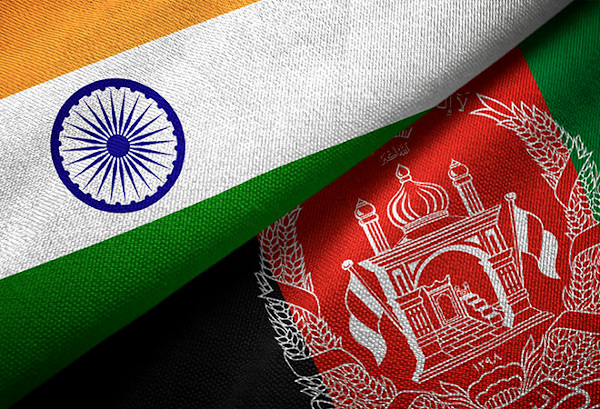
Afghanistan’s chargé d’affaires in India, Mufti Noor Ahmad Noor, has called for deeper political, economic and diplomatic engagement between Afghanistan and India, describing the relationship as one rooted in centuries of shared history and people-to-people connections.
Noor made the remarks during a reception at the Afghan Embassy in New Delhi marking five years since the Taliban returned to power in Kabul. The event was significant as it was the first public Victory Day reception organised by Afghanistan’s current authorities in India since the change of government in August 2021.
Afghanistan’s Ministry of Foreign Affairs currently lists Noor as the chargé d’affaires of the Embassy of the Islamic Emirate of Afghanistan in New Delhi.
Noor Calls for Political Trust and Economic Partnership
Addressing diplomats and other guests, Noor said stronger political trust, economic cooperation and sustained engagement between India and Afghanistan could benefit both countries while supporting wider regional stability.
He said closer relations could also contribute to improved connectivity and shared economic prosperity across the region. Afghanistan, a landlocked country, has placed increasing emphasis on expanding trade routes and access to regional markets.
Noor thanked the Indian leadership and External Affairs Minister S. Jaishankar for New Delhi’s engagement with Afghanistan. He also expressed appreciation for what he described as India’s support for Afghanistan’s legitimate interests at international forums.
His remarks came against the backdrop of a noticeable expansion in official contacts between New Delhi and Kabul over the past year.
India’s Ministry of External Affairs said at its August 14 media briefing that recent engagements with Afghanistan had strengthened cooperation in areas including development, trade and connectivity. The MEA also emphasised the longstanding historical and people-to-people relationship between India and Afghanistan.
‘Shared Past’ Links India and Afghanistan
A major theme of Noor’s address was the historical relationship between the two countries.
He pointed to centuries of interaction through trade, transit, culture, scholarship and religious traditions. Afghan cities such as Kabul, Herat and Kandahar historically received traders travelling from the Indian subcontinent, while Indian cities were influenced by Afghan scholars, poets and Sufi traditions.
Noor described this long interaction as a “shared past” from which the two countries could draw inspiration while building their future relationship.
The geographical region covering present-day Afghanistan and the Indian subcontinent has been connected for centuries through commercial routes across the Hindu Kush. These connections carried not only goods but also languages, artistic traditions, religious ideas and cultural influences in both directions.
Noor also referred to the political histories of the two countries and their experiences during the period of British imperial power in the region.
Indian Government Represented at Reception
The reception brought together diplomats, members of Indian civil society and media representatives.
Anand Prakash, Joint Secretary handling the Pakistan-Afghanistan-Iran division at the Ministry of External Affairs, attended the event as the chief guest. His presence reflected the growing level of official interaction between the two sides.
The Afghan Ministry of Foreign Affairs separately confirmed in July that Prakash had co-chaired the fourth meeting of the Joint Committee between the foreign ministries of Afghanistan and India in New Delhi. That meeting covered political and economic cooperation, visa issues, trade challenges and measures to strengthen imports and exports.
Diplomatic representatives from several countries, including Russia, China, Iraq, Qatar, the United Arab Emirates, Palestine, Niger, Oman, Mongolia and Serbia, were also present at Monday’s event.
India-Afghanistan Engagement Expands
The reception comes amid steadily expanding interaction between India and Afghanistan’s current authorities.
While political engagement attracts much of the attention, recent discussions have increasingly focused on practical areas such as trade, humanitarian cooperation, visas, transport links and regional connectivity.
The July 2026 India-Afghanistan Joint Committee meeting in New Delhi specifically discussed bilateral political and economic cooperation as well as difficulties affecting trade.
Noor’s appointment itself represents another important development. Afghanistan’s Ministry of Foreign Affairs officially identifies him as its chargé d’affaires in New Delhi and lists the embassy as the country’s diplomatic mission in India.
Before taking up the New Delhi assignment, Noor served as Director General of the First Political Division in Afghanistan’s Foreign Ministry. An official Afghan Foreign Ministry record from 2025 identifies him in that role while leading an Afghan delegation for political consultations with Pakistan.
Trade and Connectivity Move Up the Agenda
Economic relations are emerging as an important pillar of the renewed engagement.
Afghanistan depends heavily on regional transit networks because it has no direct access to the sea. India, meanwhile, has long supported connectivity arrangements that provide Afghanistan with access to international markets without relying exclusively on traditional overland routes.
The recent diplomatic dialogue suggests that both sides are looking at ways to remove obstacles affecting bilateral commerce and strengthen exports and imports.
The Afghan Foreign Ministry’s account of the July Joint Committee meeting specifically identified visa issuance and trade-related challenges among the subjects discussed by officials from the two countries.
Such discussions could become increasingly important as Kabul seeks investment, market access and diversified transport links while India looks to maintain its long-standing economic and strategic presence in Afghanistan.
First Public Victory Day Reception in India
The August 17 gathering also carried symbolic significance because of the occasion it marked.
Afghanistan’s current authorities observe August 15 as Victory Day, commemorating the Taliban’s entry into Kabul on August 15, 2021, after the collapse of the previous Afghan government during the withdrawal of US-led international forces.
The New Delhi reception was held two days after the anniversary and marked the first major public celebration of the occasion by the current Afghan diplomatic establishment in India.
At the same time, New Delhi’s engagement with Kabul has increasingly centred on practical cooperation rather than ceremonial diplomacy alone. The Indian government has continued discussions with Afghan representatives across trade, development assistance, connectivity and humanitarian issues.
The MEA’s latest comments underline this approach. At its August 14 briefing, the ministry highlighted the growing number of engagements between the two sides and said these contacts had helped strengthen cooperation in several areas.
A Relationship Shaped by History and Regional Interests
Noor’s emphasis on shared history also highlights an important element of India-Afghanistan relations that predates modern political developments.
Trade routes connecting India with Central Asia have historically passed through Afghanistan. Cultural influences moved across these routes for centuries, leaving lasting connections in architecture, language, cuisine, literature and religious traditions.
Modern India has also maintained extensive links with the Afghan population through education, healthcare, development projects and trade.
The current phase of engagement therefore combines historical connections with practical strategic interests. Afghanistan requires access to markets, investment, medical services and infrastructure, while India has an interest in a stable Afghanistan connected economically with the wider region.
Noor’s message at the New Delhi reception suggested that Kabul wants this engagement to deepen further.
For India, the growing diplomatic contact provides an opportunity to preserve its longstanding relationship with the Afghan people while maintaining a direct channel with the authorities governing the country.
The first Victory Day reception in New Delhi therefore represents more than a ceremonial event. It reflects a broader period of renewed India-Afghanistan interaction in which political dialogue, trade, connectivity and regional stability are increasingly moving to the centre of the relationship.
Official sources: Ministry of External Affairs, Government of India — Transcript of Bi-Weekly Media Briefing, August 14, 2026; Ministry of Foreign Affairs of Afghanistan — Afghanistan’s Foreign Mission in India and Afg-India Foreign Ministries Joint Committee Meeting Held, July 9, 2026.
You may also like
-
Tarang Shakti Delegates from 28 Countries Visit HAL and BEL to Explore India’s Defence Manufacturing Ecosystem
-
Swiss President Guy Parmelin to Visit India as EFTA Economic Partnership Deepens
-
India and Brazil Move to Expand Mercosur Trade Pact Beyond 450 Tariff Lines
-
India and Qatar Accelerate FTA and Investment Treaty Talks
-
India and Russia Review Bilateral Ties and International Developments in Moscow
