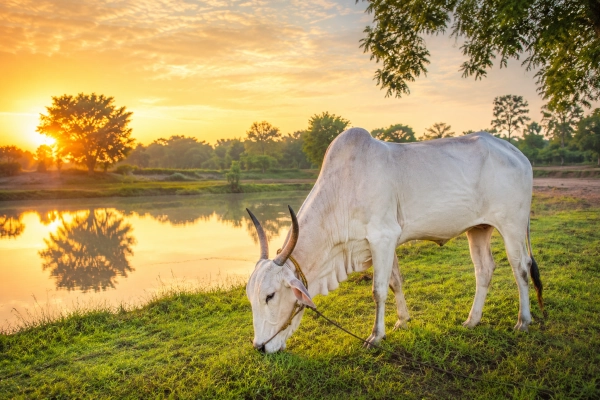
Khillar cattle are among the finest indigenous draught breeds developed in the rugged agricultural landscape of western India. Closely associated with Maharashtra and northern Karnataka, these compact, alert and energetic animals have long been valued for their speed, stamina and ability to work under the hot, dry conditions of the Deccan plateau.
The breed is officially recognised as an indigenous Indian cattle breed, with Maharashtra and Karnataka recorded as its native tract. Its registered accession number is INDIA_CATTLE_1108_KHILLAR_03014.
Unlike breeds developed primarily for milk, the Khillar was shaped by generations of farmers who needed dependable working cattle. Its bullocks could plough fields, pull carts and travel considerable distances across difficult terrain while surviving on the limited fodder commonly available in drought-prone regions.
Native Home of the Khillar
The traditional Khillar breeding belt extends across the dry districts of southern and western Maharashtra and adjoining parts of Karnataka.
Important areas associated with the breed include Satara, Sangli, Solapur, Kolhapur, Pune, Osmanabad and neighbouring districts of Maharashtra. In Karnataka, Khillar cattle are found in districts such as Belagavi, Vijayapura, Dharwad, Kalaburagi and Bagalkot.
This region is characterised by high summer temperatures, irregular rainfall, rocky uplands, dry grasslands and extensive areas of black and shallow soils. Agricultural work in such conditions traditionally demanded animals that could remain active despite heat, dust and seasonal fodder scarcity.
The Khillar evolved precisely for this environment.
A Distinctive and Powerful Appearance
A typical Khillar animal has a compact, tightly built body with strong limbs and clearly defined muscular features. Its frame appears lean rather than bulky, reflecting a breed selected for movement and work rather than heavy body mass.
The head is usually long and narrow, with a broad forehead that gradually tapers towards the muzzle. The ears are comparatively small, pointed and held outward.
One of the breed’s most striking features is its pair of long, sharply pointed horns. They emerge close together at the base, sweep backwards along the line of the forehead and then curve gracefully upwards. This smooth bow-like formation gives the Khillar a proud and unmistakable profile.
The legs are straight and strong, while the hooves are hard and generally dark. The hindquarters are well developed, and the back may rise slightly towards the pelvis. The ribs are well sprung, giving the trunk a firm, barrel-shaped appearance.
The skin is tight, and the coat is generally short, fine and glossy.
Coat Colour and Regional Types
Khillar cattle display several colour variations depending on their regional type.
Animals from the Deccan plateau are commonly greyish-white. Adult bulls often develop darker shading over the neck, shoulders, forequarters and hindquarters. Some possess attractive grey-and-white mottling on the face.
Calves may be born with reddish or rust-coloured markings on the forehead, which usually become less prominent as they mature.
Traditionally recognised Khillar types include:
Atpadi Mahal Khillar
This type is associated with the dry belt around Atpadi and adjoining parts of southern Maharashtra. It is generally compact, energetic and highly suited to fast draught work.
Mhaswad Khillar
Associated principally with Satara and Solapur, the Mhaswad type is known for its greyish-white colouring, strong frame and ability to work in dry agricultural areas.
Tapti or Thillari Khillar
This type is connected with the Satpura and Tapti region. The animals may be lighter or almost white, sometimes possessing reddish or carrot-coloured muzzles and hooves.
Nakali Khillar
The Nakali type is generally grey, occasionally with tawny or brick-coloured shading over parts of the forequarters.
Although regional distinctions remain part of traditional breed knowledge, movement and interbreeding among populations have made some boundaries less pronounced.
Built for Speed and Draught Power
Khillar bullocks are celebrated for their quick and spirited gait. They belong to the medium-fast draught class and are particularly effective where agricultural work requires agility rather than sheer weight.
Their relatively light but muscular build enables them to move rapidly while pulling carts or farm implements. Farmers traditionally used Khillar pairs for ploughing, inter-cultivation, transporting farm produce and travelling between villages and markets.
The breed’s working style is marked by alertness, responsiveness and sustained movement. Well-conditioned bullocks can travel long distances without displaying early fatigue.
This combination of speed and endurance distinguished the Khillar from heavier draught breeds that were more suited to slow pulling in deep soils.
The Maharashtra government’s historical Gazetteer of Kolhapur also describes Khillar animals in the region as draught cattle and records their presence in the district’s eastern agricultural zone.
Adaptation to the Deccan Environment
Khillar cattle are products of a demanding ecological zone. The Deccan plateau frequently experiences intense heat, prolonged dry periods and seasonal shortages of green fodder.
The breed’s compact frame, active temperament and efficient walking ability help it perform under these conditions. Its hard hooves are suitable for travelling over dry, stony and uneven surfaces.
Khillar cattle can utilise crop residues, dry grasses and locally available roughage when managed carefully. Their adaptation makes them suitable for mixed farming systems in which cattle must survive on resources produced within or near the farm.
Their heat tolerance and ability to continue working under harsh agro-climatic conditions remain important genetic qualities, particularly as farmers confront increasingly variable weather.
Milk Production
Khillar cows are not specialised dairy animals. Their traditional importance lies primarily in producing strong draught bullocks.
The average milk production is therefore modest when compared with recognised dairy breeds such as Gir, Sahiwal or Red Sindhi. The National Dairy Development Board’s Dairy Knowledge Portal reports an average lactation yield of approximately 451 kilograms, with average milk fat around 4.2 per cent.
Milk is generally used for household consumption and calf rearing. The low commercial milk yield has reduced the breed’s attractiveness in farming systems that measure livestock value almost entirely through daily milk production.
However, evaluating the Khillar only as a dairy animal overlooks its principal function. It was developed as a source of animal power, mobility, manure and resilient breeding stock for dryland agriculture.
Temperament and Management
Khillar cattle are alert, active and sometimes highly spirited. Bullocks respond quickly to experienced handlers, but young bulls require calm and consistent training.
Because the breed is energetic, adequate space for movement and regular exercise are important. Animals kept permanently tied without meaningful activity may become difficult to manage or lose the muscular conditioning that defines the breed.
A practical management system should provide:
- A dry, well-ventilated shelter with protection from intense midday heat
- Sufficient clean drinking water
- Balanced feeding during work and breeding seasons
- Regular hoof inspection, especially for working bullocks
- Vaccination and deworming according to veterinary advice
- Gradual training for young draught animals
- Rest periods during periods of extreme heat
Working bullocks need additional energy and mineral supplementation during ploughing and transport seasons. Crop residues alone may maintain an idle animal but are generally inadequate for sustained heavy work.
Role in Traditional Farming
Before tractors became widely available, a reliable pair of Khillar bullocks represented one of the most important assets of a Deccan farmer.
The animals prepared fields, carried harvested crops, transported sugarcane, moved grain to markets and supplied dung for manure and household fuel. Bullocks could operate in places where mechanised equipment was expensive, unavailable or unsuitable for fragmented holdings.
Their agility was especially useful for intercultural operations between crop rows and for moving carts along narrow rural roads.
Khillar cattle also became part of the social identity of farming communities. Well-bred bullock pairs were displayed at village fairs, agricultural exhibitions and festivals. Their symmetrical horns, disciplined gait and physical condition reflected the knowledge and reputation of the breeder.
ICAR-supported indigenous-cattle exhibitions in Kolhapur continue to feature Khillar animals, demonstrating the breed’s enduring cultural and agricultural importance in Maharashtra.
Decline in the Age of Mechanisation
The spread of tractors, power tillers and motorised transport sharply reduced the economic demand for draught bullocks across India.
Khillar cattle were particularly affected because their principal value lay in work rather than high milk production. As animal traction declined, farmers increasingly shifted towards buffaloes, crossbred dairy cattle or specialised milch breeds that could provide regular cash income.
Other pressures include shrinking grazing areas, rising feed costs, reduced availability of pure breeding bulls and indiscriminate mating. In some places, farmers continue to maintain visually impressive bullocks for exhibitions or ceremonial purposes, while the number of well-recorded breeding cows remains limited.
This imbalance can weaken the long-term genetic base of the breed. Conservation requires maintaining complete breeding populations rather than focusing exclusively on a small number of celebrated males.
Khillar Cattle – Built for Survival
The future value of the Khillar extends beyond conventional ploughing.
Small farms, vineyards, orchards and environmentally sensitive areas may continue to benefit from light animal traction. Bullocks can work without fossil fuel, create less soil compaction than heavy machinery and produce manure that returns organic matter to the land.
Khillar cattle also carry genes associated with heat adaptation, mobility, endurance and survival under low-input conditions. These traits may become increasingly valuable as climate stress affects livestock production.
The breed can contribute to:
- Organic and natural farming systems
- Low-cost transport within farms
- Conservation-oriented cattle breeding
- Rural tourism and agricultural exhibitions
- Production of dung-based manure, biogas and other farm inputs
- Research into heat tolerance and draught efficiency
- Preservation of the livestock heritage of the Deccan
ICAR-NBAGR includes Khillar germplasm among the cattle genetic resources preserved in the National Gene Bank, providing an important safeguard for the future.
The Need for Scientific Conservation
Khillar conservation must combine traditional breeder knowledge with modern animal-recording systems.
Purebred cows and bulls should be identified within the native tract and registered using clear physical and genetic standards. Performance records should include fertility, calving history, growth, disease incidence and draught ability rather than concentrating only on milk yield.
Selected breeding bulls can be used through organised natural-service centres and artificial-insemination programmes. Semen from genetically diverse and well-characterised males should be conserved to prevent excessive dependence on a few popular bloodlines.
Farmers who maintain pure Khillar herds also require practical incentives. Breed conservation becomes sustainable only when the animals generate economic value through draught services, organic inputs, breeding-stock sales, exhibitions or specialised farming systems.
Community-based breeder associations could play an important role in maintaining herd books, organising cattle fairs and preventing the sale of valuable breeding females outside conservation networks.
A Living Symbol of Deccan Agriculture
The Khillar represents the skill with which Indian farmers once developed livestock for specific landscapes and agricultural demands.
Its speed was shaped by long journeys across the plateau. Its strong legs and hard hooves were refined by stony ground. Its endurance emerged from heat, sparse fodder and long working days. Its alert temperament reflected the need for a responsive animal capable of working closely with its handler.
Mechanisation has reduced the Khillar’s former economic role, but it has not diminished the breed’s genetic or cultural importance.
Preserving the Khillar means conserving a living product of the Deccan plateau—an indigenous animal whose strength lies not in exceptional milk production or massive size, but in agility, resilience, stamina and an extraordinary capacity for work.
Reference
ICAR–National Bureau of Animal Genetic Resources Cattle Breeds of India: Khillar Home tract: Maharashtra and Karnataka Accession No.: INDIA_CATTLE_1108_KHILLAR_03014 National Dairy Development Board Dairy Knowledge Portal: Khillar Breed characteristics, breeding tract, draught utility and milk-production information Indian Council of Agricultural Research Indigenous Cow Exhibition, ICAR–Shri Siddhagiri Krishi Vigyan Kendra, Kolhapur ICAR–National Bureau of Animal Genetic Resources National Gene Bank: Indigenous livestock germplasm preserved for conservation Government of Maharashtra Gazetteers Department Kolhapur District Gazetteer: Agriculture and Livestock
You may also like
-
Indian Grey Hornbill Returns to Gir After Six Decades, Marking a Major Conservation Success
-
Indian Scientists Discover New Deep-Sea Conger Eel 300 Metres Below Arabian Sea Off Kerala
-
Black-Headed Ibis Flock Turns Tirunavaya Paddy Fields Into a Spectacular Bird Haven
-
Bihar’s 700-Year-Old Banyan Becomes World’s Oldest Scientifically Dated Ficus benghalensis
-
Mizoram Adds Two New Amphibians as Scientists Uncover Hidden Diversity in Northeast India
