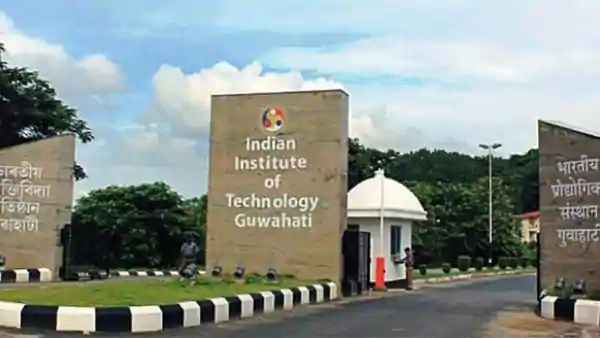
India is preparing to establish domestic commercial production of C-phycocyanin, a valuable natural blue pigment derived from Spirulina, through an indigenous biotechnology developed by the Indian Institute of Technology Guwahati. The Technology Development Board under the Department of Science and Technology has extended financial assistance to Hyderabad-based K. N. Biosciences (India) Private Limited to bring the technology from the laboratory to industrial-scale production.
The project, titled “Production of C-Phycocyanin Using Spirulina Species as a Cell Factory,” aims to create an Indian manufacturing base for a high-value biological ingredient used across the food, nutraceutical, agricultural, aquaculture, poultry-feed and plant-biostimulant industries. Its commercialisation is expected to reduce dependence on imported natural colourants while strengthening India’s ability to supply specialised bio-based ingredients to domestic and international markets.
C-phycocyanin is the blue-coloured pigment-protein that gives Spirulina much of its distinctive blue-green appearance. Once extracted and purified, it can be converted into a stable, water-soluble blue powder suitable for several commercial applications. The food and beverage industry can use it as a natural colouring ingredient in confectionery, beverages, dairy preparations, desserts and nutritional formulations. Its biological origin makes it particularly relevant to the expanding clean-label market, where manufacturers and consumers increasingly prefer naturally derived ingredients.
The pigment also has applications in nutraceutical products and specialised analytical uses. Agriculture, aquaculture and poultry-feed producers can use Spirulina-derived materials as functional ingredients, while plant-biostimulant manufacturers can explore them in formulations intended to support crop growth and productivity. Rising global demand for natural pigments has created a significant commercial opportunity for countries capable of cultivating suitable biological feedstocks, extracting active compounds and delivering them in standardised industrial grades. India’s climatic conditions, biotechnology expertise and expanding food-processing sector provide a strong foundation for developing this value chain.
The production technology was developed by IIT Guwahati using the indigenous Spirulina strain NCIM 5143. The institute transferred the technology to K. N. Biosciences through a formal technology-transfer agreement, allowing the company to establish commercial production facilities based on the research. The transfer represents an important example of publicly supported scientific research entering India’s manufacturing ecosystem.
Indian research institutions regularly develop promising laboratory-scale processes, biological materials and specialised products. Their wider economic value depends on successful technology transfer, industrial investment, production engineering, quality control and market deployment. Through this initiative, IIT Guwahati’s research will provide the scientific foundation for a domestically operated natural-pigment manufacturing project, while K. N. Biosciences will undertake the industrial-scale implementation required to produce consistent quantities and grades for different markets.
The project uses Spirulina as a biological production platform, or cell factory, for generating phycocyanin-rich biomass. Spirulina is cultivated through a controlled photoautotrophic process in which light, nutrients and environmental conditions are carefully managed to promote biomass growth and pigment accumulation. Optimised lighting and nutrient conditions allow the cultivation system to produce high-density biomass containing substantial quantities of phycocyanin. This biomass then becomes the raw biological material for extraction and purification.
The upstream cultivation process is crucial because the quality of the final pigment depends heavily on the strain used, the growth environment, biomass density, pigment concentration and consistency of production. A controlled system can help manufacturers maintain stable output across production cycles while improving the efficient use of water, nutrients, energy and cultivation space. The use of an indigenous Spirulina strain also gives the project a strong self-reliance dimension, since India will possess access to the biological strain, cultivation knowledge, processing technology and manufacturing infrastructure within a domestic value chain.
A major feature of the IIT Guwahati technology is its environmentally sustainable downstream process. After cultivation, the Spirulina biomass undergoes a green, solvent-free extraction method followed by a single-step purification process. This allows food-grade and analytical-grade C-phycocyanin to be recovered with lower processing complexity, reduced chemical use and a smaller environmental burden.
Conventional extraction and purification systems can involve several processing stages, chemical inputs and complex separation procedures. Each additional stage can increase capital requirements, energy consumption, product losses and waste-management demands. A streamlined extraction and purification route therefore offers commercial as well as environmental value. According to the government announcement, the resulting C-phycocyanin is obtained as a stable, water-soluble blue powder and has been benchmarked against commercially available international standards, an important step towards establishing its suitability for industrial buyers.
Different markets require varying levels of purity. Food manufacturers need products that meet food-grade quality and safety expectations, while laboratories and specialised analytical applications generally require higher levels of purity and consistency. The ability to produce multiple grades could allow the Indian facility to serve a broader range of customers and develop products tailored to different industrial requirements.
Commercial-scale production of C-phycocyanin could help India create a domestic value chain extending from Spirulina cultivation to pigment extraction, purification, formulation, packaging and distribution. Each stage offers opportunities for biotechnology firms, equipment manufacturers, food-ingredient businesses, testing laboratories, agricultural enterprises and specialised exporters.
Domestic production can also improve supply-chain resilience for Indian companies that currently depend on imported natural colourants and bio-based ingredients. Access to an Indian supplier could shorten procurement cycles, reduce exposure to international shipping disruptions and encourage the development of products designed specifically for the domestic market. The initiative supports import substitution by replacing at least part of India’s dependence on externally sourced natural blue pigments, while also creating export potential when the commercially produced material meets international purity, safety and performance requirements.
C-phycocyanin represents a higher-value output from algal biotechnology than the sale of untreated Spirulina biomass alone. Its production demonstrates how biological resources can be processed into specialised ingredients with applications across multiple industries. This shift from basic biomass cultivation to advanced extraction and purification can raise the economic value generated from each production cycle and create more technologically sophisticated manufacturing opportunities.
The project also carries considerable potential for India’s clean-label food sector. The global shift towards naturally derived colours has become especially important for food processors seeking transparent labels, recognisable ingredient sources and more sustainable production systems. Blue is among the more difficult colours to obtain consistently from natural sources, giving a stable, water-soluble blue pigment considerable commercial relevance.
Indian food and beverage companies could use domestically produced C-phycocyanin in confectionery, drinks, nutritional preparations, dairy products and other value-added foods. The availability of an Indian source can also stimulate research into improved stability, formulation compatibility, storage conditions and product-specific applications. The technology could encourage collaboration among biotechnology firms, food technologists, agricultural researchers, nutraceutical manufacturers and packaging companies, helping convert the pigment into market-ready ingredients suited to different production environments.
The initiative aligns closely with India’s broader effort to expand its bioeconomy through sustainable manufacturing, biological processing and the commercialisation of indigenous research. Biotechnology-based manufacturing uses living organisms, biological materials or cellular processes to create useful products across food, agriculture, pharmaceuticals, fuels, chemicals, environmental services and advanced materials.
India already possesses a large scientific workforce, a growing biotechnology start-up ecosystem and extensive biological resources. The successful scale-up of research technologies can convert these advantages into factories, intellectual property, skilled employment, exports and resilient domestic supply chains. Technology Development Board Secretary Rajesh Kumar Pathak described India’s bioeconomy as a major opportunity to transform indigenous research into globally competitive products and reaffirmed the board’s commitment to supporting green manufacturing, domestic commercialisation and value-added biotechnology.
K. N. Biosciences has stated that the financial assistance from the Technology Development Board will help the company establish commercial-scale production facilities and accelerate the introduction of indigenous C-phycocyanin into the market. The company expects the project to contribute to a stronger domestic ecosystem for natural bio-based products while serving rising demand in India and overseas.
Scaling a biological technology from laboratory production to a commercial facility requires specialised cultivation systems, extraction equipment, process controls, testing capabilities and trained personnel. Manufacturers must also maintain batch-to-batch consistency, purity, stability and traceability. Support during this stage can help bridge the gap between scientific success and commercial viability by enabling investment in infrastructure required to demonstrate reliable production volumes and meet the quality expectations of industrial customers.
The project highlights the importance of connecting Indian research institutions with domestic manufacturers. IIT Guwahati has provided the scientific and technological foundation, K. N. Biosciences will focus on commercial production and market deployment, and the Technology Development Board is supporting the transition through financial assistance for industrial implementation.
This model can be applied across several emerging areas of Indian biotechnology. Universities and public laboratories can develop new strains, processes and products, private enterprises can build production capacity, and government institutions can help reduce the risks associated with commercial scale-up. Successful implementation would demonstrate that India can develop, transfer, manufacture and market a sophisticated natural ingredient through an indigenous ecosystem. It could also encourage further investment in algae-based products, natural pigments, functional foods and sustainable agricultural inputs.
The commercialisation of indigenous C-phycocyanin technology carries significance far beyond the production of a natural blue colour. It combines biotechnology, sustainable manufacturing, import substitution, research commercialisation and the creation of a specialised industrial value chain. By supporting production through an indigenous Spirulina strain and a green extraction process, the initiative places environmental efficiency alongside economic opportunity.
As global demand for clean-label ingredients and naturally derived products expands, India has an opportunity to become a competitive producer of high-value biological ingredients. The partnership among IIT Guwahati, K. N. Biosciences and the Technology Development Board represents an important step towards converting that opportunity into domestic manufacturing capacity. The project ultimately demonstrates how Indian science can move from a research laboratory into a commercial production facility, creating a market-ready product that serves food, nutrition, agriculture and other industries while strengthening India’s bio-based economy.
Source: PIB
You may also like
-
New X-Ray Clues from Blazars could Provide Insights on Powering of Active Galaxies
-
A Powerful Punch by Black Hole Jets Shapes the Fate of Galaxies
-
IIT Delhi Develops India’s First Indigenous Micro-GPU for Embedded Graphics Systems
-
Beyond one: Indian Researchers’ Experiment Could Lead to A New Tool for Quantum Measurement
-
DRDO Backs Indigenous 20 mK Dilution Refrigerator in First High-Value Deep-Tech TDF Project
