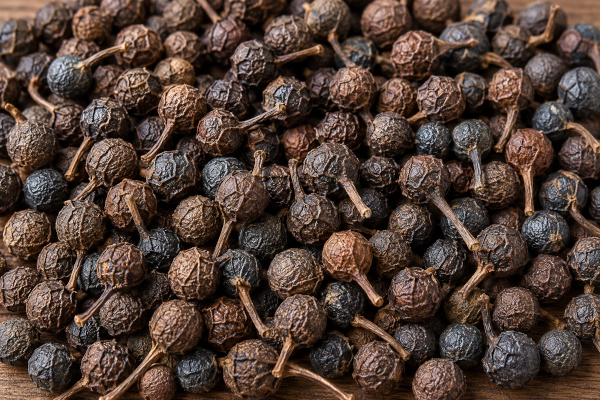
Kankola, commonly known as Tailed Pepper or Cubeb Pepper, is an aromatic spice-medicine valued in Ayurveda for digestion, appetite, throat comfort and Kapha balance. Botanically known as Piper cubeba, it belongs to the Piperaceae family and is recognized by its small pepper-like dried fruits with a tiny stalk or “tail,” which gives it the name tailed pepper. Its fragrance is warm, sharp and slightly camphor-like, making it useful in formulations that support Agni, clear heaviness and refresh the respiratory channels.
Names and Identity
Sanskrit name: Kankola
Common names: Tailed pepper, Cubeb pepper, Kabab chini, Sheetal chini
Botanical name: Piper cubeba L.f.
Family: Piperaceae
Part used: Dried fruit
Main traditional action: Digestive, aromatic, Kapha-clearing, throat-supporting
The name “tailed pepper” comes from the small stalk attached to the dried berry, giving it a tail-like appearance. It resembles black pepper but has a more aromatic, slightly bitter and camphor-like fragrance.
Ayurvedic Nature of Kankola
Kankola is an aromatic, pungent and warming spice-drug. It is used in small quantities because its action is sharp and stimulating.
Rasa: Katu, Tikta — pungent and bitter
Guna: Laghu, Ruksha, Tikshna — light, dry and sharp
Virya: Ushna — hot in potency
Vipaka: Katu — pungent post-digestive effect
Dosha action: Helps balance Kapha and Vata when used properly
Its warmth and sharpness make it useful where there is cold digestion, mucus, heaviness, low appetite, coating of the tongue and sluggish movement in the channels.
Kankola and Agni
Kankola supports Deepana and Pachana, meaning it helps kindle digestive fire and digest accumulated heaviness. In Ayurveda, weak Agni leads to Ama, bloating, tastelessness, abdominal dullness and Kapha accumulation. Kankola’s pungent aroma helps awaken taste, stimulate appetite and support better digestion.
It can be compared with black pepper in its digestive role, but Kankola has a more fragrant and slightly resinous quality. This makes it useful in formulations for both stomach and respiratory passages.
Benefits in Respiratory Health
Kankola is traditionally valued in Kasa and Shwasa, meaning cough and breathing difficulty, especially when Kapha is involved. Its drying, aromatic and warming nature helps reduce mucus heaviness and supports clearer breathing channels.
Modern reviews on Piper cubeba also describe its traditional use in respiratory and digestive disorders, and note that the fruit is rich in essential oil. Research literature has studied it for antioxidant, antibacterial, anti-inflammatory and related pharmacological activities.
Benefits in Digestion and Taste
Kankola is useful in low appetite, tastelessness of the mouth, gas, abdominal heaviness and Kapha-related indigestion. It improves ruchi, or taste perception, and supports the movement of Vata in the abdomen.
It may be used in spice mixtures, digestive powders, medicated oils, throat preparations and classical formulations. Because it is sharp and heating, it is generally used in small measured quantity rather than as a regular large-dose kitchen spice.
Kankola and the Throat
The aromatic quality of Kankola makes it valuable for throat comfort. It can help reduce a coated, heavy or mucus-filled sensation in the throat. Its pungent and bitter taste cuts through Kapha, while its fragrance refreshes the mouth and supports voice clarity.
In traditional practice, herbs like Kankola are often combined with Maricha, Pippali, Shunthi, Ela, Lavanga or Yashtimadhu, depending on whether the condition requires more heat, soothing action or Kapha-clearing strength.
Manuscript and Textual Importance
Kankola belongs to the long Indian tradition of aromatic spice-medicines. Ayurvedic manuscripts and nighantus preserved such substances not merely as flavouring agents but as medicines with rasa, guna, virya, vipaka and dosha action. The dried fruit of Kankola shows the deep link between trade, pharmacy and food culture in Ayurveda. Its presence in digestive, throat and respiratory traditions reflects how ancient physicians studied aroma, taste and heat as therapeutic tools.
Precautions
Kankola is hot, sharp and drying. It should be used carefully in people with acidity, burning sensation, mouth ulcers, gastritis, bleeding tendency or strong Pitta aggravation. Excess use may cause heat, dryness or irritation.
Pregnant women, children, elderly persons and those taking regular medication should use it only under qualified guidance. It is best treated as a medicinal spice, not as a casual high-dose remedy.
Conclusion
Kankola, or Tailed Pepper, is a powerful aromatic Ayurvedic herb for digestion, Kapha balance, throat clarity and respiratory support. It kindles Agni, improves taste, reduces heaviness and clears mucus-dominant stagnation. Kasturi and Kankola should be clearly distinguished: Kasturi belongs to rare animal-origin medicine linked with protected musk deer, while Kankola is the practical plant-based tailed pepper used in digestive and respiratory traditions. In the Ayurvedic kitchen and pharmacy, Kankola stands as a fine example of how fragrance, pungency and warmth can become medicine when used with wisdom and proportion.
You may also like
-
High Blood Pressure Through an Ayurvedic Lens: Stress, Diet and Dosha Imbalance
-
IISc Develops Engineered Nanobody Antivenom With Broad Protection Against Indian Cobra Venoms
-
Indian MedTech Startup Periwinkle Takes Rapid AI Cervical Cancer Screening to BRICS
-
WHO Chief Praises India’s Gains in Maternal, Child Health and NCD Care
-
Ayurvedic Foods for Liver Health and Digestion
